Amazon Merges Air and Ground Operations: A New Playbook for Multimodal Shipment Tracking

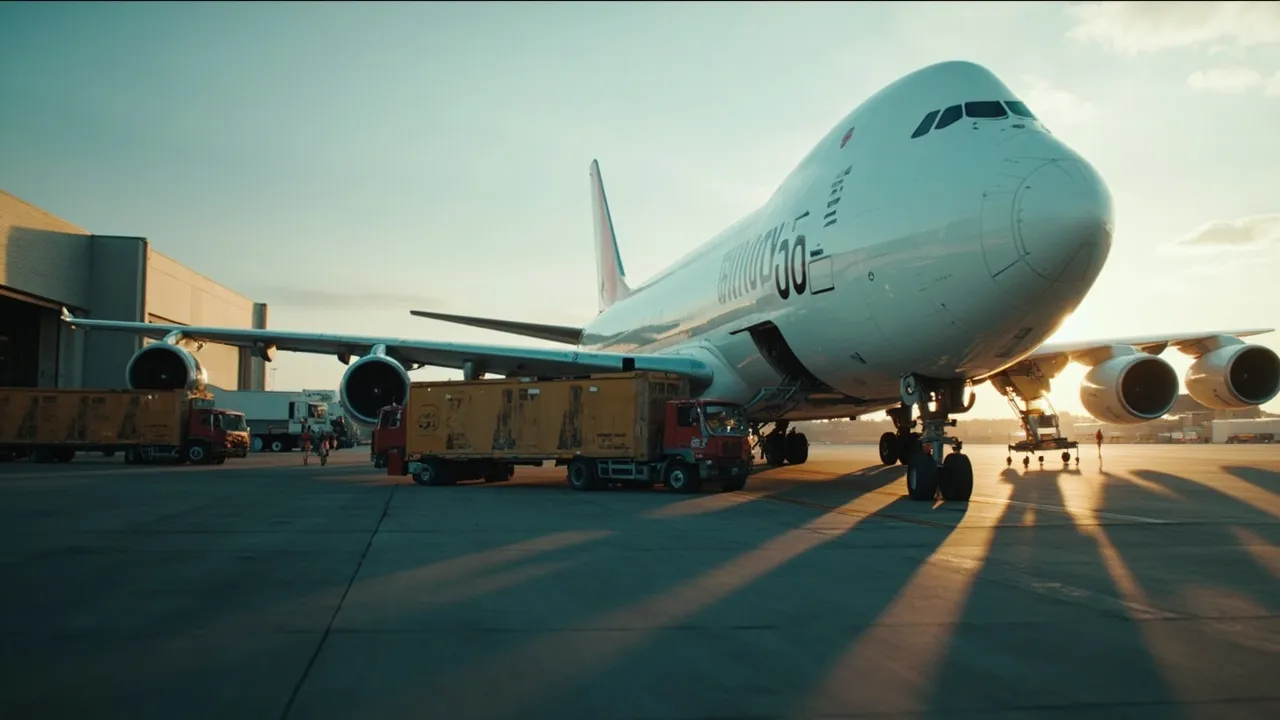
Amazon is bringing its Amazon Air, ground transportation, and sort-center teams into one transportation organization. The move is more than an org-chart adjustment. It recognizes a basic truth about multimodal logistics: an aircraft can arrive on time and a truck can perform exactly to plan, yet the shipment can still miss its promise if nobody owns the connection between them.
Supply Chain Dive reported the reorganization as Amazon pursues faster fulfillment while facing higher fuel-related transportation costs. The air operation is substantial. A separate Supply Chain Dive report says Amazon Air operates more than 100 aircraft and over 250 daily flights. At that scale, a small disconnect between flight arrival, sort completion, and linehaul departure can multiply into a large exception backlog.
Freight forwarders do not need Amazon's asset-heavy network to learn from the decision. They need one operating model for every planned air-to-ground connection, shared milestones across providers, and an exception queue that measures whether freight—not merely a vehicle—made the handoff.
The connection is the unit of performance
Air and ground teams often optimize different clocks. Air operations focus on tender cutoff, unit load device buildup, departure, arrival, and recovery. Ground teams focus on trailer availability, driver hours, dock appointments, route departure, and destination cutoff. Sort centers track induction, scan compliance, processing rate, and dwell.
Those measures are useful, but none proves connection success. A flight arriving at 02:00 is not a win if cargo is not available until after a 03:00 truck closes. Likewise, holding every truck for late freight protects connections but destroys downstream schedules and adds cost.
The shipment record should therefore include a planned connection: inbound service, transfer facility, target outbound service, minimum transfer time, and cutoff. It should also identify the cargo quantity expected to connect. Performance is then binary and auditable: the planned pieces made the onward service, or they did not.
This becomes increasingly important as an air network grows. FreightWaves reported in 2024 that Amazon's network connected 54 U.S. airports while operating more than 250 daily flights. More nodes and departures create more possible routings, but also more handoff combinations that can fail when milestones are stored in separate carrier portals.
Build one air-to-ground event schema
A practical multimodal shipment tracking model does not require every provider to use the same system. It requires them to publish events with consistent meaning. For an air-to-ground move, the minimum schema should capture:
- Shipment, house air waybill, master air waybill, flight, truck, trailer, and handling-unit identifiers.
- Planned and actual origin acceptance, flight departure, flight arrival, cargo availability, sort completion, dock release, truck departure, and destination arrival.
- Location, timestamp, time zone, event source, and confidence status for every update.
- Piece count, weight, and exception quantity so a partial connection is not reported as fully complete.
- The planned onward service, transfer cutoff, minimum connection time, and current connection probability.
Planned events must remain visible after a disruption. Replacing the original truck departure with a later booking hides the missed connection and makes the recovery appear on time. Keep the original plan, actual outcome, recovery plan, and reason code as separate records.
Event quality matters as much as event speed. A flight-status feed may show arrival when the aircraft reaches the gate, while the forwarder's freight is not available until unloading, breakdown, and release are complete. The control tower should use cargo availability—not aircraft arrival—as the trigger for the ground connection clock.
Put every mode in the same exception queue
Separate air and ground dashboards force coordinators to reconcile problems manually. A shared exception queue should rank shipments by operational consequence: connection time remaining, service commitment, cargo priority, recoverability, and cost of failure.
For example, a late inbound flight should automatically identify the handling units assigned to departing trucks. The system can distinguish freight that remains safe, freight requiring accelerated recovery, and freight that cannot connect. The owner then chooses among a dock priority, trailer hold, alternate linehaul, local recovery vehicle, or rebooking.
Every exception needs one accountable owner, a response deadline, and an escalation path. Ownership can change as the shipment moves, but it should never be ambiguous. The air carrier may provide the revised arrival estimate, the handler may prioritize breakdown, and the ground dispatcher may authorize a hold. One coordinator still needs responsibility for the end-to-end connection decision.
Track KPIs that expose missed handoffs
On-time performance by mode can conceal poor end-to-end service. Freight forwarders should add connection-level measures:
- Connection success rate: handling units loaded to the planned onward service divided by units planned to connect.
- Transfer-time variance: actual time from cargo availability to ground departure compared with the planned transfer window.
- Exception detection lead time: minutes between the first reliable risk signal and the transfer cutoff.
- Recovery decision time: minutes from exception creation to an approved action.
- Misconnection cost: premium transport, storage, handling, rebooking, and service-credit cost per failed connection.
- Milestone completeness: required events received on time and with valid identifiers divided by events expected.
Segment these KPIs by airport, handler, linehaul provider, lane, weekday, and handling profile. A network average can hide a recurring problem on one night sort or a transfer window that is unrealistic for loose cargo.
Adopt the operating model without owning the assets
Amazon can reorganize teams it directly controls. A freight forwarder usually coordinates airlines, handlers, truckers, and warehouses through contracts. The equivalent move is to create shared data rules and decision rights across those partners.
Start with one high-volume gateway and its most failure-prone onward lanes. Define the event schema, load the planned connections, and establish alert thresholds. Review missed connections weekly with all providers using the same shipment evidence. Only then expand the model to more stations and modes.
CXTMS connects multimodal plans, milestones, documents, providers, and exceptions in one operational shipment record. Teams can see a threatened air-to-ground connection early, assign the right owner, preserve the original plan, and measure recovery without rebuilding Amazon's physical network.
The lesson from Amazon's consolidation is straightforward: mode-level excellence is not enough when the handoff fails. Request a CXTMS demo to see how shared multimodal tracking turns air and ground events into dependable connection performance.