Reshoring in 2026: The Freight Capacity Plan OEM Investment Announcements Often Miss

A factory announcement is not a freight plan. The press release may identify the investment, location, floor space, and future jobs, but it rarely explains when tooling will arrive, which suppliers will feed the plant, how volumes will ramp, or whether nearby carriers and warehouses can absorb the demand.
That gap matters more in 2026 as reshoring moves from discussion to execution. A Reshoring Initiative survey reported by Supply Chain Dive found that 36% of 118 OEM respondents had reshored or were actively doing so, up from 29% in 2025. Another 63% planned capital investments in reshoring or domestic expansion. Every approved project creates a changing set of inbound, outbound, storage, and special-project requirements long before steady production begins.
The logistics team should therefore translate the investment announcement into a phased capacity model immediately—not wait for the first production forecast.
Convert the announcement into a lane map
Start with the bill of materials and supplier geography, even if both are incomplete. Classify every known component by origin, weight and dimensions, production criticality, handling requirements, lead time, and expected weekly consumption. Then assign a likely inbound mode and replenishment pattern.
The result should distinguish at least four flows:
- construction materials and production equipment moving before launch;
- tooling, test units, and engineering freight during commissioning;
- components and packaging required for pilot and full-rate production;
- finished goods, returns, reusable containers, and service parts moving after launch.
Reshoring does not necessarily eliminate international freight. A domestic assembly plant may still rely on imported electronics, castings, machinery, or raw materials. Logistics planners need to identify where the supply chain becomes domestic and where port, border, or airfreight exposure remains. The correct model is a network of supplier-to-plant lanes, not a simplistic switch from ocean freight to trucking.
Build low, expected, and high volume cases for each lane. Include units per finished product, packaging density, shipment frequency, equipment type, and seasonal variation. This turns an uncertain production forecast into capacity ranges that procurement can actually discuss with carriers.
Plan modes around the production phase
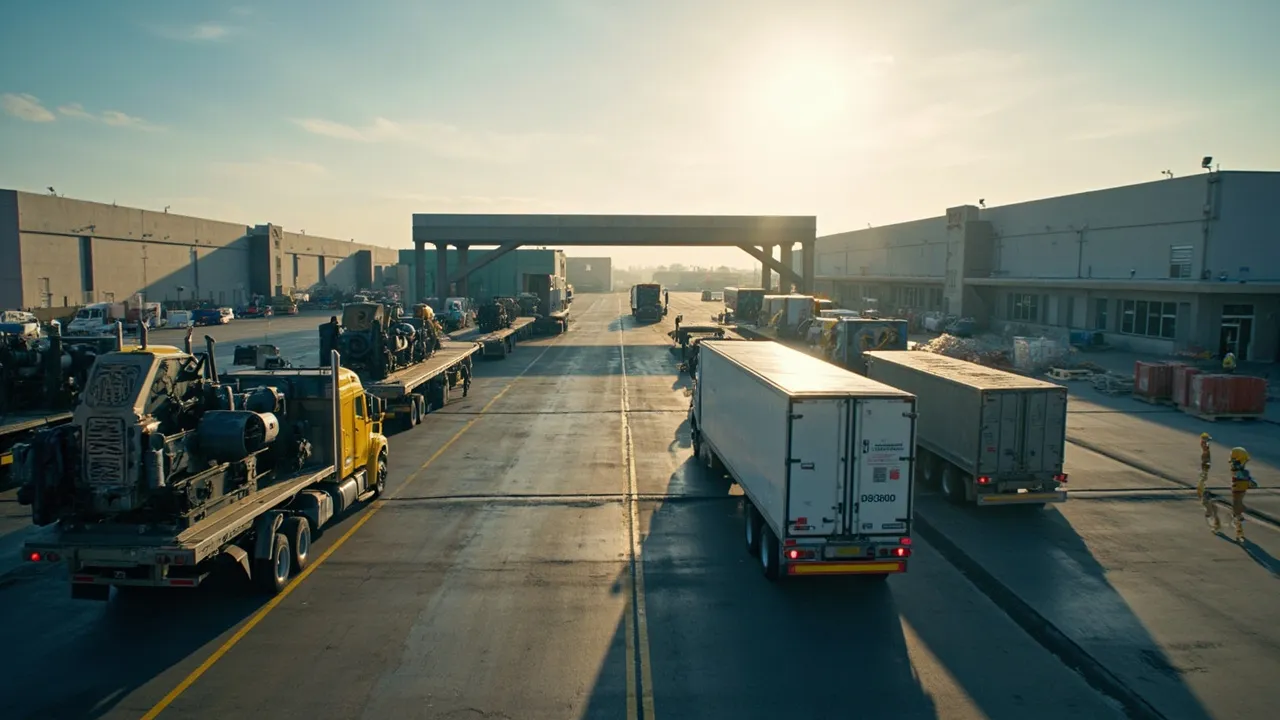
The transport profile changes sharply during a factory launch. Construction and installation can generate irregular flatbed, heavy-haul, and expedited moves. Tooling validation creates low-volume but schedule-critical shipments. Pilot production often relies on partial truckload, LTL, and premium air because demand is uneven and defects trigger replacement orders. Full-rate output eventually supports predictable truckload, intermodal, milk-run, or dedicated capacity.
Treating those phases as one annual freight bid is a mistake. Separate project freight from recurring production freight, and establish a mode rule for each phase. The rules should define when teams may expedite, who approves premium service, and which production-risk threshold justifies the extra cost.
Current investment projects show why this sequencing is essential. La-Z-Boy plans to invest $23 million in its Neosho, Missouri, operation and add a 150,000-square-foot distribution center, according to Supply Chain Dive. The project is expected to create up to 100 jobs. It is also part of a broader consolidation from 15 regional distribution centers to three hubs, with an expected 30% reduction in warehouse square footage and 20% reduction in heavy-furniture delivery mileage. Those are network changes, not merely building changes: inbound consolidation, transfer points, delivery regions, and carrier requirements all move together.
Reserve warehouse capacity before production needs it
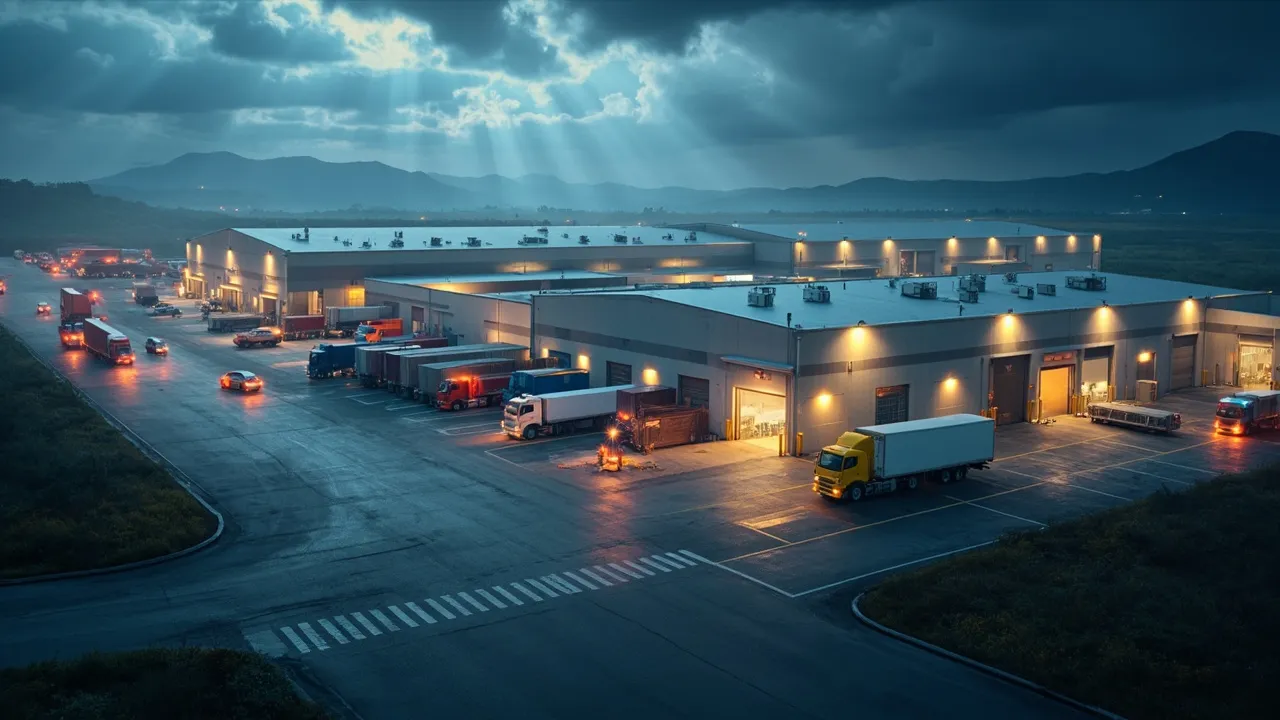
New plants rarely move directly from empty floor to stable flow. Early supplier schedules fluctuate, quality holds accumulate, packaging changes, and production teams protect the line with additional inventory. A warehouse plan based only on mature days of supply will be undersized precisely when the operation is least stable.
Model storage by pallet positions, floor-loaded volume, rack compatibility, yard spaces, and quarantine requirements. Include temporary capacity for launch inventory, defective material, empty packaging, and finished goods awaiting release. If an external warehouse or cross-dock is required, qualify it before pilot production and test its appointment, labeling, inventory-control, and shuttle processes.
The decision should also account for domestic supply limitations. In the reshoring survey, 65% of OEMs cited tariffs and 60% cited geopolitical risk as leading motivations, but respondents also reported gaps in domestic components and labor availability. A plant can be geographically closer to customers while remaining operationally vulnerable to a single constrained supplier. Buffer policies should be based on component criticality and recovery time, not a blanket inventory target.
Contract capacity in stages
Freight commitments should follow the confidence curve of the launch. Begin with flexible project-carrier agreements for construction and equipment. Add short-term or volume-banded contracts for pilot production. Move core lanes to annual commitments only after supplier schedules, packaging, and run rates become credible.
Each contract should specify volume bands, surge notice, equipment requirements, weekend coverage, detention rules, and the process for adding a new supplier lane. Secure backup capacity for line-stopping parts and preapprove the commercial rules for emergency moves. Negotiating an expedite at 2 a.m. after a missed pickup is the most expensive possible sourcing process.
Avoid promising carriers precise volume too early. Policy uncertainty remains substantial: 57% of surveyed OEMs named it their primary reshoring challenge, compared with 15% citing market pricing and difficulty passing costs to customers. Use ranges, review gates, and scenario triggers so contracts can adjust without destroying carrier trust.
Run the launch through one control tower
During launch, production, procurement, suppliers, warehouses, and carriers must operate from the same version of the plan. A launch control tower should connect the production schedule to purchase orders, pickup appointments, in-transit milestones, inventory status, and delivery priorities.
Track a short list of leading indicators: supplier schedule changes, confirmed capacity versus forecast, pickup compliance, transit exceptions, premium-freight approvals, dock congestion, inventory below coverage, and parts at risk of stopping the line. Assign every exception an owner and response deadline. Review assumptions weekly during construction and daily during pilot production.
The control tower should also preserve forecast history. When actual truckloads exceed the original estimate, planners need to know whether the cause was a higher build schedule, poor packaging density, extra safety stock, supplier fragmentation, or rework. That evidence improves the next capacity reservation and prevents temporary launch behavior from becoming permanent cost.
Reshoring can shorten delivery times and reduce some international exposure, but geography alone does not create resilience. The operational benefit appears only when the company synchronizes plant milestones, supplier lanes, warehouse space, and carrier commitments from construction through full-rate output.
CXTMS brings orders, tenders, milestones, documents, exceptions, and carrier performance into one execution environment, giving launch teams a shared view of capacity assumptions and live freight. Request a CXTMS demo to build a controlled transportation plan for your next domestic manufacturing expansion.