The Delivery Protection Act: Building a Cost-and-Service Model for New York City Parcels

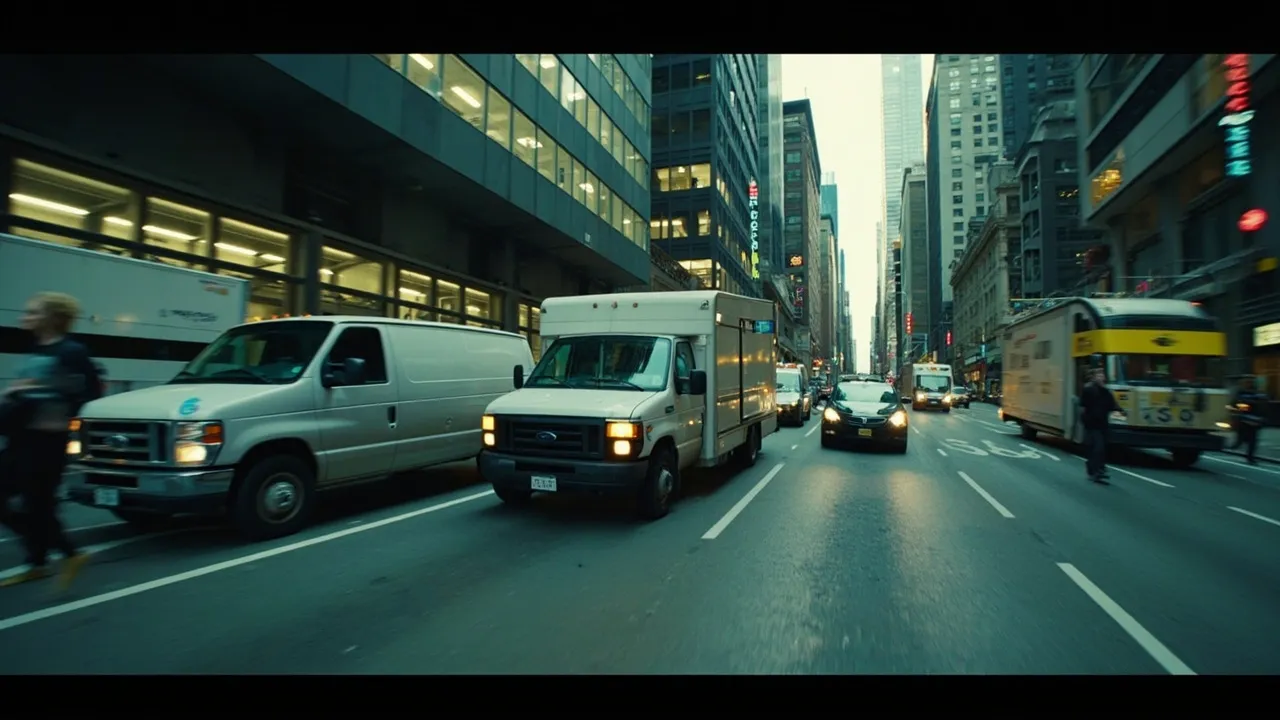
New York City's proposed Delivery Protection Act is still legislation, not an operating rule. Yet parcel shippers cannot afford to wait for a final compliance date before measuring its potential effect. Carrier contracts, fulfillment locations, delivery promises, and customer pricing all work on longer planning cycles.
The proposal would require operators of covered last-mile warehouse and distribution facilities to directly employ core delivery and warehouse workers rather than obtain those services through third parties. It would also introduce facility licensing plus safety, labor, and training standards. Supply Chain Dive reports that the bill includes a two-year grace period for the direct-employment requirement.
For logistics teams, the useful question is not whether every prediction about the bill will come true. It is: which cost and service assumptions would change under each plausible network response?
Start with the network exposure
The contractor model is material to New York's parcel network. An economic and transportation analysis cited by Supply Chain Dive estimated that about 36% of current daily parcel volume in the city is connected to contractor operations potentially at risk under the proposal. The publication also reports that New York has 50 last-mile facilities larger than 50,000 square feet; nearly 30% are operated by Amazon and 60% by FedEx and UPS.
Those figures do not mean 36% of parcels would disappear. They define the volume whose labor structure, facility location, carrier allocation, or price may need to change. Possible outcomes range from operators absorbing higher employment and compliance costs to shifting activity outside city limits. Some volume could also migrate toward networks already using directly employed drivers.
A shipper should therefore establish a baseline by carrier, service, origin facility, destination borough, package profile, weekly volume, and current promised transit time. Without that baseline, a regulatory scenario becomes a vague percentage applied to an invoice rather than an operational forecast.
Separate five drivers of parcel economics
A reliable model should keep the following variables distinct:
- Regulatory cost. Include wages, benefits, payroll taxes, training, licensing, safety processes, administration, and any transition expense. Do not treat all of this as a permanent per-package premium; separate one-time conversion costs from recurring costs.
- Route density. Parcels per route and stops per hour determine how widely fixed vehicle and labor costs are spread. If volume moves to facilities outside the city, longer stem miles can reduce productive delivery time.
- Stop time. Curb access, building entry, elevators, signature requirements, pedestrian-safety procedures, and parcel handling vary sharply by neighborhood and building type.
- Failed delivery. A second attempt adds transportation and handling cost without adding revenue. Model failure rates by service, parcel characteristics, time window, and destination type.
- Customer promise. Same-day and next-day commitments require inventory positioning, late cutoffs, and reserve capacity. If a scenario removes dozens of stops from a driver's productive day—as the report cited by Supply Chain Dive warns could happen after relocation—the premium promise may need a different cutoff or price.
Keeping these drivers separate prevents double counting. A carrier rate increase may already reflect additional stem mileage or labor. Adding both again as independent blanket percentages would exaggerate exposure.
Build scenarios at shipment level
The model should create an effective-dated policy record, then evaluate each parcel against it. At minimum, capture:
- destination borough and ZIP code;
- requested and promised service level;
- weight, dimensions, residential or commercial status, and special handling;
- carrier, delivery partner, and origin facility;
- pickup cutoff, planned dispatch time, and expected stop time;
- policy scenario, assumed effective date, and contract renewal date.
From those fields, construct at least three cases. The baseline preserves today's network and costs. A direct-employment conversion case adds employment, licensing, training, and administration assumptions while retaining city facilities. A network relocation case moves affected dispatches outside the city, adds stem mileage and time, reduces route capacity, and revises premium-service availability.
A fourth, blended case is often the most realistic: some carriers convert labor structures, some shift facilities, and some volume moves to alternate networks. DoorDash, for example, told city officials that the proposal could affect its five DashMart locations if regulators or courts determine those facilities are covered, according to Supply Chain Dive. That illustrates why applicability must be a configurable field rather than a hard-coded assumption.
Each case should produce more than cost per parcel. Track expected on-time delivery, route capacity, failed-delivery exposure, cutoff feasibility, carrier concentration, and the share of orders whose customer promise changes. A cheaper case that breaks a next-day commitment is not actually cheaper once refunds, churn, and service recovery are counted.
Use ranges, triggers, and named assumptions
Because the bill's final form and operator responses remain uncertain, avoid a single-point forecast. Give every uncertain input a low, central, and high assumption. Label the owner, evidence date, and next review date for each one.
Operational triggers make the model actionable. Examples include a bill amendment, passage, agency guidance, a carrier facility announcement, a new surcharge, a service-map change, or a contract-renewal notice. When a trigger occurs, the TMS should rerun affected lanes and customers—not the entire parcel book indiscriminately.
Procurement can then approach renewals with concrete questions: Which facilities serve our boroughs? Which driver model applies? Are new regulatory charges itemized? What happens to same-day cutoffs if dispatch moves? Is capacity guaranteed during transition? Which rate adjustment requires supporting evidence?
Make policy awareness part of parcel planning
The Delivery Protection Act highlights a broader last-mile reality: public policy can alter labor, facilities, route geometry, and service design at the same time. A surcharge-only spreadsheet misses those interactions.
CXTMS gives logistics teams a structured place to combine effective-dated rates, shipment characteristics, carrier options, service rules, and exception workflows. That makes it possible to test policy scenarios before renewal deadlines and preserve the assumptions behind each decision.
Request a CXTMS demo to see how scenario-based parcel planning can connect regulatory change to cost, capacity, and customer commitments.