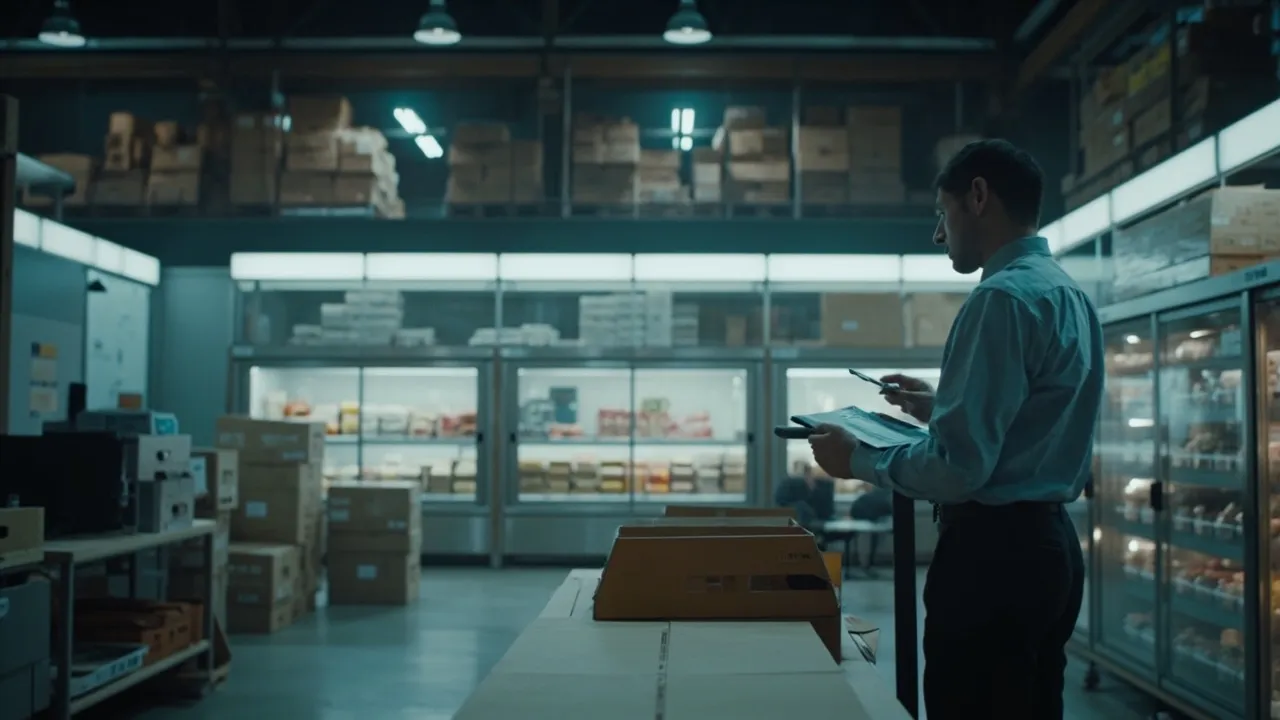
Gruyère Production Cuts Turn Tariffs Into a Cold-Chain Allocation Problem

A tariff looks like a finance problem until production falls. Then it becomes a logistics allocation problem: which orders receive scarce product, which refrigerated departures still make economic sense, and how long can inventory wait without damaging quality or margin?
That is now the practical question facing Swiss Gruyère exporters. Reuters reported that the U.S. tariff on Gruyère rose from 10% in 2025 to 12.5% in 2026. With demand weakening in an important export market, the producers’ association reduced production by 5% to defend prices and began looking for sales elsewhere.
Those figures should change more than the commercial forecast. A 5% production cut does not flow evenly through a cold chain. It changes available lots, consolidation patterns, delivery frequency, aging profiles, and the economics of every refrigerated shipment.
A Production Quota Rewrites the Transport Plan
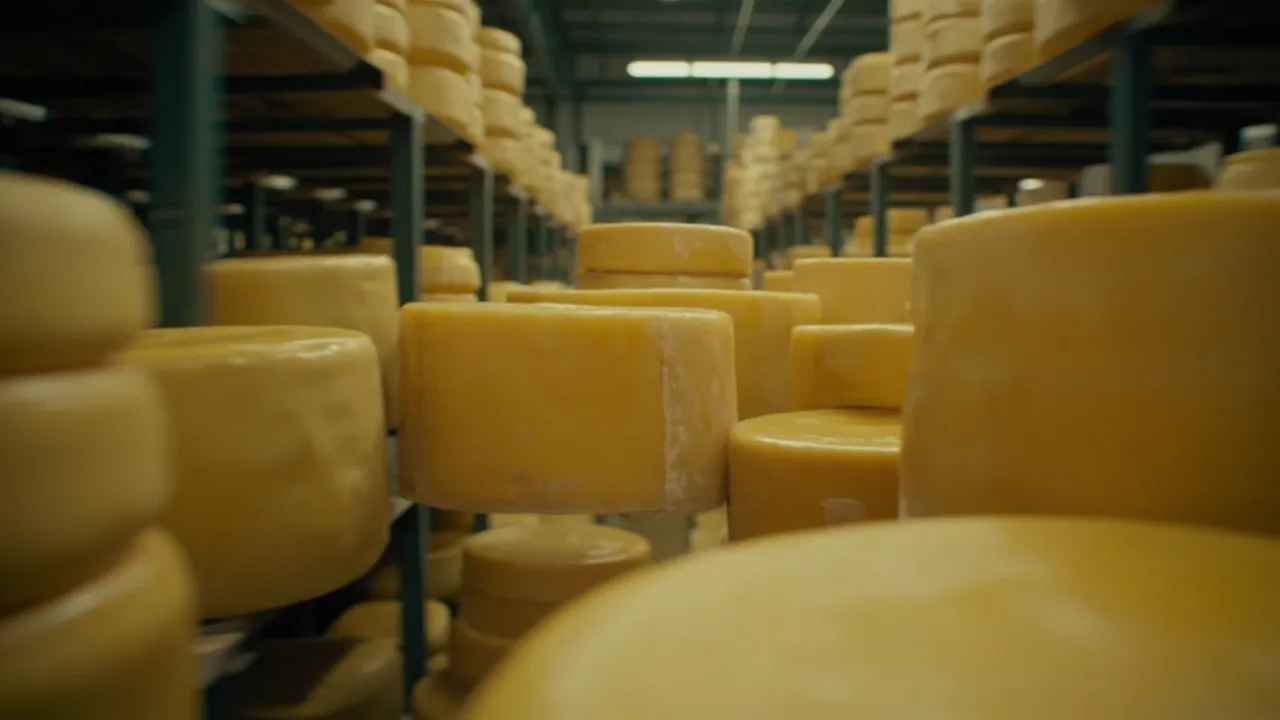
Gruyère is not interchangeable factory output. Cheese wheels mature over time, and export orders may specify age, format, certification, destination, and delivery windows. When the production pool shrinks, planners have fewer compatible lots with which to build orders.
That creates four immediate logistics effects:
- Lower consolidation density: Less compatible volume may be available for a scheduled departure, raising cold-chain cost per kilogram.
- Longer order queues: Planners may hold an order for the next sailing or departure to improve utilization, consuming shelf-life and customer lead-time buffers.
- More fragmented inventory: Scarce lots can be split among markets, leaving residual quantities that are expensive to move or difficult to match to future orders.
- Changed delivery frequency: Weekly deliveries may become biweekly, reducing transport cost but increasing importer inventory and service risk.
Capacity compounds the problem. Food Logistics has reported that temperature-controlled LTL carriers represent only about 5% to 10% of overall U.S. capacity. An exporter cannot assume that a smaller shipment will always find an economical refrigerated alternative after losing its original consolidation plan.
Allocate on Landed Margin, Not Revenue
When supply is constrained, allocating product to the largest order or highest invoice value can destroy margin. Each candidate order needs a landed-margin calculation at the lot and shipment level.
Start with net sales value, then subtract:
- The allocated product and packaging cost
- The applicable 12.5% U.S. tariff and customs charges
- Origin handling, export documentation, and inspection costs
- Refrigerated linehaul, fuel, security, and accessorial charges
- Destination handling and final-mile delivery
- Expected spoilage, rejection, delay, and temperature-excursion cost
- Inventory carrying cost for the planned waiting and transit period
The useful decision is not simply whether an order remains profitable. It is how much contribution margin the order produces per scarce unit and per constrained logistics resource.
Allocation score = expected landed contribution margin ÷ kilograms of quota product consumed.
Planners can add a second measure—contribution margin per reefer pallet position—when transport capacity is tighter than product. An order should clear both a minimum landed-margin threshold and any service commitments before receiving inventory.
This rule exposes counterintuitive outcomes. A smaller European order with short transit, dense consolidation, and no new tariff may outrank a larger U.S. order. Yet a U.S. customer with reliable volume, full-pallet quantities, and low destination cost may still outperform an opportunistic nearby buyer. Geography alone is not the answer; shipment economics are.
Shelf Life and Aging Must Stay in the Equation
Age can create value in cheese, but time is not free. Finished inventory occupies controlled space, ties up working capital, and approaches customer-specific remaining-life limits. Holding an order to fill a reefer can improve freight utilization while simultaneously reducing its commercial value.
The allocation engine therefore needs a time-adjusted cost. For every planned ship date, calculate storage cost, financing cost, expected price effect, and the probability that the lot will miss a customer’s remaining-life requirement. Use the earliest feasible ship date as the baseline, then compare the savings from consolidation with the cost of waiting.
Temperature evidence matters throughout that delay. Food Logistics notes that combining location, temperature, equipment-performance, and logistics data supports end-to-end cold-chain visibility. The stakes are substantial: another Food Logistics report cites roughly 1.3 billion tons of food wasted annually and says supply-chain optimization could address approximately half of it. Those global numbers are broader than cheese exports, but they underline why product loss belongs in a landed-margin model rather than in a separate quality report.
Build a Shipment-Level Allocation Record
A defensible allocation decision needs more than a spreadsheet snapshot. For each shipment, retain:
- Production lot, maturation date, quantity, and specification
- Customer order, destination, requested date, and service priority
- Tariff rate, customs value, currency assumption, and duty estimate
- Route, mode, carrier, temperature range, and planned departure
- Consolidation utilization and cold-chain cost per kilogram
- Expected landed contribution margin and allocation score
- Actual temperature events, delivered quantity, charges, and margin
- Reason code for approval, deferral, substitution, or rejection
Reason codes are crucial. “Low margin after tariff,” “insufficient compatible lot,” “cold-chain capacity unavailable,” and “shelf-life threshold” distinguish commercial constraints from operational ones. Over time, that history shows whether the 5% production cut is preserving price or merely shifting cost into storage, partial loads, and missed service.
Manage the Quota as a Rolling Decision
Allocation should be refreshed whenever production availability, tariff treatment, freight cost, exchange rates, or customer demand changes. A weekly review can rank open orders against available lots and committed refrigerated capacity. Planners should also test scenarios: consolidate for seven more days, divert volume to another market, adjust delivery frequency, or accept a lower margin to protect a strategic account.
CXTMS can connect those choices to the shipment record, preserving the tariff assumption, lot allocation, transport plan, temperature evidence, and final landed cost in one operational trail. That gives commercial, logistics, and finance teams the same answer when they ask why scarce inventory went to a particular customer—and whether the decision paid off.
When tariffs squeeze demand and producers cut output, the winning response is not simply to ship less. It is to allocate every kilogram against its true cold-chain economics.
Request a CXTMS demo to see how shipment-level cost, allocation, and exception data can support smarter food-export decisions.