Supply Chain Technology Buyers Need Proof of Orchestration, Not Another Tool List


Supply chain technology buyers are not short on options. They are short on proof.
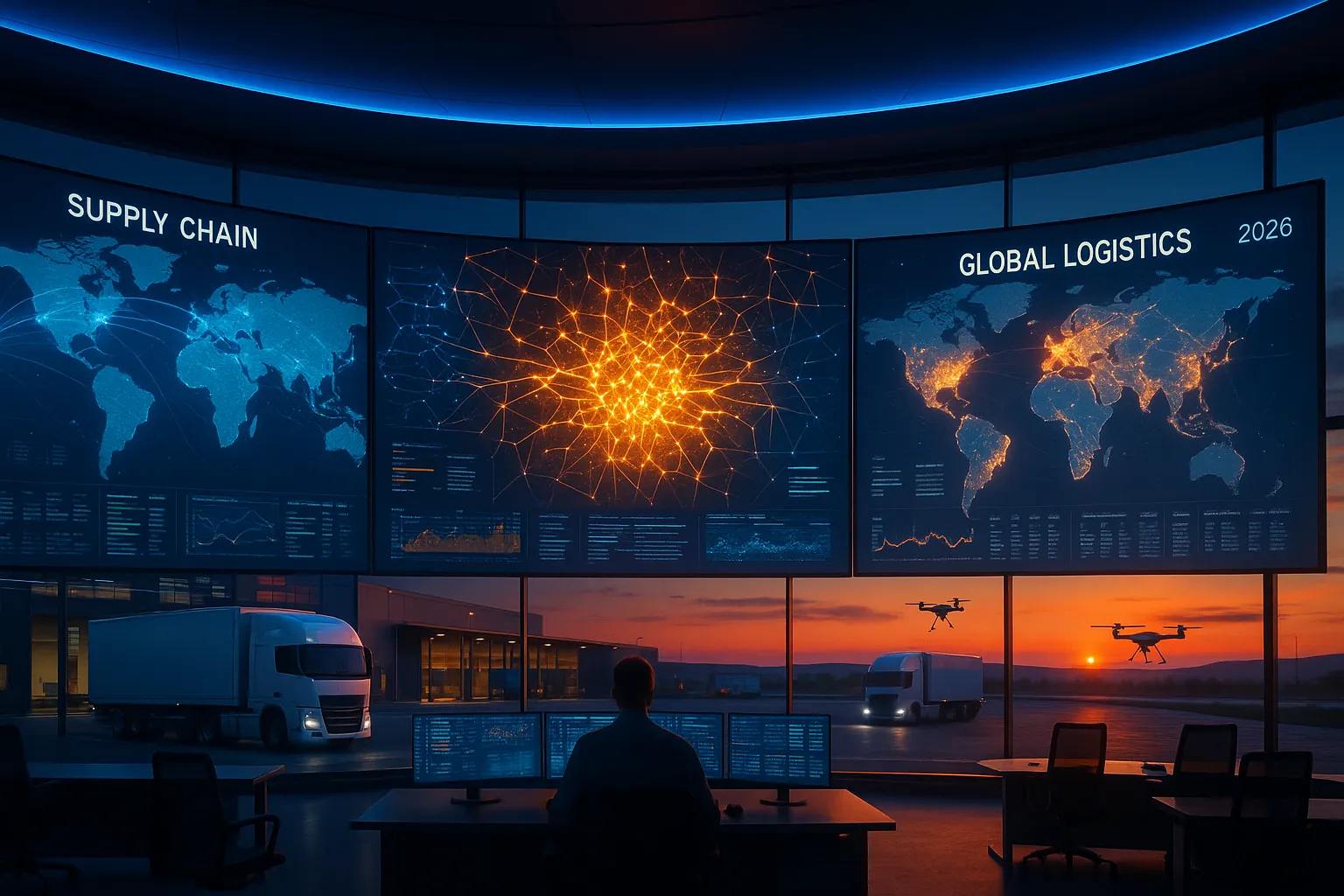
Inbound Logistics' 2026 Top 100 Logistics & Supply Chain Technology Providers makes the point clearly. The list spans established Transportation Management Systems and Warehouse Management Systems, plus newer offerings in AI, robotics, freight audit and payment, rate management, decision intelligence, multimodal visibility, and warehouse orchestration. That breadth is useful, but it also exposes the buyer's real problem: most logistics teams do not fail because they cannot find another capable tool. They fail because capable tools do not automatically coordinate the work.
A TMS can tender freight. A WMS can release orders. A rate engine can compare cost. A visibility tool can flag a delay. A freight audit platform can catch invoice variance. An AI layer can recommend action. The hard part is making those systems agree on what happened, who owns the next move, what financial exposure changed, and whether the customer promise is still valid.
That is why the 2026 software-selection conversation should move from feature lists to orchestration proof.
The technology stack is widening
The Inbound Logistics list is a useful market snapshot because it shows how broad the operating stack has become. Examples in the provider profiles include dynamic routing, freight audit and payment, rate management, warehouse capacity management, logistics event management, multimodal transportation management, carrier API connectivity, ERP integration, load consolidation, and automated audit trails from order to invoice.
That is a serious toolkit. It also creates a governance challenge.
When every platform owns a slice of the workflow, the buyer has to ask where the operational truth lives. If the warehouse changes the release sequence, does transportation see the new cutoff? If a carrier rejects a tender, does customer service see delivery risk before the customer calls? If an invoice does not match the contract, does the dispute connect back to the shipment events that caused the accessorial?
Modern Materials Handling's coverage of Gartner's 2026 supply chain technology trends reinforces that direction. Gartner highlighted eight technologies across autonomy and agency, specialization and intelligence, and trust and governance, including agentic AI, collaborative multiagent systems, domain-specific language models, product provenance, and decision governance. The key line for buyers is not "AI is coming." It is that leaders must make advanced technologies work together to deliver measurable value and resilience.
That is orchestration language, even when vendors use different labels.
Visibility is not enough
The last decade trained buyers to ask for visibility. That was reasonable. Logistics teams needed to know where orders, containers, trucks, inventory, and invoices stood.
But visibility is no longer the finish line. Inbound Logistics' recent article on six technologies reshaping logistics execution argues that leading organizations are moving from digitization and tech implementation toward AI integration and connected execution. It highlights robotics, digital twins, IoT, blockchain, agentic AI, green logistics, edge computing, and 5G, but the practical takeaway is sharper: success depends on creating an ecosystem powered by process intelligence, not buying one technology in isolation.
That matters because logistics exceptions are cross-functional by nature. A late inbound trailer may change receiving labor, dock appointments, inventory allocation, outbound consolidation, customer promise dates, detention exposure, and invoice accruals. If each system sees only its own piece, the company still runs on meetings, spreadsheets, screenshots, and urgent messages.
Visibility tells teams that the trailer is late. Orchestration tells them what to do next.
The proof checklist
Buyers should still evaluate features, security, pricing, implementation effort, and user experience. But those checks are table stakes. The more useful 2026 test is whether a provider can prove orchestration in the workflows that actually cost money.
Start with integration ownership. A vendor should be able to name the systems it connects with, the data objects it owns, the APIs or EDI flows it supports, and what happens when an integration fails. "We integrate with everything" is not proof. A mapped order-to-invoice flow is proof.
Then test event taxonomy. Transportation, warehouse, carrier, customer, and finance systems often use different names for the same milestone. Buyers should ask how the platform normalizes pickup, departure, arrival, delivery, hold, exception, and invoice events across modes and partners.
Data latency is next. An exception that arrives four hours late is often just a historical record. Buyers should measure the delay between a carrier event, system ingestion, workflow trigger, user notification, and customer-facing update.
Exception workflow is the core test. Who owns a missed appointment? What rule decides whether it is monitored, escalated, retendered, rebooked, or sent to the customer? Can the workflow branch by account, lane, service level, cargo type, margin, or compliance risk?
Financial audit trail belongs in the same conversation. A routing change, accessorial dispute, detention event, temperature excursion, or missed delivery promise should connect to cost and revenue impact. If operations and finance cannot trace the same shipment story, the software is not orchestrating the business. It is just reporting pieces of it.
User adoption is another proof point. Orchestration fails when users work around the system because tasks are unclear, alerts are noisy, or data is unreliable. Each role should see the decision it needs, not a generic command center.
Finally, demand a measurable operating outcome. Faster tender acceptance, lower accessorial leakage, shorter exception response time, cleaner invoice approval, fewer customer status calls, improved on-time performance, or reduced manual rekeying all count. Vendor-category breadth does not.
Why transportation is the proving ground
Transportation is where technology promises hit physical reality. Orders become freight. Warehouse plans meet carrier capacity. Customer commitments meet weather, appointments, docks, documents, and rates. Invoices reveal whether the plan actually held.
That makes the TMS a natural orchestration layer, especially for freight forwarders and logistics companies serving multiple customers, modes, carriers, and geographies. The system cannot just book shipments. It has to preserve the execution record: rates, tenders, milestones, documents, exceptions, decisions, communications, charges, and approvals.
CXTMS is built around that operating reality. It gives logistics teams a transportation execution layer where shipment events, carrier updates, customer requirements, documents, exceptions, and billing context stay connected. The value is not another screen. The value is a cleaner record of what happened and a faster path to the next right action.
For buyers evaluating supply chain technology in 2026, the question is simple: can the platform prove orchestration when a real shipment changes, or does it only look strong in a demo?
If your team is ready to turn transportation data into auditable execution, schedule a CXTMS demo and see how connected freight workflows reduce the gap between visibility and action.