Nuclear Supply Chain Funding Will Test Long-Lead Logistics Before Construction Starts

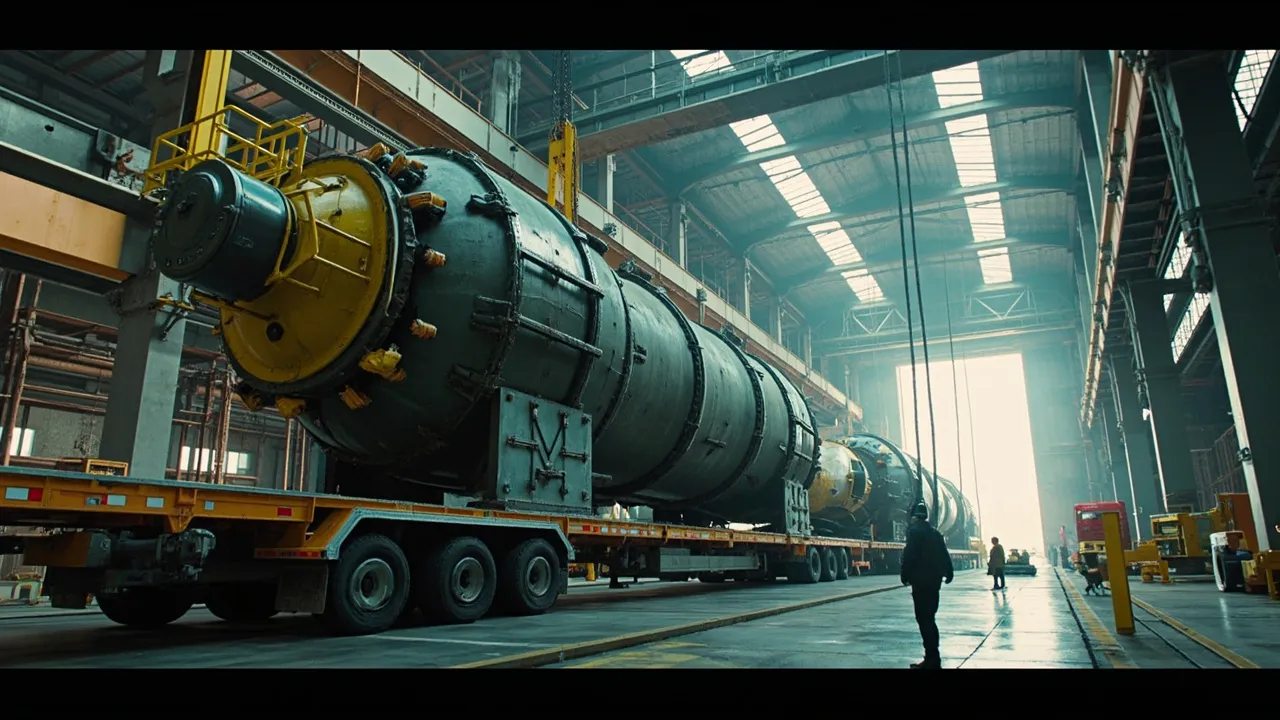
The newest nuclear supply chain story is not really about reactors. It is about whether project logistics teams can control the critical path before the first heavy component ever moves.
The signal is large enough to matter. Inbound Logistics reports that the U.S. Department of Energy is earmarking $17.5 billion in low-interest loans to strengthen the front end of the nuclear power pipeline. The funding is aimed at long-lead Tier-1 components, including reactor pressure vessels, steam generators, and high-power coolant pumps.
That is not ordinary procurement. Those components depend on specialized forging capacity, strict quality systems, technical documentation, and manufacturing slots that can stretch years into the future. By the time a pressure vessel is ready for transport, many of the logistics risks have already been locked in.
The bottleneck starts at purchase order
Inbound Logistics says the DOE funding will be distributed across five selected projects structured as special purpose vehicles between utilities and Westinghouse. Each SPV must contribute $1 billion in private capital into the procurement pipeline, and all five projects plan to deploy the Westinghouse AP1000 reactor design.
That structure matters because it treats procurement as schedule insurance. The article reports that EDF Director Gregory Beard expects early financing of heavy components to compress commercial operation timelines by up to three years. The goal is to place orders early enough to secure manufacturing capacity, stabilize component cost, and avoid the stop-start procurement patterns that have damaged past megaprojects.
Project logistics teams should read that as a change in ownership. If the project waits until construction is approved and delivery windows are visible, the transportation team is already late. A pressure vessel may require supplier qualification, route surveys, bridge studies, heavy-haul permits, specialized trailers, crane availability, laydown space, weather windows, and insurance documentation. None of that begins cleanly if purchase orders, supplier milestones, and site readiness data are scattered across inboxes.
Vogtle is the warning label
The DOE program is clearly designed around painful experience. Inbound Logistics notes that Southern Company's Plant Vogtle expansion in Georgia, which brought two AP1000 units online in 2023 and 2024, slipped seven years behind schedule and ran $17 billion over budget.
Not every delay in a nuclear build is a freight delay. But freight-sensitive failures tend to compound. A design change can alter the component specification. A supplier delay can consume the construction buffer. A missed fabrication milestone can collide with vessel booking, inland transport permits, or crane availability. A site that is not ready to receive an oversized component can force storage, rehandling, demurrage, and resequencing.
The highest-risk moves are often the least forgiving. A project cargo shipment may have only a few practical route options, months of permit work, and a receiving pad, lifting plan, safety zone, and inspection team that must be ready at the same time. If the component arrives before the site is ready, the project pays. If it arrives late, the project pays.
Capital cost changes inventory behavior
The nuclear funding announcement also lands in a manufacturing environment where capital, inventory, and supply chain flexibility are under pressure. In separate coverage, Supply Chain Dive reported that inflation accelerated to 4.2% year over year in May, while the Federal Reserve kept interest rates unchanged at its latest meeting.
That combination leaves manufacturers in an awkward place. They still need to invest, but the cost of holding the wrong inventory, buying too early, or waiting too long is more visible. Supply Chain Dive also notes that manufacturers are paying closer attention to inventory placement and the total cost of inventory across the network, not simply trying to reduce stock levels everywhere.
That is exactly the tradeoff nuclear component funding is trying to reshape. Ordering early can reduce schedule risk, but it creates its own logistics questions. Where will components be staged if construction slips? Who owns storage condition monitoring? What happens if a supplier finishes before permits, site work, or transport assets are ready?
The project-logistics control tower has to move upstream
The practical answer is not to give logistics teams a dashboard after the cargo leaves the supplier. The control tower has to move upstream into procurement, engineering, supplier management, and site readiness.
A strong long-lead logistics record should connect the purchase order, supplier milestones, drawing release, inspection hold points, fabrication progress, packaging requirements, transport constraints, route feasibility, permit status, carrier capacity, staging location, and receiving-site readiness.
That record should also manage exceptions before they become expensive. If a forging slot moves, the system should show which transport windows and construction milestones are at risk. If a site readiness date slips, the system should surface storage needs, rehandling exposure, and custody obligations while there is still time to adjust.
Nuclear is a preview of other industrial supply chains
Inbound Logistics argues that the DOE's procurement-first model could become a template for other capital-intensive sectors such as grid-scale energy storage, offshore wind, critical mineral refining, transmission lines, chip plants, and domestic mining projects.
The same bottleneck pattern appears whenever a project depends on scarce suppliers, specialized equipment, constrained routes, and expensive site sequencing. The cargo may be a transformer, turbine, reactor component, semiconductor tool, mining module, or transmission structure. The operating problem is familiar: small delays early in the supply chain can become massive delays at the job site.
Supply Chain Dive's broader 2026 risk outlook also points to a year shaped by material constraints, operational cost pressure, logistics reliability questions, and trade uncertainty. Those pressures make long-lead planning more important, not less. When capacity, capital, and supplier reliability are all under strain, a project cannot afford to discover logistics dependencies after fabrication is complete.
CXTMS turns long-lead risk into managed milestones
Nuclear supply chain funding may reduce one part of the problem by giving utilities and suppliers earlier procurement capital. It does not remove the operating burden. Someone still has to coordinate suppliers, milestone dates, documents, permits, carriers, storage plans, inspections, site readiness, and exceptions across years of execution.
That is where transportation management needs to operate above the shipment level. CXTMS helps logistics teams connect purchase-order visibility, project cargo milestones, carrier workflows, document controls, exception escalation, and customer-facing status in one operating layer.
The companies that win the next wave of capital-project freight will know which component is at risk six months early, which milestone is slipping, which permit needs attention, and which logistics decision protects the construction schedule.
If your long-lead freight still lives across spreadsheets, email threads, and disconnected supplier updates, schedule a CXTMS demo to see how project logistics can move with better visibility before the cargo ever leaves the supplier.