Dubai South’s E-Commerce Warehouse Growth Shows Gulf Fulfillment Is Becoming Regional Infrastructure

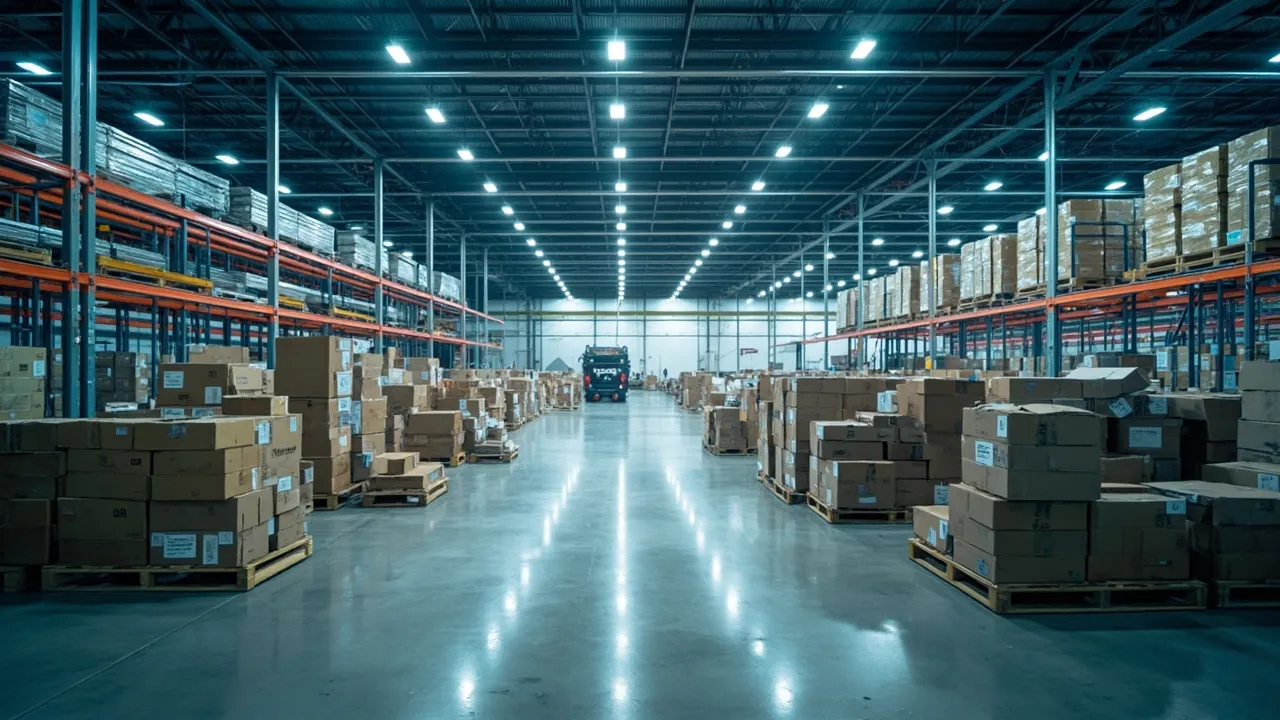
Dubai South is starting to look less like a real estate story and more like a regional operating system for e-commerce logistics. The latest signal is CEVA Logistics’ new warehouse in the Dubai South Free Zone, reported by Inbound Logistics as a nearly 250,000-square-foot facility designed for e-commerce customers and capable of handling more than 30,000 units per day. That is not just another fulfillment center opening. It is a marker that Gulf distribution is moving from country-by-country stock positioning toward regional infrastructure built around inventory pooling, customs optionality, and faster cross-border service.
The numbers matter because e-commerce fulfillment capacity only becomes strategic when it can absorb volatility. A site that can process more than 30,000 units per day gives brands room to handle promotional spikes, marketplace demand swings, and cross-border order flows without rebuilding the network every season. In a region where consumers may expect fast delivery in Dubai, Abu Dhabi, Riyadh, Doha, Manama, and Muscat, the question is no longer whether a company has a warehouse in the Middle East. The sharper question is whether that warehouse can act as a control point for the whole Gulf.
Why Dubai South Is Becoming A Fulfillment Platform
The location is the point. Dubai South sits around the Al Maktoum International Airport ecosystem and the broader Jebel Ali/Dubai logistics corridor, giving operators access to air cargo, ocean containers, bonded-zone services, and highway distribution in one operating geography. That combination is exactly what e-commerce networks need when order profiles are unpredictable: inbound replenishment can arrive by sea for cost, urgent stock can move by air, and outbound parcel or pallet flows can be staged for multiple Gulf markets.
Inbound Logistics’ report on the CEVA site places the facility inside an emerging logistics hub for the United Arab Emirates and the wider Gulf Cooperation Council region. That framing is important. Gulf fulfillment is not simply about serving one dense city. It is about using a high-capability node to orchestrate inventory across markets with different demand curves, customs requirements, payment behaviors, and last-mile economics.
Market data supports the shift. Mordor Intelligence estimates the United Arab Emirates e-commerce market at USD 12.30 billion in 2026 and forecasts it will reach USD 21.01 billion by 2031, an 11.29% CAGR. It also reports that smartphones accounted for 78.67% of UAE e-commerce transactions in 2025 and that digital wallets held 43.92% of payments. Those statistics point to a mobile-first, fast-converting market where demand can appear quickly and where fulfillment networks need to react with the same speed as the front-end shopping experience.
That creates a mismatch for older distribution models. A retailer cannot promise app-speed commerce while running inventory through slow regional replenishment loops, manual customs handoffs, and disconnected parcel carriers. The warehouse becomes the physical counterpart to the digital checkout: if the order experience is instant, the fulfillment network has to be engineered for compression.
From National Warehouses To Zone-Based Service Design
The old playbook was straightforward: put stock in each country, appoint local partners, and accept that service levels would vary by market. That model can still work for slow-moving goods, but it is expensive and rigid for e-commerce. Duplicate safety stock increases working capital, small-country warehouses struggle to reach automation thresholds, and fragmented operations make it harder to see true available-to-promise inventory.
A Dubai South-style hub changes the design logic. Instead of asking, “Which country owns this inventory?” logistics teams can ask, “Which service zone should this inventory support?” Fast movers can sit in the central Gulf hub. Market-specific products can be forward-positioned closer to local demand. Returns can be consolidated into one inspection and disposition process. Promotional inventory can be allocated dynamically as demand signals come in.
That is where transportation management becomes decisive. Regional fulfillment only works if orders, carriers, customs documents, and delivery promises are coordinated in one execution layer. A warehouse may be able to process 30,000 units per day, but the real operating constraint often appears downstream: missed carrier cutoffs, incomplete commercial invoices, inconsistent delivery-area data, or no clear rule for when to use express air versus deferred road movement.
For freight forwarders and 3PLs, this is the commercial opening. The customer is not just buying storage. They are buying a regional service architecture. That includes inbound container planning, bonded inventory visibility, cross-dock decisions, parcel injection, customs documentation, returns routing, and exception management. The more markets a hub serves, the more valuable the orchestration layer becomes.
Gulf Growth Raises The Bar For Inventory And Customs Control
The wider GCC logistics market is also evolving in ways that favor hub-based fulfillment. Mordor Intelligence identifies GCC Customs Union harmonization as a driver that can reduce cross-border clearance times, while wholesale and retail trade is projected as the fastest-growing end-user segment at a 7.43% CAGR. It also notes that courier, express, and parcel demand is gaining from cross-border e-commerce, dark stores, and omnichannel fulfillment.
Those trends make customs and inventory control inseparable. If goods are positioned in Dubai for regional distribution, logistics teams need to know more than what is physically on the shelf. They need status by customs regime, country eligibility, SKU restrictions, documentation readiness, and carrier lane performance. A product that is available in the warehouse but not cleared for the destination market is not truly available to promise.
This is where many fast-growing e-commerce operations stumble. They invest in warehouse capacity first and operational intelligence later. The result is a shiny fulfillment center that still relies on spreadsheets, email approvals, and manual carrier selection. That may survive at low volume. It breaks when order velocity, SKU count, return volume, and cross-border complexity all rise together.
What Operators Should Do Now
Companies building Gulf fulfillment strategies should treat Dubai South and similar hubs as network assets, not isolated warehouses. Three moves matter.
First, define service zones before placing inventory. Dubai same-day, UAE next-day, Saudi two-to-three-day, and wider GCC deferred delivery are different promises with different cost structures. Inventory rules should reflect those promises.
Second, connect warehouse events to transportation decisions. Pick completion, cartonization, customs document generation, carrier cutoff, and delivery exception data should flow into the same operational view. Fragmented visibility is the enemy of regional fulfillment.
Third, measure regional performance by landed service cost, not warehouse cost alone. A cheaper storage location can become expensive if it increases failed deliveries, customs delays, expedited freight, or excess safety stock.
CEVA’s Dubai South facility is one example, but the signal is broader: Gulf e-commerce logistics is professionalizing quickly. The winners will not simply be the companies with the most square footage. They will be the ones that turn fulfillment hubs into coordinated regional networks.
CXTMS helps freight forwarders and logistics teams manage exactly that kind of complexity: multimodal execution, documentation, carrier coordination, and customer visibility in one transportation management platform. If your Gulf distribution model is outgrowing spreadsheets and disconnected systems, schedule a CXTMS demo and see how a modern TMS can keep the network moving.