Producer Prices Hit a Three-Year High. Transportation Budgets Need Faster Cost Sensing.

Annual transportation budgets were never built for a cost curve this twitchy.
Producer prices surged in April, and the logistics line item was right in the blast radius. According to Supply Chain Dive, wholesale prices rose 1.4% in April and 6% year over year, the largest 12-month increase since December 2022. The same report cited Bureau of Labor Statistics data showing transportation and warehousing costs up 5% in April, while wholesale energy prices jumped 7.8%.
That is not a rounding error. It is a warning that freight, storage, and fuel assumptions can go stale faster than the monthly finance close.
For logistics teams, the problem is not simply that costs are rising. Rising costs are familiar. The bigger problem is speed. A shipper can negotiate a careful annual routing guide in January, approve a warehousing budget in February, and still be operating on bad assumptions by April if fuel, carrier capacity, detention exposure, storage demand, or energy-linked surcharges move abruptly.
Budget cycles are too slow for logistics reality
Most transportation budgets still behave like the year will unfold in tidy quarters. Freight does not cooperate.
A transportation plan may set expected cost per mile, fuel surcharge exposure, warehousing rates, accessorial assumptions, and customer surcharge rules once or twice a year. That works when movement is gradual. It breaks when producer prices, energy costs, and capacity signals shift in weeks.
The April data shows why. A 5% monthly increase in transportation and warehousing costs can distort margin forecasts quickly, especially for companies with heavy outbound networks, imported inventory, temperature-controlled distribution, or long-haul truckload exposure. A 7.8% jump in wholesale energy prices does not stay politely inside the fuel budget. It appears in surcharges, parcel linehaul, refrigerated distribution, drayage, warehouse utilities, packaging inputs, and labor expectations.
Logistics Management's truckload coverage added another useful signal: fuel was driving April spot and contract rate movement even as volumes were mixed. The publication reported that April national average spot rates reached $2.67 per mile for van, $3.11 for reefer, and $3.46 for flatbed, with fuel surcharges hitting their highest levels since July 2022. Van fuel surcharges rose to $0.71 per mile, reefer to $0.77, and flatbed to $0.85.
That is the uncomfortable part: costs can rise even when demand does not look explosive. If finance waits for a classic demand-led freight recovery before revising assumptions, it may miss the cost-led squeeze already happening.
Cost sensing beats cost reporting
A monthly budget variance report tells leaders what already hurt. Cost sensing tells them where the hurt is forming.
The difference is operational. Cost reporting says, "Fuel spend was over budget last month." Cost sensing says, "Diesel-linked lanes are trending above tolerance, reefer exposure is widening, and two customer surcharge tables no longer cover actual landed cost."
That second version is the one logistics teams need now.
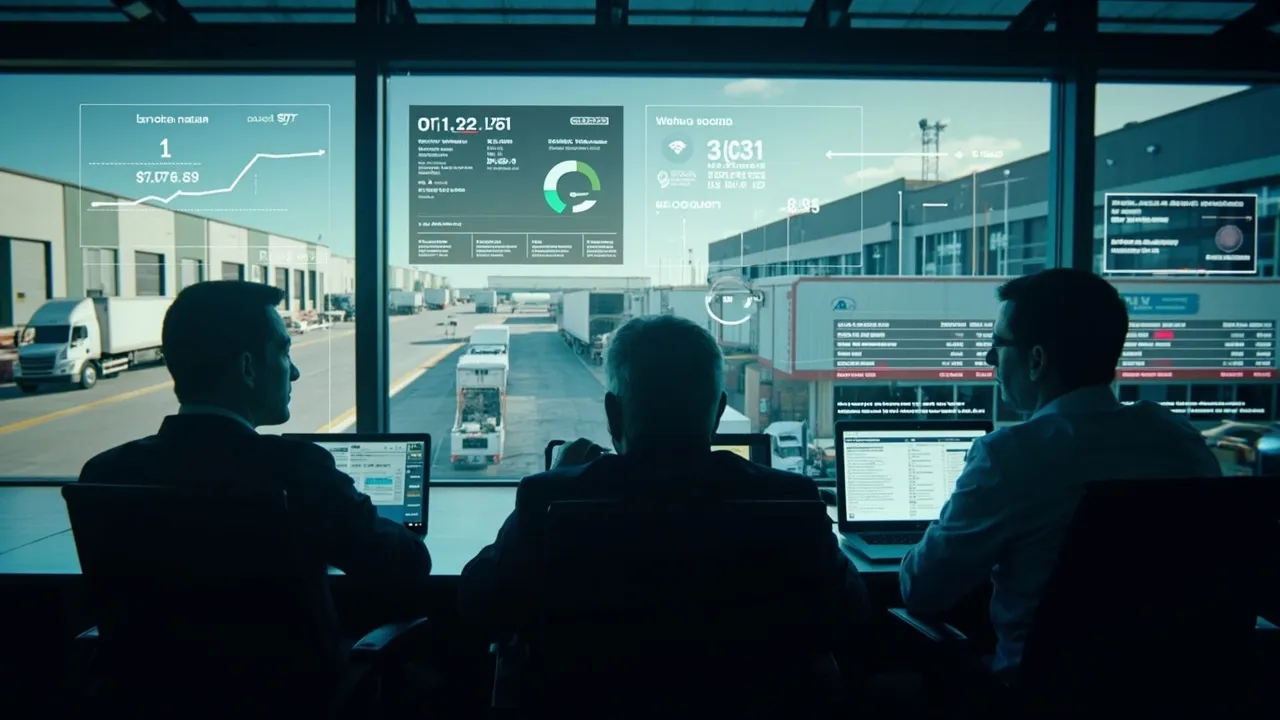
A useful cost-sensing dashboard should combine external market indicators with internal execution data. Producer price movement, diesel trends, spot-contract spreads, carrier acceptance, accessorial frequency, warehouse dwell time, and invoice exceptions all belong in the same conversation. Together, they show whether a cost spike is broad inflation, a routing problem, a surcharge mismatch, a carrier mix issue, or a customer-pricing gap.
The best dashboard is not the prettiest one. It is the one that forces a decision.
If a lane crosses a fuel-adjusted cost threshold, should planners shift volume, consolidate orders, change tender timing, or trigger a customer surcharge review? If warehousing costs climb, should inventory be repositioned or appointment discipline tightened? If accessorials are rising, is the problem carrier behavior, facility congestion, bad order data, or unrealistic delivery windows?
Cost sensing is valuable because it turns "prices are up" into "here are the three actions we should take this week."
Routing assumptions need live fuel logic
Fuel is where stale assumptions usually show first.
Many routing guides still treat fuel as a formula that runs quietly in the background. That is fine until the formula stops matching reality. When fuel surcharges move sharply, the cheapest contracted carrier on paper may no longer be the lowest-cost option on an all-in basis. A carrier with a slightly higher linehaul rate but better utilization, fewer accessorials, or more reliable pickup performance may protect margin better than the nominal low bidder.
That is especially important when market signals are mixed. Logistics Management reported that linehaul rates excluding fuel saw only modest gains for van and reefer, while fuel-related costs did much of the work in pushing rates higher. In other words, teams that only compare base rates are looking at the wrong cost picture.
Transportation management systems should make all-in cost visible before tendering, not after invoice audit. Planners need to see linehaul, fuel, expected accessorials, service risk, and historical exception cost together. Procurement needs the same view when deciding whether to reopen a mini-bid or update customer-facing surcharge logic.
Landed cost forecasting cannot be an accounting afterthought
Producer-price pressure also belongs in landed-cost forecasting.
For importers, distributors, and manufacturers, transportation and warehousing costs are part of product economics. If they move faster than pricing models, sales teams may quote customers using margins that no longer exist. A product can look profitable in the ERP and leak money in the freight file.
That is why PPI signals should feed commercial decisions, not just logistics dashboards. A landed-cost model should show how fuel, warehousing, accessorials, drayage, parcel, and inventory positioning affect product margin by customer, region, and channel. When transportation and warehousing costs rise 5% in a month, companies need to know which SKUs, lanes, and accounts are most exposed.
This is not about panicking every time a macroeconomic report lands. It is about building a faster feedback loop. If the cost environment normalizes, the model can relax. If pressure persists, leadership has evidence early enough to adjust pricing, service promises, routing policy, or inventory placement.
Margin protection is a logistics discipline
The practical playbook is straightforward.
First, refresh transportation budget assumptions more often than the annual bid cycle. Monthly is better than quarterly when energy and producer-price volatility are active.
Second, track all-in cost by lane, mode, customer, and carrier. Base rates alone are not enough when fuel and accessorials are doing the damage.
Third, connect freight execution to customer surcharge rules. If surcharge tables lag actual cost, margin leakage will hide inside apparently healthy revenue.
Fourth, review warehousing cost signals alongside transportation. Storage, handling, labor, energy, dwell time, and appointment failures can amplify each other.
Finally, create escalation triggers. A dashboard without thresholds is just expensive wallpaper. Decide what happens when a lane exceeds budget by 3%, fuel exposure crosses a set level, or accessorials rise for two consecutive weeks.
CXTMS helps logistics teams build that operating discipline into daily execution: shipment costs, routing decisions, carrier performance, exception history, and customer billing context in one workflow. When transportation budgets are under pressure, the winning teams are not the ones with the prettiest annual forecast. They are the ones that sense cost changes early and act before margin disappears.
Ready to turn freight cost volatility into faster decisions? Schedule a CXTMS demo and see how real-time transportation visibility can protect your landed cost, routing strategy, and customer margins.