Safer Truck Stops Are Becoming a Driver Retention Strategy, Not Just an Amenity Issue

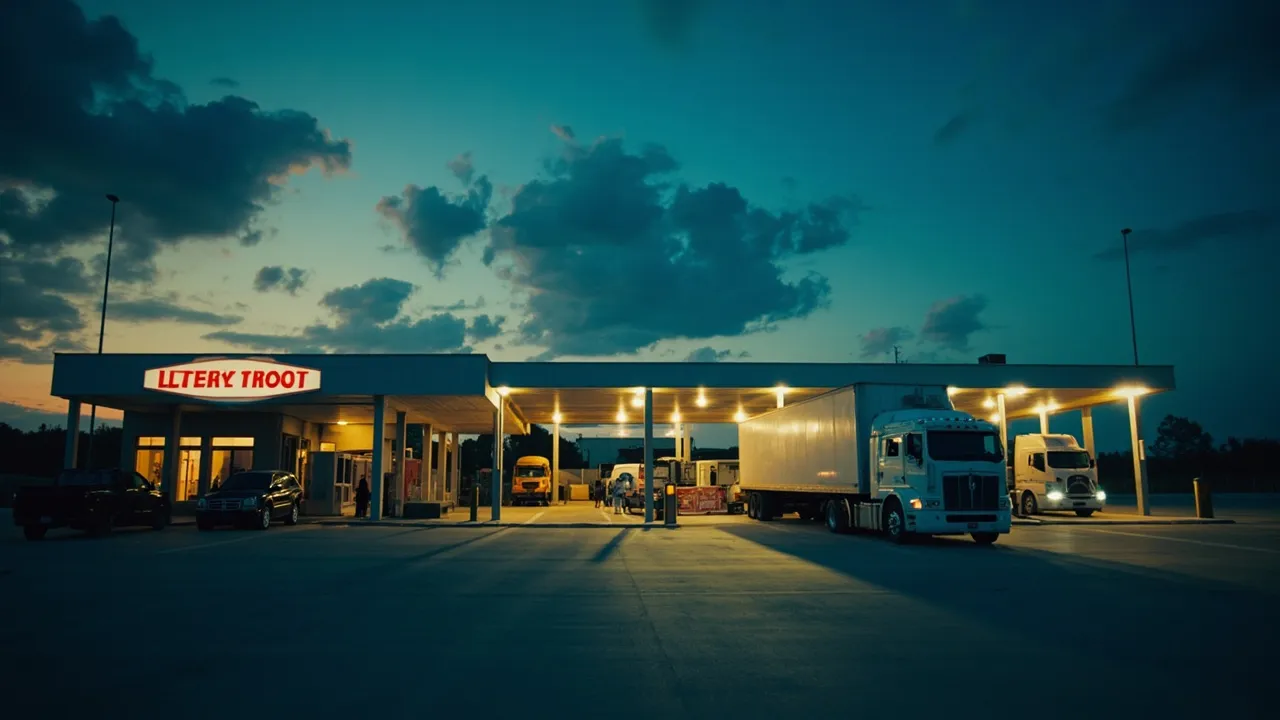
Truck stop safety used to be treated like a driver-comfort topic: important, but separate from routing guides, carrier scorecards, and shipper service metrics. That framing is now too soft. If a driver cannot reliably find safe parking, clean bathrooms, lighting, showers, laundry, maintenance help, and on-site security, the risk does not stay at the facility. It shows up in turnover, route refusal, delayed appointments, recruiting costs, and carrier capacity.
That matters even more for women truck drivers, who remain underrepresented in the driver workforce and face safety risks that are not theoretical. Inbound Logistics reported that roughly one in six women drivers experiences harassment or discrimination daily, citing ATRI research. Nearly a quarter have left the industry over personal safety concerns. Those numbers should land hard: a labor pool the industry badly needs is saying the operating environment itself is pushing people out.
The sharper takeaway is that safer truck stops are no longer just an amenity issue. They are a driver-retention strategy.
The safety data is operational data
Inbound Logistics’ reporting highlights several numbers freight teams should not bury in HR decks. Truck stops are the most common location for harassment incidents against women drivers, accounting for 23% to 30% of reported harassment incidents in the 2022 FMCSA Crime Prevention for Truckers Study. That was higher than cargo pickup and delivery points, at 15% to 17%, and fueling stations, at 9% to 11%.
The same article notes that women truck drivers report sexual harassment at more than twice the rate of non-minority men, while minority women are up to nine times more likely to report being physically harmed. About 42% of affected women do not report incidents at all because they believe reporting will not make a difference or because they feel they have no choice but to tolerate the conditions.
That underreporting is the part shippers and brokers should pay closest attention to. If the official safety record is only the visible portion of the problem, then carrier scorecards that rely only on crashes, claims, and late loads are missing a driver-level risk signal. A carrier can look stable on paper while its drivers are quietly avoiding certain routes, stops, or time windows because the facility network does not feel safe.
WIM and Trucker Path turned amenities into a framework
The Women In Motion Council and Trucker Path partnership gives the industry a useful structure. Their women-friendly truck stop criteria center on seven practical amenities: lighted parking, bathroom access, lounge areas, showers, laundry facilities, 24/7 maintenance, and on-site security. The first three recognized locations met all seven criteria and scored highest among app users.
This is not fancy. That is exactly why it matters.
Drivers are not asking for perks that sit outside freight execution. They are asking for the basic infrastructure required to do the job without unnecessary personal risk. Lighting reduces vulnerability in large lots. Bathroom access matters when hours-of-service rules and parking scarcity already constrain stop choices. Lounges, showers, and laundry affect multi-day over-the-road work. Maintenance access prevents small problems from becoming roadside failures. Security turns a parking decision into a risk-managed stop instead of a gamble.
The scale is also meaningful. Inbound Logistics reported that Trucker Path is used by more than one million professional drivers, more than 12,000 truck stops have listed at least one WIM amenity, and nearly 250 now offer all seven. The WIM section of the app has been accessed more than 64 million times. That usage says drivers are actively searching for safety signals before and during execution.
For logistics teams, that is the clue: if drivers are using safety data to choose stops, shippers should be using safety data to evaluate carrier operating quality.
Driver retention is a service-reliability metric
Driver retention has always affected service, but it is often discussed too generically. Better pay, better schedules, and better equipment matter. But the stop network also shapes whether a driver sees a lane as sustainable.
Women represented 9.5% of all professional drivers in the 2024-25 Women in Trucking Index, down from 12.1% the prior year, according to the same Inbound Logistics report. Women were 10.7% of student drivers and trainees in 2024, down from more than 15% in 2022. When participation declines while the broader trucking market continues to wrestle with capacity and compliance pressure, facility safety becomes part of the labor equation.
There is also a performance argument. ATRI’s research found women were safer drivers than men in every statistically significant category, with fewer crashes, convictions, and violations. Losing safer drivers because the road network feels hostile is not just unfair. It is operationally dumb.
Shippers do not control every truck stop. But they do influence lane design, appointment timing, facility dwell, preferred carrier selection, and how much pressure carriers face to make unrealistic transit plans. A route that depends on a driver reaching a poorly lit stop at 1 a.m. is not the same risk profile as one with safer parking options built into the plan.
Safety should move into carrier scorecards
Brokers and shippers should not turn truck stop safety into a vague “values” box. It should become a measurable carrier-management input.
Start with the carrier’s own policies. Does the carrier coach drivers on safe parking? Does dispatch help plan stops, or does it leave the burden entirely on the driver? Are drivers allowed to reject unsafe parking without penalty? Does the carrier track harassment reports, restroom access issues, and unsafe customer-site conditions? Are those incidents reviewed with the same seriousness as service failures?
Then add route-level visibility. Lanes should be reviewed for safe stopping options, especially long-haul routes, cross-border moves, high-theft corridors, remote delivery points, and time-sensitive freight that pushes drivers into late-night arrivals. If a lane repeatedly creates unsafe stop choices, that is not a driver problem. It is a network-design problem.
Finally, connect safety to compliance. FreightWaves’ Roadcheck 2026 coverage noted that the 72-hour event averages nearly 15 commercial vehicle inspections every minute and focuses on issues such as ELD falsification and cargo securement. Safety culture is not divisible.
What CXTMS users should measure
A modern TMS should help turn these signals into action. In CXTMS, logistics teams can build safer-carrier governance into the same operating layer that already manages rates, tenders, documents, exceptions, and performance.
Useful scorecard fields include safe-parking policy, driver escalation process, customer-site safety feedback, harassment-response protocol, route-planning support, detention by facility, after-hours appointment exposure, and compliance history. None replaces on-time pickup, cost, or claims. They explain why those metrics hold or break when the network gets stressed.
This is the bigger point: safer truck stops are not charity. They are infrastructure for a more reliable trucking workforce. If the industry wants more drivers, better retention, and safer capacity, it has to stop pretending the quality of a stop is separate from the quality of the freight move.
CXTMS helps brokers, forwarders, and shippers connect carrier performance, lane planning, compliance signals, and exception workflows in one place. If your team is ready to treat driver safety as an execution metric instead of a side conversation, schedule a CXTMS demo and see how better transportation data can support better freight decisions.