Lucid’s Supplier Issue Is a Reminder That EV Logistics Still Breaks at the Part Level

Electric vehicle logistics has a habit of looking modern from the outside and brutally old-fashioned at the constraint point. The vehicle may be software-defined, the factory may be automated, and the go-to-market story may be built around advanced mobility. But if one supplier part is late, wrong, or unavailable, the launch still breaks like any other manufacturing program.
Lucid just gave the industry a clean example. Reuters reported that a supplier-related issue disrupted deliveries of the Gravity SUV in February, limiting first-quarter sales and contributing to Lucid suspending its full-year forecast. The company had previously guided for 25,000 to 27,000 vehicles this year. Instead, it reported revenue of $282.5 million against analyst expectations of $440.4 million, according to LSEG data cited by Reuters.
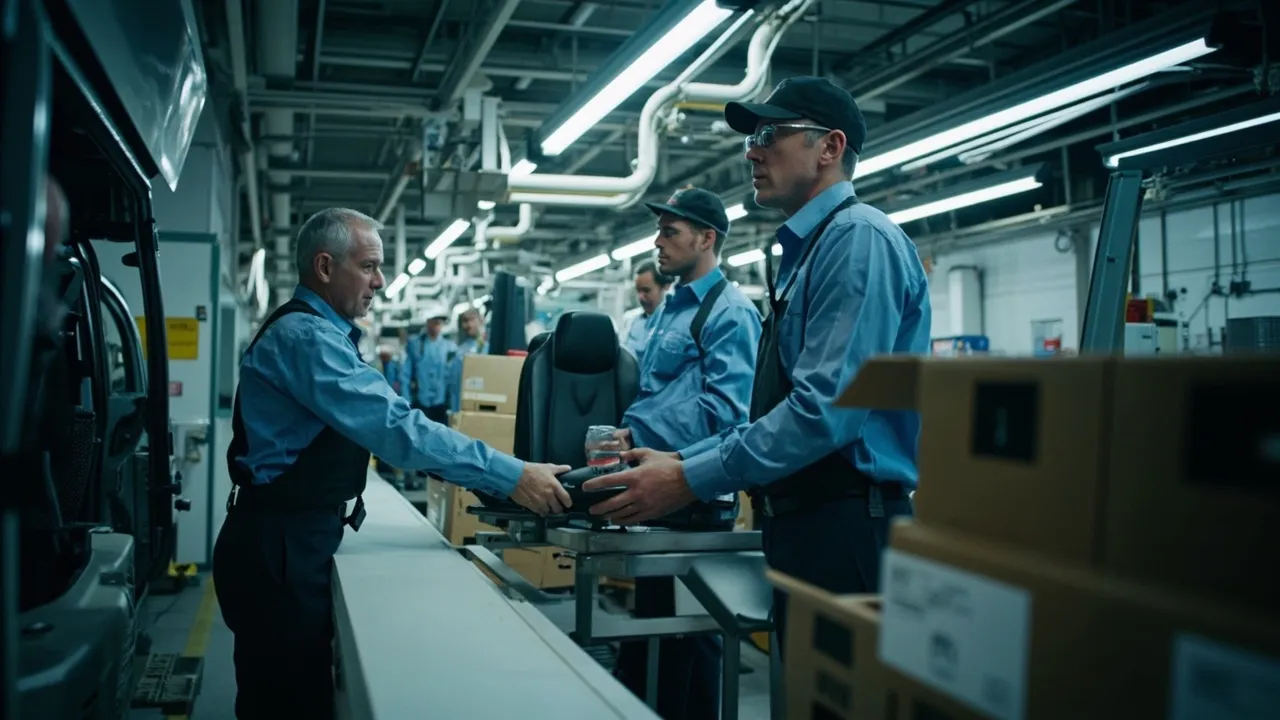
The operational detail matters more than the headline. Lucid produced 5,500 vehicles in the quarter, up about 149% from a year earlier, but delivered only 3,093 units. Reuters said the disruption involved a second-row seat supplier issue affecting Gravity SUVs. Lucid said the issue had been resolved, and March improved: North American order intake rose 144% from the prior month and deliveries increased 14% year over year.
That is the shape of part-level logistics risk. A single component problem does not stay neatly inside procurement. It moves into production sequencing, yard dwell, finished-vehicle delivery, revenue recognition, customer communication, and executive guidance.
EV launches are unforgiving because the network is still maturing
Automotive supply chains have always been sensitive to parts shortages, but EV launches intensify the problem. New models rely on fresh supplier tooling, immature demand signals, battery and electronics constraints, specialized packaging, and tight coordination between inbound logistics and production readiness. A late part can block a vehicle that is otherwise nearly complete.
That is especially painful during a launch ramp. Early production is not just about units; it is about proving that the supplier base, inbound network, plant schedule, quality process, and delivery promises can scale together. When one of those links slips, the company may still show production progress while deliveries lag.
Lucid’s numbers illustrate that difference. Producing 5,500 vehicles and delivering 3,093 is a flow issue. Inventory sits in the wrong state: built but not shippable, shippable but not complete, complete but waiting for inspection, or deliverable but delayed by downstream scheduling.
The lesson for logistics teams is simple: tracking the vehicle is too late. By the time a finished unit is stuck, the decisive signal may have occurred days or weeks earlier in a supplier milestone, ASN, quality hold, inbound appointment, packaging shortage, or premium freight decision.
Visibility has to move below the shipment level
Many control towers are designed around orders, loads, containers, trailers, or finished goods. That is useful, but it is not enough for automotive launch risk. A load can arrive on time and still fail the operation if the wrong component mix is inside it. A supplier can meet an aggregate shipment target while missing the exact part family needed for next week’s build sequence.
Part-level visibility means connecting transportation events to bill-of-material importance and production commitments. Which components are line-stoppers? Which supplier shipments feed constrained trims? Which inbound loads support high-priority customer deliveries? Which parts require quality validation before they can release to production? Which shortages trigger substitution, resequencing, or premium freight?
This is where the broader supply chain technology conversation is heading. Logistics Management’s 2026 technology roundtable argued that supply chain technology is moving from visibility to execution. The article highlighted AI and orchestration moving into high-frequency operational decisions such as transportation planning, supplier performance management, carrier selection, load consolidation, and real-time recommendations.
For automotive logistics, that shift is not optional. A dashboard that says a supplier is late is useful. A system that identifies which production commitments are exposed, recommends a reroute or expedite, alerts the right planner, updates the delivery risk, and preserves the audit trail is much more valuable.
Component scarcity is not going away
Lucid’s seat issue was specific, but the backdrop is broader. Supply Chain Dive reported that 2026 supply chains are being shaped by shortages, rising costs, and shifting trade dynamics, with companies redesigning global networks and carrying more inventory to absorb short-term shocks. The article cited J.P. Morgan Global Research’s expectation that the U.S. faces a refined copper deficit of 330,000 metric tons this year and an average copper price of $12,075 per metric ton.
That matters to EV programs because electric vehicles are highly exposed to electronics, metals, batteries, sensors, seats, wiring, thermal systems, and specialized components that may have long qualification cycles. When material markets tighten or suppliers struggle, the impact can surface as a very practical transportation problem: which part gets moved first, by which mode, to which plant, against which build plan?
Buffer inventory can help, but it is a blunt instrument. Too much inventory creates working-capital drag and hides weak signals. Too little inventory leaves the launch dependent on perfect supplier execution. The better answer is targeted resilience: know the critical parts, watch the supplier milestones, model inbound risk, and trigger contingency plans before the line or delivery schedule is exposed.
What transportation teams should change
First, classify parts by operational consequence. A delayed low-risk component should not compete with a launch-critical seat, battery-related part, or electronic module. Transportation priority should reflect production and revenue exposure, not just shipment age.
Second, connect inbound milestones to build plans. Purchase order dates, supplier confirmations, ASNs, pickup scans, border status, appointments, yard arrival, quality release, and line-side availability should feed one exception model. The goal is to see risk while there is still time to resequence, substitute, expedite, or communicate.
Third, make premium freight accountable. Expedites are sometimes the right call, especially during launch. But they should be tied to a specific shortage, supplier, part number, production commitment, and avoided impact. Otherwise, premium freight becomes a recurring tax.
Fourth, track recovery after the disruption. Lucid’s March rebound shows why recovery metrics matter. It is not enough to mark an issue resolved. Teams need to know how quickly orders, deliveries, inventory balance, carrier performance, and customer commitments normalized.
Why CXTMS belongs in the launch conversation
EV logistics does not fail only at the factory gate. It fails when supplier exceptions, transportation milestones, inventory status, production commitments, and delivery promises live in separate systems.
CXTMS helps logistics teams connect those signals in one transportation operating layer. That means planners can see which inbound issues matter, act on exceptions faster, coordinate carriers and suppliers, document decisions, and measure the cost and service impact of recovery actions.
The Lucid example is not just an EV story. It is a warning to every manufacturer running complex, launch-sensitive supply chains: if you cannot see risk at the part level, you are probably seeing it too late.
If your team needs tighter supplier, inbound, and transportation exception control, schedule a CXTMS demo. CXTMS helps turn part-level logistics risk into visible, manageable workflows before one component becomes a revenue problem.