Product Codes Used in Inventory Management: Why SKU Data Quality Is Becoming the New Warehouse Bottleneck

The product code used in inventory management used to feel like back-office plumbing. A buyer created an item, a warehouse printed labels, and operations worked around whatever naming convention had survived from the ERP implementation.
That era is over. In modern fulfillment, product codes are execution instructions. They tell robots which bin to retrieve, scanners whether a pick is valid, parcel systems which carton should ship, cold-chain teams which lot needs quarantine, and transportation teams whether the right freight was staged for the right order.
As warehouses add robotics, inventory audits, IoT sensors, and denser storage, bad SKU data is becoming a costly logistics bottleneck.
The core product codes warehouses actually use
A useful inventory-code strategy starts by separating identifiers that are often thrown together.
A SKU, or stock keeping unit, is the internal item code a company uses to plan, store, pick, replenish, and report inventory. A UPC identifies a retail trade item for point-of-sale and consumer packaging. A GTIN, managed under GS1 standards, is the broader global trade item number family used across trading partners.
Lot and batch numbers track production runs, expiration dates, recalls, and regulated inventory. Serial numbers identify one individual unit. Location codes identify the bin, rack, aisle, zone, dock door, or trailer position where inventory physically sits. License plate numbers, or LPNs, identify a pallet, tote, carton, or handling unit.
The distinction matters because automation depends on the relationship between these codes. A robot needs to know which SKU is allowed in which bin, which GTIN belongs to which pack size, which lot is eligible to ship, and which LPN is currently sitting in which location.
Automation makes dirty item masters visible
Warehouse automation is expanding quickly beyond mega-retailers. Supply Chain Dive reported that a 2025 MHI, Peerless Research Group, and The Robotics Group study found 48% of participating organizations were using robots in plants or warehouses in 2025, up from 23% three years earlier. The same coverage noted that robotics-as-a-service and software-as-a-service models are making automation more accessible to midsized operators.
That adoption curve raises the cost of sloppy product data. A human picker can sometimes recognize that two similar descriptions are really the same item. A robot, scanner, or warehouse execution system will follow the master data exactly. If the cube, pack hierarchy, or SKU-to-barcode relationship is wrong, a valid product can become an exception.
Inbound Logistics’ roundup of ecommerce fulfillment technology shows how tightly automation now depends on SKU structure. AutoStore FlexBins are described as expanding SKU coverage by supporting multiple bin heights and diverse product form factors. Exotec’s Skypod system can process up to 600 bins per hour at each workstation while matching orders with the right container. Those capabilities are powerful only if the item master tells the system what each product is, how it moves, and where it can be stored.
Inventory audits are moving from quarterly counts to continuous validation
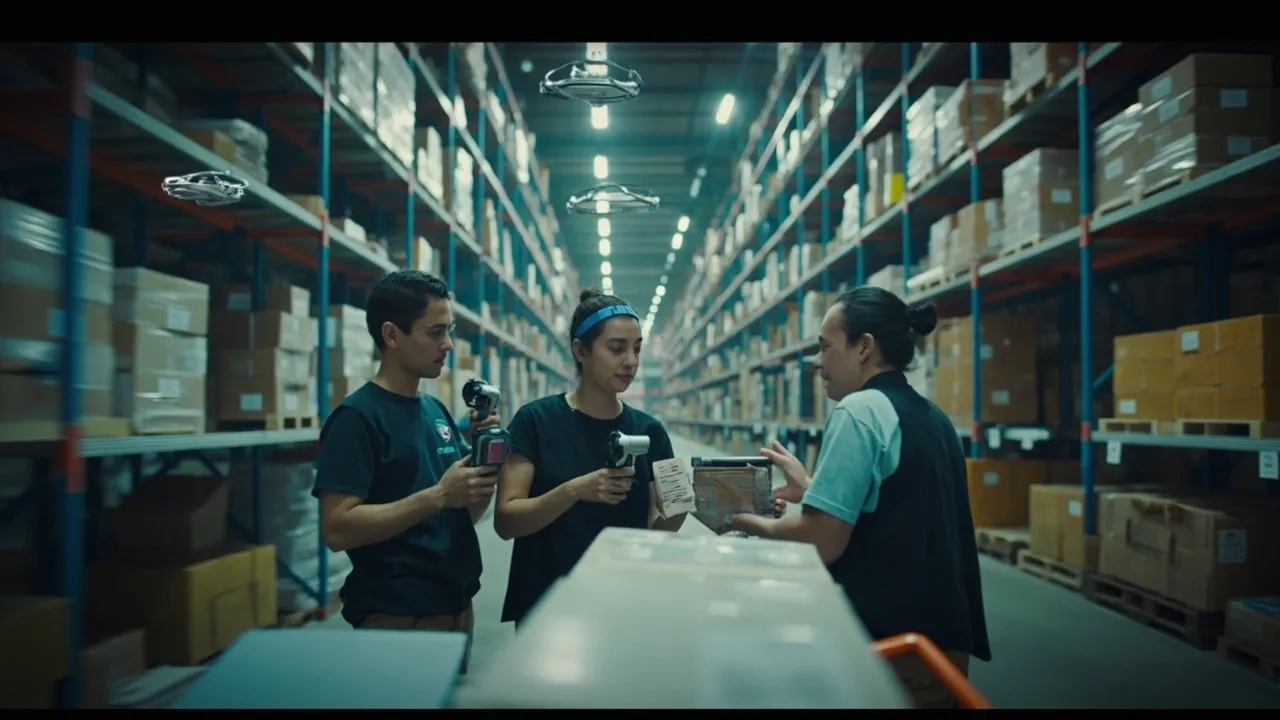
Autonomous inventory tools are also changing the cadence of accuracy. Modern Materials Handling reported that Southern Glazer’s Wine & Spirits is expanding its Corvus Robotics deployment to more than 40 autonomous inventory drones across nine distribution centers. The drones scan pallet locations, sync data directly with the warehouse management system, and operate without interrupting picking activity.
The numbers are the point. According to the report, the system completed about 5,000 flights and identified more than 35,000 inventory discrepancies across the network. Southern Glazer’s also moved from quarterly counts to biweekly inventory measurements, and the company said improved accuracy contributed to a 100-basis-point increase in cases processed per hour.
That is not just a robotics story. It is a master-data story. Autonomous audits can find the mismatch between system record and physical reality, but they cannot magically repair weak product-code governance. If locations are reused inconsistently, LPNs are not closed correctly, or SKU aliases are unmanaged, the audit output becomes another exception queue.
IoT pixels add another layer of identity
Item identity is also moving below the barcode. Inbound Logistics highlighted Wiliot’s Gen3 IoT Pixel, a battery-free sensing technology roughly the size of a postage stamp that broadcasts encrypted Bluetooth signals and can track location, temperature, humidity, and movement.
That kind of sensor data is valuable for cold chain, high-value goods, and condition-sensitive inventory. But the sensor identity has to map cleanly to the product, lot, handling unit, shipment, and customer order. Otherwise, teams receive a temperature or movement event without enough context to act.
The future warehouse will have more codes: SKU, GTIN, LPN, location, lot, serial, sensor ID, shipment ID, and customer order references. Winners will govern relationships between identifiers across systems.
Where product-code failures hit fulfillment
Bad product-code data usually shows up as an operations problem long before executives call it a data problem.
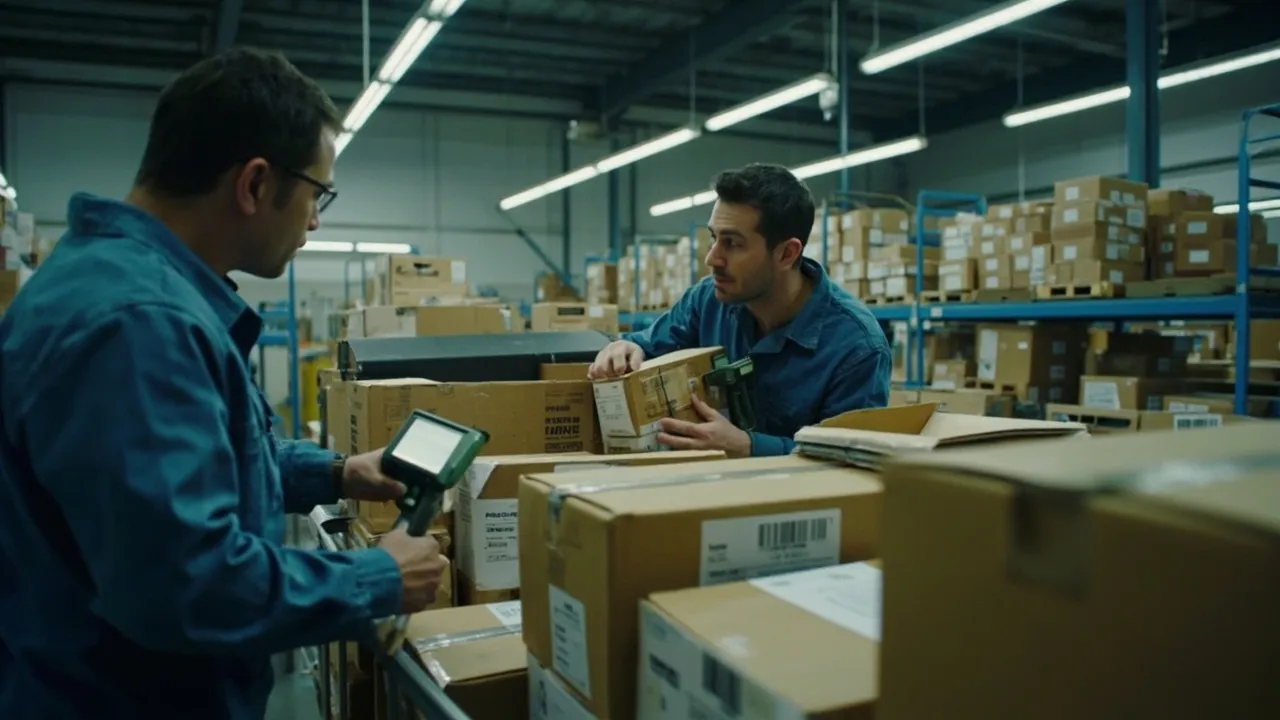
A picker scans a barcode the WMS does not recognize. Replenishment sends the wrong unit of measure. A customer receives the right product in the wrong pack quantity. A recall search misses units because the lot code was captured in a free-text note. A parcel label prints for an order that should have been held for special handling.
Each failure looks small. Together, they create labor drag, claims, chargebacks, expedited freight, write-offs, and planning distrust. Once planners stop trusting inventory, they add buffers. Once warehouses add buffers, space gets tighter and automation ROI gets harder to prove.
What better SKU governance looks like
A practical product-code program does not need to start with a year-long master-data transformation. It needs a few non-negotiables.
First, define which identifier owns which decision: SKU for internal execution, GTIN or UPC for trading-partner identity, lot and serial for traceability, LPN for handling units, and location for physical control.
Second, validate physical attributes before automation uses them. Dimensions, weight, pack hierarchy, hazmat status, temperature requirements, expiration rules, and conveyability are execution data, not optional catalog enrichment.
Third, govern aliases. If vendors, ecommerce channels, and customers use different item numbers, the cross-reference table must be maintained deliberately.
Fourth, connect inventory identity to transportation identity. The warehouse may think in SKUs, lots, and LPNs, while transportation thinks in shipments, stops, containers, and PRO numbers. Fulfillment accuracy depends on that handoff.
The CXTMS angle: keep item identity connected to shipment execution
CXTMS helps logistics teams treat product codes as part of the execution chain, not as isolated warehouse metadata. When shipment, warehouse, customer, and carrier milestones are connected, teams can see whether the right SKU, lot, LPN, and shipment reference moved through the right step at the right time.
The next warehouse bottleneck will not always be labor or equipment. Increasingly, it will be whether floor systems can trust the identifiers they receive.
If your warehouse is adding robotics, denser storage, inventory drones, or IoT sensing while still cleaning product codes manually in spreadsheets, the bottleneck is already forming. Request a CXTMS demo to see how connected shipment and warehouse workflows can keep inventory identity clean from order release through delivery.