Reverse Logistics Is Becoming an ESG Risk: Why Returns Processing Can No Longer Be a Back-Room Cost Center


Reverse logistics used to be treated like a necessary mess: receive the box, inspect the item, issue the credit, and try to recover what value remains. That model is breaking.
Returns are now a material ESG, fraud, labor, inventory, and customer-experience risk. The reason is scale. SupplyChainBrain reports that U.S. retail return rates have held between 16% and 18% of total purchases since 2023, citing National Retail Federation data. At that volume, a returns dock is not a back room. It is a second supply chain running in reverse, with all the same exposure to cost, compliance, service failures, and reputational damage.
The companies that win in 2026 will stop asking only, “How do we process returns cheaper?” The sharper question is, “Can we prove every returned unit was routed to the right outcome quickly, ethically, and profitably?”
Returns are a human network, not just a parcel flow
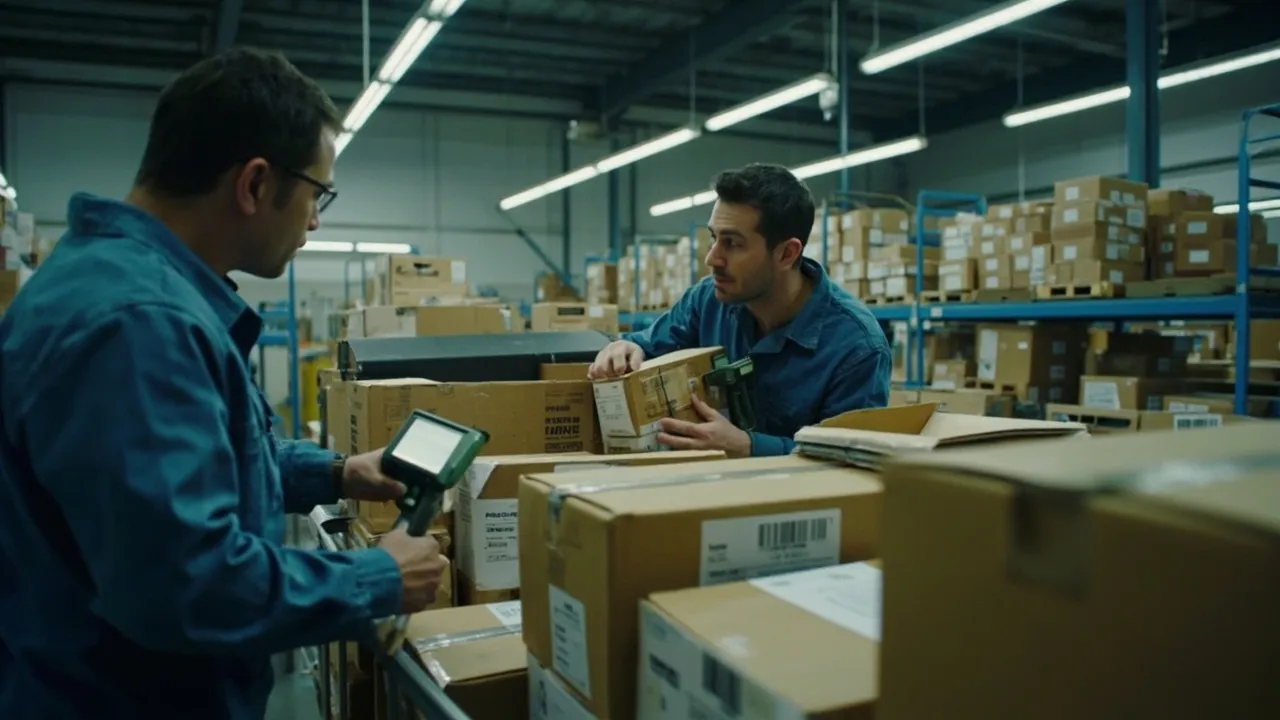
Every return activates people: drivers collecting parcels, warehouse associates opening cartons, inspectors grading condition, customer-service agents issuing credits, resale partners handling secondary markets, repair teams restoring value, and disposal partners managing unsellable goods.
That human footprint is becoming part of ESG scrutiny. SupplyChainBrain highlights labor hours per returned unit, wage and safety benchmarks, transparency scores for cross-border partners, community impact mapping, and disposition tracking for unsellable goods as emerging reverse-logistics metrics. Those are not soft-goodwill ideas. They are operating controls.
A retailer can have a polished sustainability report and still create risk if its returns process quietly pushes high-volume inspection work into facilities with poor ergonomics, unstable staffing, or weak partner oversight. The same applies to liquidation and disposal. If returned goods are dumped into opaque secondary channels or landfills near vulnerable communities, the environmental issue becomes a social-impact issue too.
That is why reverse logistics ESG is less about public messaging and more about traceability. Companies need to know who touched the product, where it moved, how it was graded, what decision was made, and why.
Fraud turns returns processing into a control problem
The ESG pressure is arriving at the same time returns fraud is getting nastier.
In a separate 2026 analysis, SupplyChainBrain says Deloitte and NRF industry reports suggest 9% to 15% of returns were fraudulent during 2024 and 2025, costing businesses billions of dollars. The article also notes that refund abuse rose from 53% to 57% in 2025 in Ravelin’s Global Fraud Trends report, and that the Merchant Risk Council identified refund and returns policy abuse as the most prevalent fraud type facing merchants such as online retailers.
Inbound Logistics puts the financial pain in starker terms: returns fraud cost retailers $103 billion in 2024. It recommends fraud detection practices that validate purchase histories, identify suspicious return patterns, and flag high-risk returns before they drain margin.
This matters for logistics leaders because fraud is not only a payments issue. It is an inspection-quality issue, a routing issue, and a workflow issue. Wardrobing, empty-box returns, item switching, counterfeit substitutions, and organized refund schemes all exploit weak handoffs. High-volume peak periods make the problem worse because teams are tempted to trade control for speed.
The answer is not to make every return hostile. That punishes honest customers and slows inventory recovery. The better answer is differentiated control: clean customers get fast paths, suspicious patterns get extra verification, high-value products get stricter inspection rules, and exceptions are visible before credits, replacements, or vendor claims are released.
Speed is still the economic lever
Reverse logistics is now an ESG and fraud problem, but it is still very much a working-capital problem.
Inbound Logistics notes that rapid returns processing helps maintain cash flow, reduces warehousing costs, prevents bottlenecks, and gets returned products back into inventory faster. Slow processing traps capital in limbo. A returned product that could be resold this week loses value if it sits unopened until next month.
That is where many returns operations fail. They optimize transportation separately from warehouse inspection, customer-service refunds, vendor agreements, resale eligibility, and disposal decisions. The result is a pile of “pending” inventory that nobody owns end to end.
For returns processing to work, disposition rules must be operational, not theoretical. A returned item should quickly move into one of a few clear paths: restock, return to vendor, repair, refurbish, resale, donate, recycle, or dispose. Each path needs a service-level target, documentation requirement, cost rule, and owner.
Transportation matters here too. Inbound Logistics emphasizes optimized returns routing: directing returns to the right destination for restocking, return-to-vendor, or resale reduces handling time and accelerates the return-to-sell cycle. That sounds obvious until a network starts sending repairable goods to the wrong warehouse, vendor returns to a resale partner, or landfill-bound goods through premium parcel services.
What returns teams should measure now
The old metric set was too narrow: return rate, processing cost, and maybe refund cycle time. Those still matter, but they do not capture the risk picture.
Returns teams should add operational ESG and control metrics: percentage of units with verified disposition, average labor hours per returned unit, inspection rework rate, fraud-flag hit rate, resale recovery rate, return-to-vendor cycle time, donation and recycling volumes, disposal by geography, and exceptions unresolved after 48 hours.
They should also connect customer behavior to logistics reality. Inbound Logistics cites studies showing that 82% of shoppers consider return policies before buying, while 33% avoid retailers with unclear policies. A generous return promise can support conversion, but only if the reverse network can absorb the volume without creating fraud leakage, labor stress, or inventory delay.
That means returns policy, warehouse capacity, carrier routing, inspection rules, and finance controls need to be designed together. If ecommerce writes a promise the returns network cannot execute, logistics inherits the mess.
The CXTMS angle: reverse logistics needs a system of record
Reverse logistics cannot be managed with carrier portals, spreadsheets, email approvals, and tribal knowledge. That stack creates exactly the blind spots ESG auditors, fraud teams, finance leaders, and customers will punish.
CXTMS helps logistics teams create auditable workflows for return-to-vendor, restock, resale, repair, donation, recycling, and disposal decisions. The value is not just tracking a return shipment. It is connecting the shipment milestone to the inspection result, disposition rule, partner handoff, exception owner, and customer or vendor commitment.
Returns are no longer a back-room cost center. They are a high-volume operating network where fraud control, working capital, sustainability, labor accountability, and customer trust collide. Companies that make reverse logistics visible will recover more value and carry less risk. Companies that keep treating it as cleanup work will keep discovering that the most expensive shipment is often the one coming back.
If your returns process still depends on disconnected spreadsheets and manual follow-ups, it is time to put reverse logistics under real transportation control. Request a CXTMS demo to see how connected workflows can turn returns processing into a faster, cleaner, auditable operating model.