Target’s Receive Center Model: Why Inventory Buffers Are Moving Upstream in Retail Logistics

Lean inventory never disappeared, but Target’s newest supply chain move shows how much the definition has changed. The retailer is not simply pushing more goods into stores or asking regional distribution centers to absorb every demand swing. It is adding a new layer upstream: a receive center built to hold inventory before it enters the downstream replenishment network.
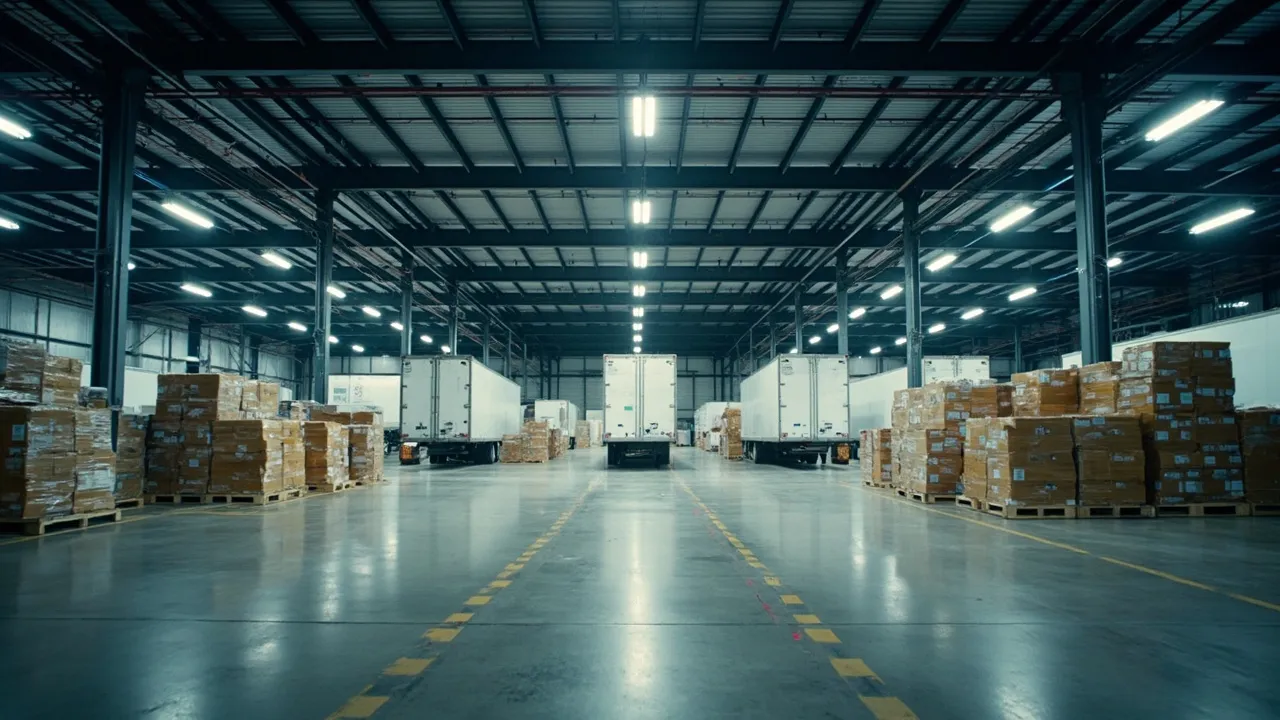
According to Supply Chain Dive, Target opened a $265 million Houston Receive Center that spans 1.2 million square feet, employs 185 people, and serves six regional distribution centers plus a flow center. The site receives product from vendors and holds it until replenishment is needed elsewhere in the network. Target said the Houston location adds regionally based capacity between its import warehouses in Georgia and Washington, helping the company move product to the right place faster and at lower cost through shorter distances traveled.
That is the important part. The facility is not just another warehouse. It is a buffer with a purpose.
Why the buffer is moving upstream
For years, retail logistics teams were pushed toward the cleanest possible version of lean: less stock, faster turns, smaller backrooms, and fewer idle pallets. That logic still matters. Dead inventory is expensive, and every unnecessary touch adds cost. But the past few years have made one thing obvious: a network with no strategic slack becomes brittle.
Tariff volatility, port congestion, weather disruption, labor shortages, demand shocks, and changing import patterns all punish networks that can only operate when forecasts are perfect. Supply Chain Dive’s 2026 risk outlook warned that tariff-fueled turbulence, operational cost pressure, material constraints, and logistics reliability concerns are all still shaping supply chain decisions this year. In that environment, the old choice between “carry inventory everywhere” and “carry almost no inventory anywhere” is too crude.
The better option is to decide where inventory flexibility creates the most value. Target’s receive center points to one answer: hold selected inventory before it clogs stores, regional DCs, or last-mile operations.
That upstream position gives retailers more room to decide when and where goods should move. Seasonal items, bulky products, long-lead-time inventory, and hard-to-forecast categories can be secured earlier without forcing downstream facilities to become overflow storage. Supply Chain Dive reported that the Houston site offers roughly 3 million to 3.5 million cubic feet of storage and can send products onward either as full pallets loaded directly into outbound trailers or through a sortation system before loading.
That operating model creates optionality. Inventory can be protected without being prematurely committed.
Strategic buffers are not a retreat from lean
Some executives hear “inventory buffer” and immediately think “working capital problem.” Fair enough. Inventory is cash sitting on a rack. But the receive center model is not the same as stuffing every node with safety stock.
A poorly designed buffer hides bad planning. A well-designed buffer buys decision time.
The difference is visibility and control. If a retailer knows what inventory is sitting in a receive center, which downstream nodes are likely to need it, which carriers are available, and what the transfer lead times look like, then the buffer becomes an execution tool. If that same inventory is invisible, unmanaged, or disconnected from transportation planning, it becomes another expensive pile of “just in case.”
This is where transportation management matters. Upstream inventory only improves resilience if the freight network can respond quickly when the signal changes. A retailer may decide to accelerate replenishment into one region because demand is running hot, delay transfer into another because backrooms are full, or re-route volume because capacity has tightened. Each decision needs lane-level cost, appointment availability, carrier performance, and service risk data.
In other words, inventory strategy and transportation execution are now inseparable.
Freight volatility makes node-level planning more valuable
Freight markets are not giving planners much room for lazy assumptions. FreightWaves reported that 2026 supply chains are operating in an environment where disruption is increasingly structural rather than temporary, citing pressures from geopolitical instability, cyberattacks, labor constraints, weather events, and capacity swings. In the same analysis, uShip CEO Sean Wu argued that successful supply chains should be designed for adaptability, not certainty, with teams able to reroute shipments in hours rather than waiting through layers of approval.
That principle applies directly to retail replenishment. The receive center gives Target another node in the network, but the real advantage comes from how that node is orchestrated. If transportation teams can see inbound vendor flows, receive center inventory, downstream demand, carrier capacity, and cost exposure in one planning environment, they can make fewer emergency moves and more deliberate transfers.
The payoff is not just lower freight cost. It is fewer store stockouts, less congestion in regional DCs, better trailer utilization, and cleaner exception management. Instead of discovering too late that a regional facility is short on inventory, the team can stage product upstream and release it when demand, capacity, and labor line up.
That is a more mature version of lean: not zero slack, but controlled slack.
What logistics teams should copy from the model
Most retailers and distributors will not build a 1.2 million-square-foot receive center tomorrow. They do not need to. The lesson is architectural, not purely physical.
First, identify which products deserve upstream buffering. The best candidates are items with volatile demand, long replenishment cycles, high cube, seasonal peaks, supplier uncertainty, or significant service consequences when stockouts occur.
Second, map inventory decisions to transportation constraints. A buffer location is only useful if outbound transfer capacity, appointment windows, and lane economics support fast repositioning.
Third, separate storage logic from replenishment logic. The goal is not to hold more everywhere. It is to hold inventory where it preserves the most optionality.
Finally, connect the data. A receive center strategy depends on node-level visibility: what is available, where it can go, what it will cost, when it can arrive, and which exception owner needs to act.
CXTMS was built for that kind of execution discipline. For freight forwarders and logistics teams managing volatile multimodal networks, the platform connects shipment planning, carrier coordination, milestone visibility, and exception workflows so transportation decisions can keep pace with inventory strategy.
Want to see how CXTMS can help your team turn inventory signals into smarter freight execution? Request a CXTMS demo and build a transportation network that is flexible without becoming chaotic.