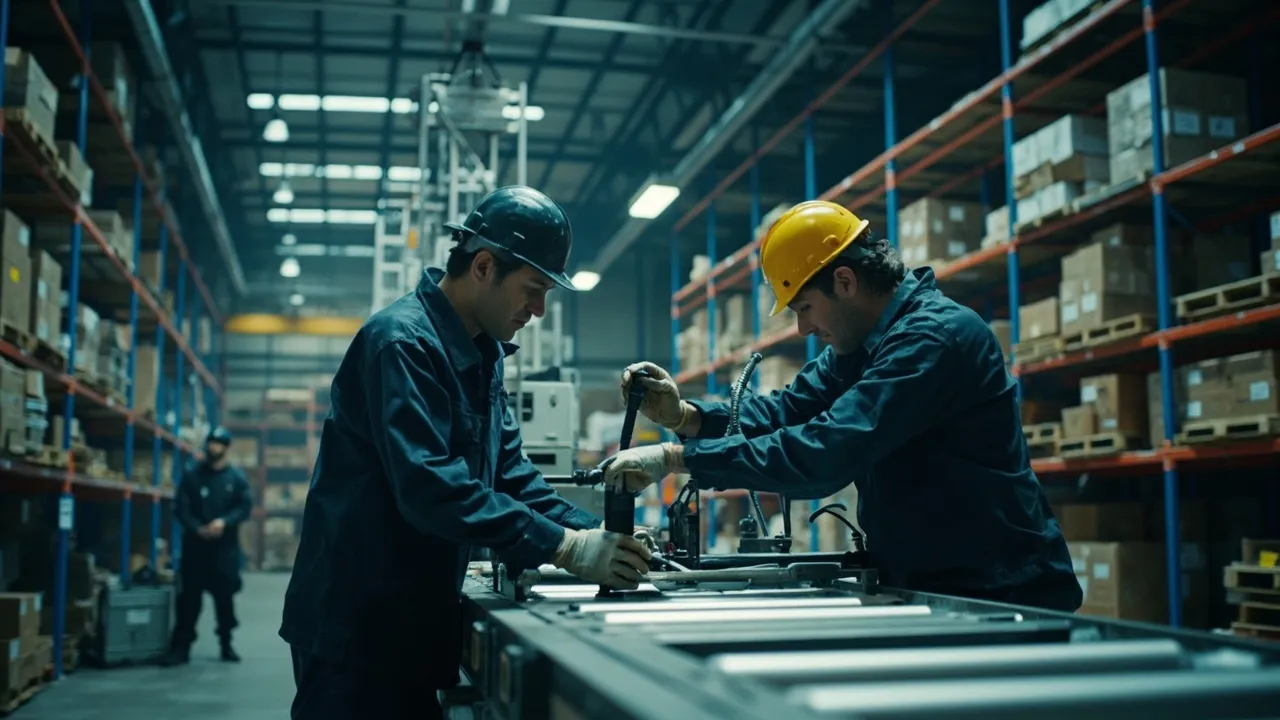
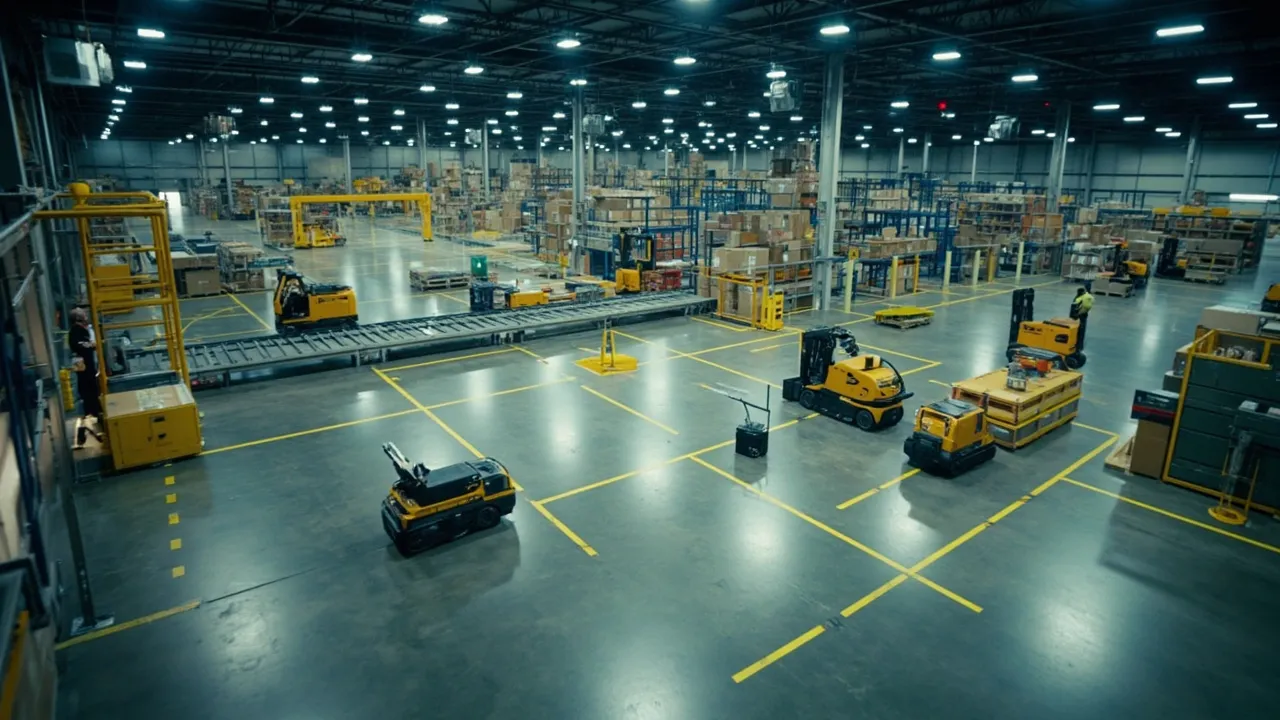
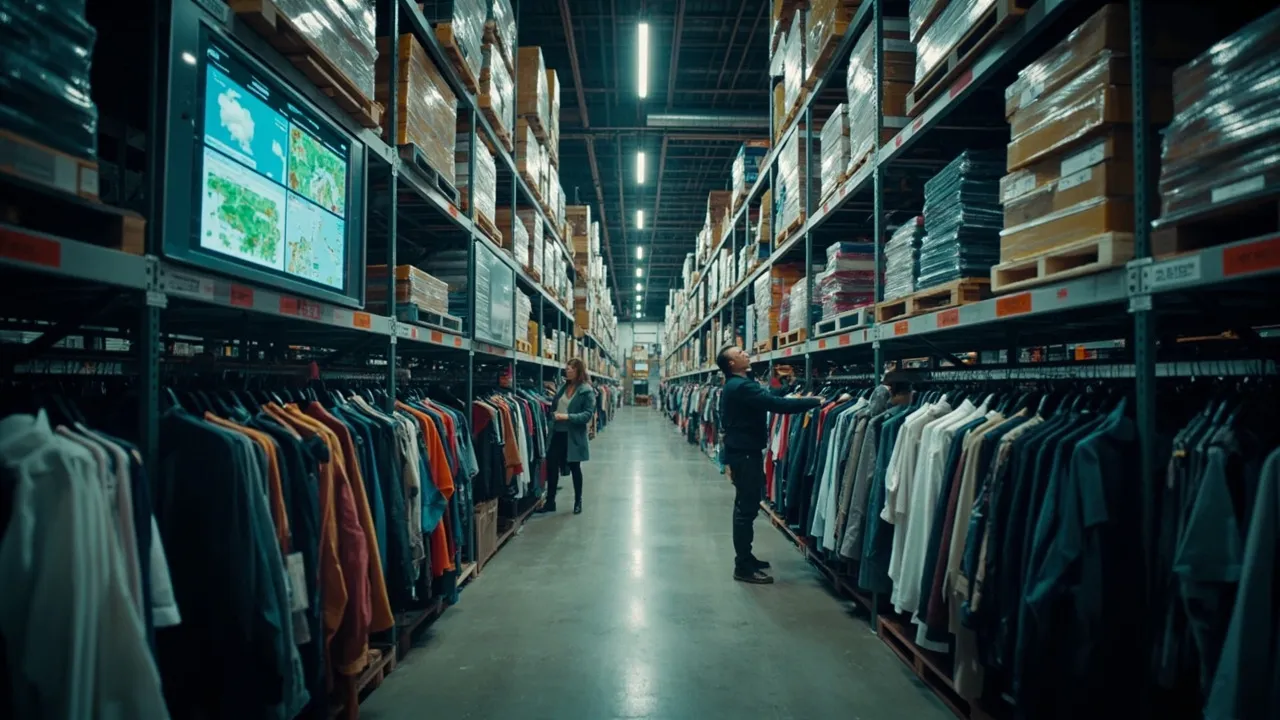
Warehouse Automation Is Becoming a Production Platform, Not Just a Fulfillment Tool

Warehouse automation is no longer just a faster way to pick, pack, and ship finished goods. It is becoming part of how goods are produced.
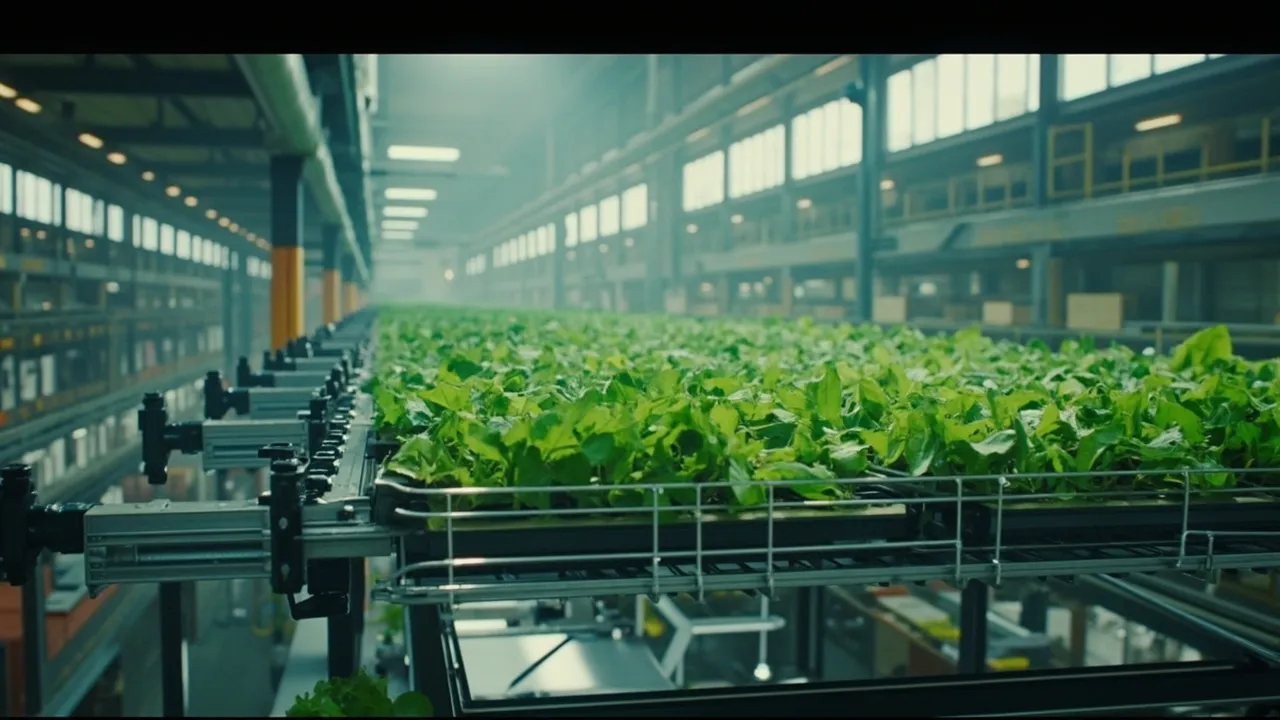
In Arizona, OnePointOne is using an automated storage and retrieval system (AS/RS) as the physical backbone of an indoor vertical farm. The robots, grid, bins, software, lighting, ventilation, irrigation, and environmental controls are not simply supporting fulfillment after production. They are the production environment itself.
Modern Materials Handling reported that OnePointOne's Opollo Farm near Phoenix uses an AutoStore-based AS/RS to grow herbs, leafy greens, and microgreens for Whole Foods stores and a regional food distributor. After developing its own robotics for five years, the company shifted to AutoStore's established platform. OnePointOne says it has raised more than $77 million and that its vertical farm can use roughly 95% to 99% less land and 95% to 99% less water than conventional farms for the same crops.
For logistics leaders, the lesson is bigger than vertical farming. The boundary between manufacturing, warehousing, and distribution is getting blurry. Automation used to sit after production. Now the same principles used for storage density, robot movement, inventory location, and order sequencing are being embedded inside production-adjacent processes.
The warehouse is becoming part of the product
A traditional warehouse is built around finished inventory. A production platform is built around work-in-process inventory, quality conditions, timing, and release decisions. OnePointOne's AS/RS stores plant trays, but the trays are living inventory. Their location, lighting, airflow, irrigation, dwell time, and movement path affect the finished product.
That matters because warehouse automation vendors have spent years optimizing space utilization and movement efficiency. In vertical farming, those same capabilities become production controls. A bin is not just a container. It is a micro-production slot. A robot move is not just a storage transaction. It is a step in the growth cycle. A software rule is not just slotting logic. It can influence quality, harvest timing, shelf life, and replenishment cadence.
This is where the market is heading. Mordor Intelligence estimates the warehouse automation market at $34.17 billion in 2026, growing to $65.74 billion by 2031 at a 13.98% CAGR. Its report also shows mobile robots holding 41.36% of warehouse automation market share in 2025, while piece-picking robots are projected to grow at a 15.27% CAGR through 2031. Software is expected to expand at a 14.87% CAGR, slightly faster than the overall market.
The value is moving from isolated equipment to coordinated systems. Hardware creates movement. Software decides which movement matters.
Why production and fulfillment are converging
Three forces are pushing production and fulfillment together.
First, customers want shorter supply chains. OnePointOne's vertical farm is designed to grow produce close to major population centers instead of moving it 2,000 miles or more from conventional growing regions. That changes the logistics equation. If production is placed near demand, freight networks need fewer long-haul cold-chain moves but more precise local replenishment, store delivery, and distributor coordination.
Second, product freshness and shelf life are becoming logistics variables. For leafy greens, herbs, pharmaceuticals, meal kits, and temperature-sensitive products, inventory age matters as much as inventory quantity. A shipment is not simply available or unavailable. It may be available with four days of shelf life, eight days of shelf life, or a quality profile that determines which customer should receive it.
Third, automation economics are improving. Mordor notes that persistent labor shortages, last-mile expectations, plug-and-play robotics, robotics-as-a-service models, and high-density automation for reshoring corridors are all supporting adoption. Small warehouse sites under 50,000 square feet are projected to grow at a 15.19% CAGR through 2031, suggesting automation is spreading into smaller, specialized facilities.
Execution systems need to see inventory before it ships
The risk is treating these new facilities like ordinary warehouses. They are not.
When automation becomes part of production, transportation management has to connect earlier in the process. A shipment plan should not begin when an order is released to the dock. It should understand production timing, inventory maturity, temperature requirements, customer service windows, and whether the facility can actually release product on the promised schedule.
Logistics Management's 2026 technology roundtable makes the same broader point: supply chain technology is moving beyond dashboards and standalone tools toward AI, orchestration, automation, robotics, and risk management embedded in real operations. The roundtable notes that AI delivers measurable ROI when applied to high-frequency decision loops such as inventory positioning, warehouse slotting, transportation planning, and supplier performance management. It also cites slotting optimization models that can reduce warehouse travel time by 10% to 20% when they continuously adapt to order patterns.
For production-adjacent automation, those decision loops multiply. The system needs to answer:
- Which inventory should be harvested or released first based on shelf life and customer promise?
- Which orders should be routed locally versus held for consolidation?
- Which carrier can maintain temperature integrity on a short-notice replenishment move?
- Which facility constraint will create a late shipment before the dock team sees it?
- Which customer should receive scarce product when production output differs from forecast?
These are logistics decisions, but they depend on production signals.
Cold-chain distance becomes a design variable
Vertical farming also reframes cold-chain planning. Growing produce near a metro market can reduce long-haul refrigerated miles, cut exposure to seasonal disruptions, and improve freshness. But it does not eliminate logistics complexity. It changes the shape of it.
Instead of one long inbound move from a growing region to a distribution center, the network may rely on frequent short-haul deliveries from automated production sites to retailers, distributors, foodservice customers, or micro-fulfillment nodes. Those moves still need appointment discipline, temperature monitoring, packaging control, proof of delivery, and exception handling. In many cases, the delivery windows get tighter because the product is fresher and the replenishment cycle is shorter.
Facility design also changes. A production platform needs automation, environmental systems, quality checks, sanitation, packaging, staging, outbound loading, and data capture. The dock becomes the handoff between controlled production and uncontrolled transportation.
The practical playbook
Start with four disciplines.
First, map inventory states, not just inventory locations. Finished, growing, curing, cooling, quarantined, inspected, released, staged, and shipped inventory should not be collapsed into one generic stock record.
Second, connect production timing to transportation planning. If harvest, assembly, batch release, or quality inspection changes, carrier tendering and customer appointment plans should change with it.
Third, design exception workflows across functions. A temperature alarm, equipment delay, labor shortage, or production variance should trigger coordinated action across operations, customer service, transportation, and inventory teams.
Fourth, measure total network performance. A highly automated production site can still disappoint customers if outbound execution is weak. Track freshness, dwell, on-time release, tender acceptance, delivery performance, claims, and customer fill rate together.
Warehouse automation is becoming a production platform because supply chains need to produce closer to demand, respond faster, preserve quality, and make better decisions before freight ever hits the road.
CXTMS helps logistics teams coordinate those execution layers: inventory-ready signals, carrier workflows, shipment visibility, document control, exception alerts, and customer delivery performance. If your network is moving from simple fulfillment to production-adjacent logistics, schedule a CXTMS demo and build the control layer before complexity outruns the operation.