Smart Glasses Are Finally Useful in Warehouses: Why Wearable Picking Tech Is Back

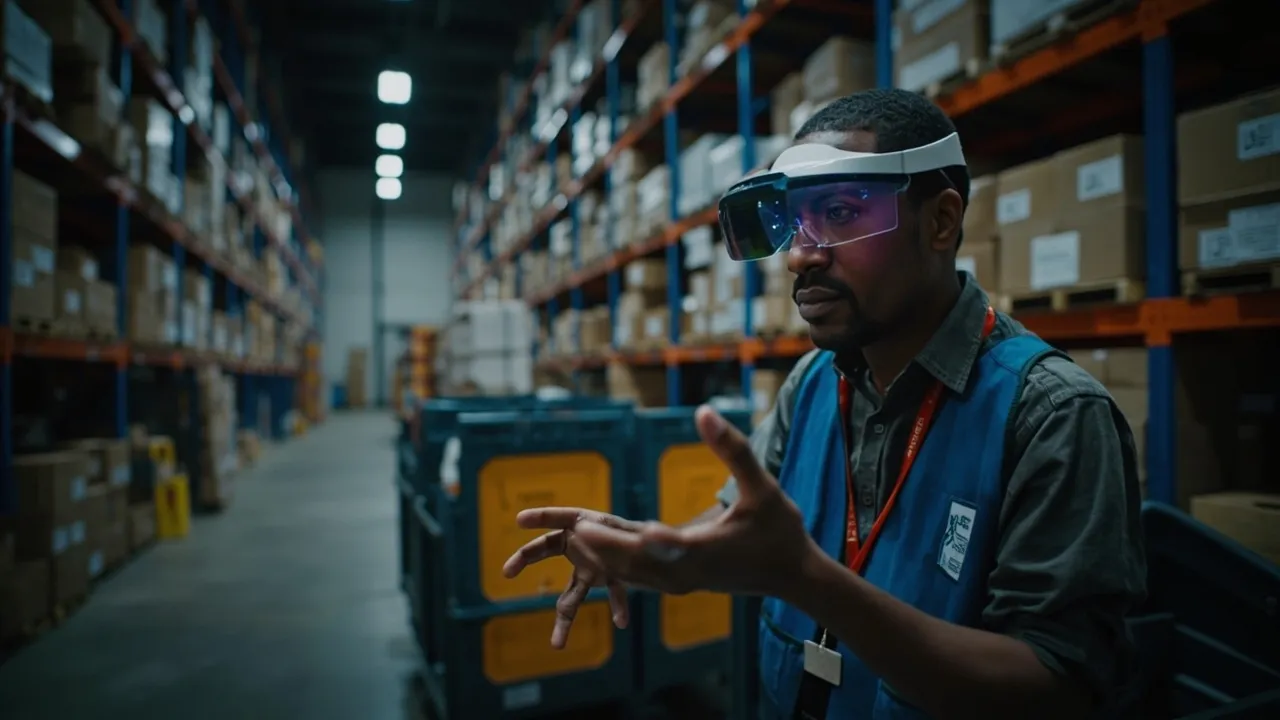
Smart glasses spent years looking like a solution in search of a problem. In consumer tech, they mostly flopped. In warehouses, they finally found one.
That is because modern fulfillment operations do not need fashion. They need speed, accuracy, and fewer moments where a worker has to stop, look down, grab a device, and break flow.
The case for warehouse smart glasses is getting stronger now because the operational fit is better than it was a decade ago. Warehouses have more SKU complexity, more labor churn, and more pressure to train people fast without killing accuracy. That makes hands-free visual guidance a lot more valuable than it used to be.
As SupplyChainBrain recently noted, smart glasses in warehousing have matured into a hybrid vision-plus-voice workflow rather than a pure replacement for earlier tools. Vendors are improving ruggedness, weight balance, low-light performance, and battery life, with newer models now able to run for up to 12 hours and use swappable batteries for full-shift work. Source: ‘Smart’ Glasses Are Back: First, for the Warehouse. Then, Consumers.
That detail matters. Early smart glasses often failed because they were too clunky for real operations. A device that dies halfway through a shift or feels miserable after two hours is not warehouse tech, it is demo tech.
Why this category is back now
The biggest change is not the glasses alone. It is the workflow around them.
Older warehouse wearables usually forced companies to choose between voice, scanning, and visual systems. That was the wrong framing. The better model is layered. Voice still works well for directing movement. Scanning still matters for confirmation. Smart glasses add a visual interface right in the worker’s field of view, which becomes especially useful in dense pick paths, training scenarios, and exception handling.
That combination is exactly what Inbound Logistics highlighted years ago when it described wearables as a new user interface for logistics software, especially in high-volume e-commerce pick-and-pack environments. The same article also cited a concrete baseline for traditional voice systems: after the Wyoming Liquor Division moved into a 145,000-square-foot facility, its voice-directed picking deployment delivered a 15% productivity increase while maintaining 99.9% order accuracy. Source: The Who, What, When, and Why of Warehouse Wearables.
That is important context because voice is still a serious benchmark. Smart glasses do not win just because they are newer. They win only where they solve problems voice-only systems handle badly.
Where smart glasses fit best
The best use cases are not universal. They are specific.
First, smart glasses make the most sense in higher-complexity picking environments where workers need visual confirmation, product images, bin cues, or multiple-step instructions without dropping to a handheld screen. When several similar items sit in the same slot, a visual overlay can reduce hesitation and mispicks.
Second, they shine in training. Modern warehouses chew through seasonal and new labor, and every extra day to proficiency is expensive. In Inbound Logistics, TeamViewer Frontline Pick reported that a DHL deployment of its smart-glasses-based picking workflow produced a 15% productivity increase, cut training time from weeks to a few hours, and was being used by roughly 1,500 operators across DHL U.S. sites. Source: PRODUCT SPOTLIGHT: Warehouse Wearables.
Third, smart glasses are a good fit for exception handling and remote support. A supervisor or technician can see what the worker sees, help resolve a short pick or bad label, and avoid walking halfway across the building to diagnose something simple.
That is where the ROI starts to look more believable. The value is not just faster picking. It is less friction around every ugly little edge case that slows a shift down.
Why handhelds and pick-to-light are not going away
None of this means smart glasses replace everything.
Handheld scanners remain cheap, familiar, and flexible. Pick-to-light still works beautifully in highly repetitive, fixed-location workflows. Voice systems are still strong in larger-item environments where workers have time to confirm picks verbally. In fact, the smarter takeaway is that warehouses should stop looking for a single winner.
Hybrid operations usually make more sense. A facility can use voice in one zone, handheld scanning in another, and smart glasses in the areas where complexity, labor turnover, or exception rates justify the extra investment.
That is also why the new generation of wearable tech looks more credible than the old one. Operators are not being asked to redesign the entire building around a futuristic gadget. They are being offered a targeted tool for high-friction workflows.
What logistics leaders should watch next
Two things will decide whether smart glasses move beyond pilot purgatory.
One is ergonomics. If the devices keep getting lighter, more rugged, and easier to use with prescription lenses, hard hats, and safety gear, adoption will rise. If not, warehouse workers will reject them fast, and they should.
The second is software integration. Smart glasses become valuable only when they connect cleanly into WMS, labor, and inventory workflows. A flashy display with lousy backend integration is useless. The winners here will be the vendors that make wearable workflows easy to deploy without turning every site rollout into an IT science project.
The blunt truth is that warehouse smart glasses are not back because the technology suddenly became cool. They are back because warehouse operations got complicated enough to need them.
And this time, that is a much better reason.
If your operation is evaluating hands-free workflows, warehouse visibility, or faster execution across complex fulfillment processes, request a CXTMS demo to see how CXTMS helps logistics teams connect execution data, inventory flows, and operational decision-making in one system.