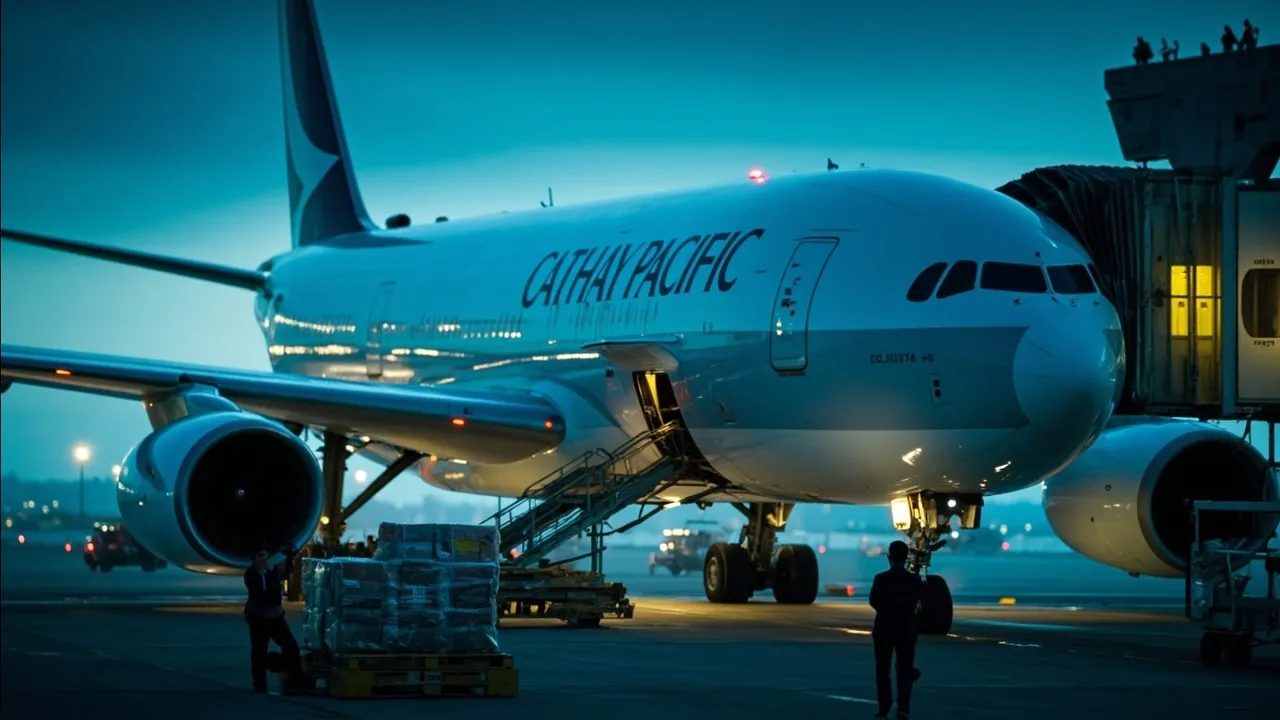
Lufthansa’s 20,000-Flight Cut Shows How Fuel Stress Can Spill Into Freight Planning Fast

Air freight planners do not need many warning shots. One is usually enough.
That is why Lufthansa Group’s decision to cut 20,000 flights over the next six months to save 40,000 metric tons of jet fuel matters well beyond passenger aviation. According to SupplyChainBrain, the carrier said the move represents a capacity decrease of less than 1% in available seat kilometers, with reductions focused on weaker routes out of Frankfurt and Munich while other hubs expand selectively.
On paper, that sounds manageable. In practice, it is exactly the kind of signal freight teams should take seriously.
When a major airline starts trimming its network in response to fuel stress, cargo shippers should not read it as an isolated airline scheduling story. They should read it as a reminder that fuel shocks can move quickly from the energy market into route availability, premium pricing, contract behavior, and contingency planning.
Fuel stress does not stay contained for long
The big issue is not only Lufthansa’s network cut itself. It is the market context around it.
SupplyChainBrain reports that Europe accounts for about 41% of the jet fuel exported out of the Persian Gulf region, citing Macquarie Group, and that global jet fuel prices have risen more than 70% since the start of the conflict at the end of February, based on the Platts Jet Fuel Price Index. That is not background noise. That is a cost shock moving through one of the most operationally sensitive parts of global transport.
Air cargo always reacts fast when fuel changes this violently because fuel is not a minor input. It is core economics. If carriers see persistent jet fuel inflation, they start reassessing marginal routes, aircraft utilization, network balance, and the mix between passenger and cargo economics. Even when cargo aircraft schedules do not change immediately, the broader network math does.
That matters because many shippers still buy air freight as if capacity is a mostly stable service layer with occasional seasonal turbulence. That assumption gets shaky when the underlying fuel market is doing something ugly.
The pricing data is already pointing in the same direction
A second approved source makes the warning even clearer.
According to Supply Chain Dive, fuel and network disruption tied to the Iran war have already started reshaping air cargo contract negotiations. The article cites Xeneta data showing that in March:
- Global air cargo spot rates reached $2.86 per kilogram, up 14% year over year
- The global dynamic load factor reached 65%, up 3 percentage points
- The share of air cargo volumes moved under spot rates climbed to 52%
- Rates from South Asia to North America were up 75% year over year
Supply Chain Dive also notes that the spot price of U.S. Gulf Coast kerosene-type jet fuel reached $4.24 on March 30, up from $3.93 the week prior, citing U.S. Energy Information Administration data.
That combination is the real story. Airlines are adjusting networks. Fuel is rising fast. Spot exposure is increasing. And shippers are shortening contract duration because nobody wants to lock in assumptions that may be obsolete a few weeks later.
That is how fuel stress spills into freight planning fast. Not with one dramatic collapse, but with a string of tactical adjustments that suddenly make your original air strategy feel stale.
What this means for cargo buyers
There are three practical consequences.
First, capacity becomes less predictable around the edges. Lufthansa said its cuts amount to less than 1% of available seat kilometers, but freight planners should care about where the cuts land, not just the percentage headline. If reductions hit specific hubs, city pairs, or connection patterns, the impact on cargo routing can be much larger than the top-line figure suggests.
Second, premium freight gets more expensive faster than budget models expect. When rates start climbing and more volume moves into the spot market, the penalty for late booking or poor mode discipline gets harsher. Air is already the expensive option. Under fuel stress, it becomes the expensive option with less forgiveness.
Third, contract strategy gets messy. Supply Chain Dive reports that shippers have been moving toward three-month agreements instead of annual contracts. That makes sense. In a volatile fuel environment, long commitments can age badly. But shorter contracts also create more administrative churn and force procurement teams to stay close to market conditions.
A practical framework for shippers facing fuel-driven volatility
If your business depends on air freight for high-value inventory, service parts, medical products, electronics, or peak recovery moves, this is not the moment for passive monitoring. It is the moment for tighter planning discipline.
1. Separate critical air freight from habitual air freight
Some shipments genuinely belong on air. Others got there because upstream planning failed. When fuel shocks hit, that distinction stops being academic. Segment urgent, margin-critical, or customer-committed shipments from everything else and make sure each category has its own routing policy.
2. Revisit hub and lane concentration risk
If one airline group, one transit hub, or one geography carries too much of your premium network, a small airline schedule adjustment can create an outsized service problem. Stress-test alternatives now, before the next surcharge or schedule cut lands.
3. Tighten contract review cycles
Annual air freight assumptions look weak in this market. If carriers and forwarders are shifting toward shorter validity windows, your internal budgeting cadence has to catch up. Finance hates surprises. Fuel markets do not care.
4. Build a mode-shift playbook in advance
Some freight can move to deferred air, expedited ocean, or premium ground with acceptable service tradeoffs. Some cannot. The time to map those thresholds is before your team is staring at inflated spot quotes at 6 p.m.
5. Use TMS data to spot avoidable premium spend
A modern TMS should show where air freight is being used because of true customer need versus preventable planning breakdowns. That visibility matters more when fuel volatility makes every avoidable air move sting harder.
The broader lesson
Lufthansa’s flight cuts are not a niche airline story. They are a useful case study in how quickly energy disruption can ripple into freight execution.
A 20,000-flight reduction and 40,000-metric-ton fuel-saving target tell us that even large, sophisticated carriers are redesigning operations under fuel pressure. Add in 14% higher global spot rates, 52% spot share, and 75% year-over-year rate increases on some lanes, and the message is pretty blunt: air cargo users should expect fuel volatility to show up in planning long before it becomes a full-blown crisis.
Smart shippers will not wait for a headline about capacity collapse. They will treat signals like these as a cue to review contracts, lane strategy, mode fallback options, and premium freight discipline now.
CXTMS helps logistics teams turn volatile transport signals into faster planning decisions, with mode visibility, cost control, and execution data in one place.
If you want a clearer way to manage air freight volatility before it wrecks your budget, book a CXTMS demo.