CXTMS Snowflake: Why Logistics Data Clouds Are Becoming the New Control Tower for Real-Time Supplier Intelligence


The old supply chain control tower was mostly a dashboard problem. The new one is a data problem.
Logistics teams now operate across TMS platforms, ERPs, procurement tools, carrier portals, warehouse systems, customs workflows, and supplier spreadsheets that still refuse to die. When those systems disagree, decision-making slows down right when speed matters most. That is why a Snowflake-style logistics data cloud, meaning a unified data layer that can ingest, harmonize, and activate information across functions, is becoming far more important than another shiny visibility screen.
The point is not to copy Snowflake as a product category. The point is to copy the architecture logic. Modern operators need one trusted layer where supplier events, shipment milestones, inventory signals, cost data, and risk indicators can be joined fast enough to support actual decisions.
According to Inbound Logistics, supply chain leaders are shifting toward real-time supplier intelligence, continuous monitoring, and AI-driven risk scoring because annual assessments and static supplier reviews no longer keep up with disruption. That is the right diagnosis. Fragmented data is not just inconvenient. It creates blind spots across procurement, operations, and finance.
Why fragmented logistics data keeps breaking decisions
Most logistics organizations do not have one supply chain dataset. They have a patchwork.
Procurement may own supplier master data. Transportation may own shipment execution data. Finance may own cost and payment data. Compliance may track certifications and exposure separately. Each team can be technically correct inside its own system while the business is strategically wrong overall.
That gap matters because risk no longer shows up on a quarterly schedule. A supplier can start slipping through late shipments, a lane can become unstable because of geopolitical stress, or a cost problem can surface first in invoice exceptions before anyone calls it disruption.
Inbound Logistics argues that supplier visibility now has to act like a living system, not a filing cabinet. That framing is dead-on. If your data architecture still assumes that supplier, carrier, and shipment information gets reviewed periodically instead of continuously, you are building latency into your own operations.
The case for a Snowflake-style data cloud in logistics
A logistics data cloud is useful because it separates data unification from application sprawl.
Instead of forcing every department to rip and replace its operating systems, companies build a shared layer where data from TMS, WMS, ERP, procurement, and external feeds can be standardized and queried together. That creates three immediate advantages.
First, it improves visibility across functions. A transportation delay can be connected to supplier performance, inventory exposure, customer impact, and margin effect in the same workflow.
Second, it makes AI less stupid. Inbound Logistics notes that no AI model can outperform the quality of the data it learns from, and it highlights five critical areas for AI readiness: data, technology, people, ethics, and security. Data comes first for a reason. If operational records are inconsistent or disconnected, AI just scales confusion faster.
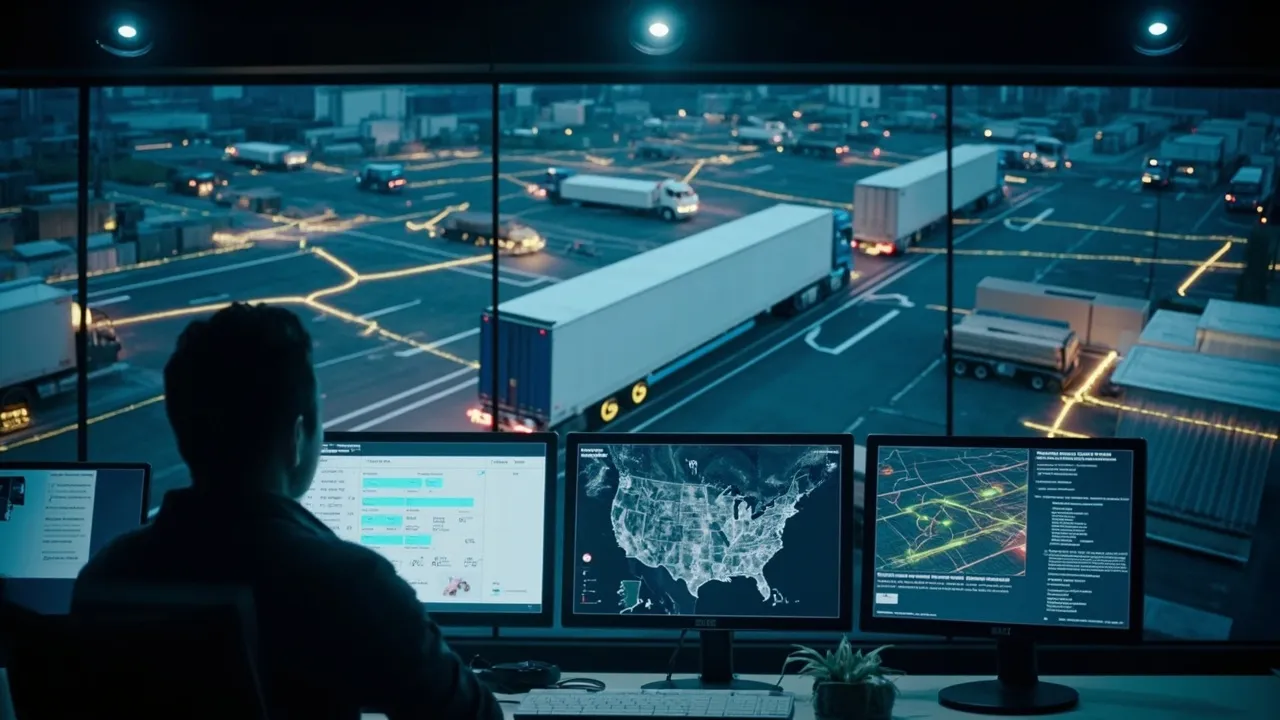
Third, it enables continuous monitoring instead of episodic reporting. That is where the control tower concept finally becomes useful again. A real control tower should not just show where freight is. It should surface which supplier is drifting, which lane is getting noisy, which customer orders are at risk, and which exceptions deserve human attention now.
Real-time supplier intelligence is becoming operational, not theoretical
The strongest argument for unified data architecture is not reporting. It is intervention.
Inbound Logistics describes a market shift toward near-real-time monitoring of regulatory changes, macro signals, supplier performance trends, and risk indicators. That matters because supplier intelligence is no longer just a procurement function. It shapes transportation planning, inventory buffers, customer commitments, and working-capital exposure.
Consider the operational chain reaction. If a supplier shows a rising pattern of late shipments, that should not live only in a supplier scorecard. It should feed planning assumptions, booking lead times, safety-stock decisions, and customer ETA communication. If finance sees growing invoice volatility from the same supplier or lane, that signal should sit next to service data, not in a separate spreadsheet graveyard.
This is where a Snowflake-style approach shines. It gives teams a place to connect structured data from internal systems with external signals, then make that information usable without forcing every decision through a manual reconciliation process.
What this means for TMS architecture
A modern TMS cannot just be an execution engine anymore. It has to participate in a broader data architecture.
That does not mean every TMS vendor needs to become a data warehouse company. It means shippers should expect modern transportation systems to expose clean data, support shared taxonomies, connect to partner ecosystems, and work inside a unified analytics environment.
Inbound Logistics makes the same point more broadly when it says AI-ready supply chains need consistent, clean, connected data and interoperability across systems and partners. For logistics teams, that translates into a simple architectural test: can your TMS feed a shared operating model, or is it still a closed box that generates reports after the fact?
The winners in the next wave of logistics software will not be the tools with the prettiest dashboards. They will be the ones that make cross-functional decisions faster. That means linking execution data to procurement risk, inventory context, cost exposure, and service outcomes in one environment.
What shippers should ask now
If you are evaluating your current stack, ask four blunt questions.
- Can supplier, shipment, cost, and exception data be joined without a heroic manual effort?
- Can teams monitor risk continuously, or are they still reviewing static reports?
- Is your AI roadmap grounded in a clean shared data layer, or just layered on top of fragmented systems?
- Does your TMS contribute usable data to the wider business, or trap it?
That is the real divide. The companies building resilient logistics operations in 2026 are not merely buying more visibility software. They are building a data foundation that lets visibility, intelligence, and execution work together.
The control tower is not dead. It just moved underneath the application layer.
If your team wants a TMS that fits into a smarter, more connected logistics data strategy, book a CXTMS demo and see how CXTMS helps unify transportation data into decisions your operators can actually use.