Cold Storage Is Splitting in Two: Why Newer High-Throughput Facilities Are Winning Demand in 2026

Cold storage demand did not disappear in 2025. It got pickier.
That is the real story heading into 2026. The U.S. market is not simply hot or cold. It is splitting in two, with modern refrigerated facilities pulling in tenants while older buildings are increasingly treated like operational compromises.
According to Logistics Management’s coverage of Newmark’s latest cold-storage report, the U.S. cold-storage sector recorded about 3.5 million square feet of positive absorption in 2025 even as vacancy climbed to a 20-year high. That combination matters. Demand still exists, but tenants are becoming much more selective about where they put product, labor, and capital.
Newmark’s takeaway is blunt: newer, high-throughput facilities captured a record share of absorption in 2025, while older buildings experienced record move-outs. In other words, cold storage is no longer competing on cubic feet alone. It is competing on speed, energy performance, automation readiness, and labor efficiency.
Why the Newer Buildings Are Pulling Away
For years, cold storage decisions were often framed around capacity, geography, and access to transport. Those still matter, obviously. But they are no longer enough.
Operators now need buildings that can move product faster, hold tighter temperature tolerances, support automation, and avoid crushing utility bills. In refrigerated logistics, throughput is strategy. Every extra pallet touch, every minute lost in dock staging, and every spike in energy usage shows up somewhere in spoilage risk, labor cost, or service failure.
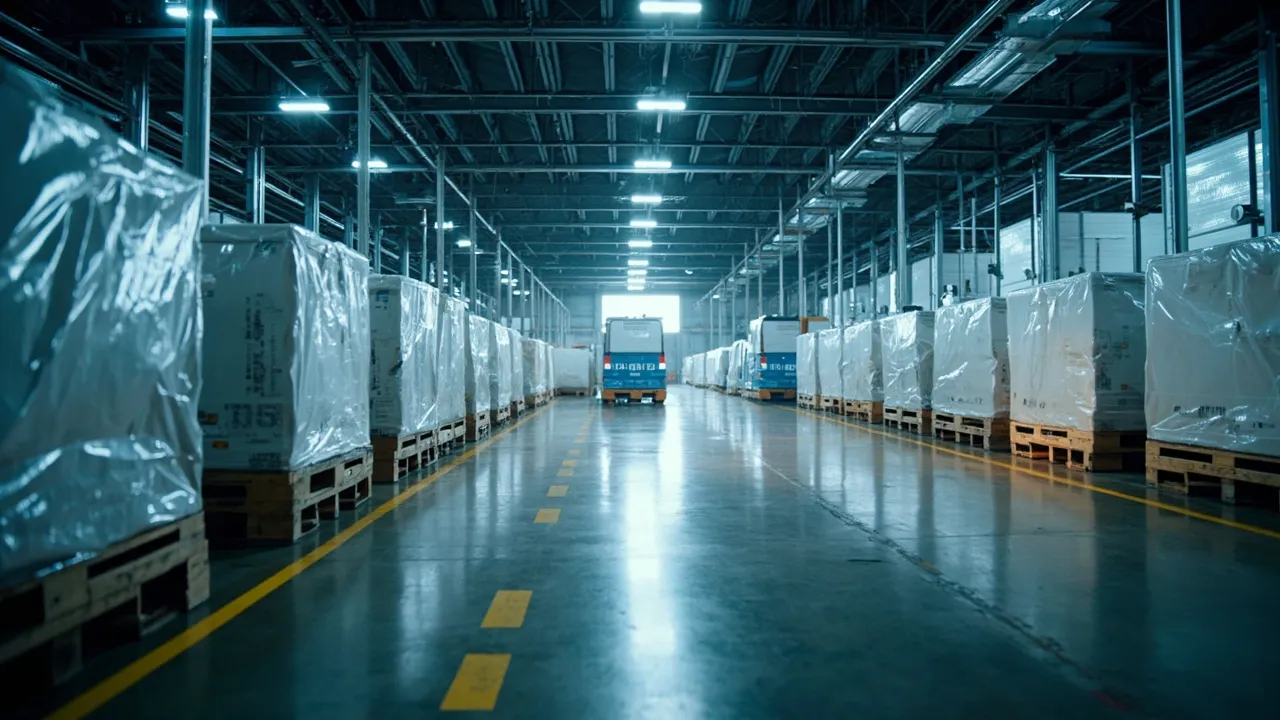
That is why the definition of a strong cold facility is changing. Modern buildings are being designed around denser rack layouts, better dock flow, more reliable refrigeration systems, and automation-friendly footprints. Those are not nice extras. They are the reason tenants are choosing one site over another.
Food Logistics’ 2026 cold-chain outlook highlights the same shift from an operating perspective. The publication points to inventory placement closer to end customers as a major driver of cost efficiency, because shorter transit distances reduce delivery time and transportation cost. That favors facilities built for rapid turn times, not just long-term frozen storage.
Throughput Is Beating Age, and Age Is Losing Badly
Older cold-storage assets are not automatically obsolete, but plenty of them were built for a different operating model. They may have lower clear heights, weaker dock configurations, poorer insulation, less efficient refrigeration, and layouts that make automation retrofits painful.
That used to be survivable when capacity was scarce and tenants had fewer choices. It is much harder now.
A rising vacancy rate alongside positive absorption tells you the market is sorting itself. Space is available, but not all space is equally useful. Tenants are effectively saying they would rather pay for performance than accept hidden operating drag from an older box.
That operating drag is real. Food Logistics has also noted that greener practices and modern cold-building features can cut labor and utility-related energy costs by almost 50% in some cases. Even if the exact savings vary by site and operating model, the direction is obvious: newer assets are better positioned to lower total operating cost, not just offer prettier specs on a leasing brochure. McKinsey makes the same broader warehouse point in its piece on getting warehouse automation right, arguing that companies are investing in automation to improve speed, reliability, flexibility, and labor productivity across distribution operations.
Why Automation Matters More in Cold Than Almost Anywhere Else
Cold environments punish inefficiency faster than ambient warehouses do.
Labor is harder to recruit and retain, dwell time is more expensive, and service errors can destroy product value instead of just delaying it. That is why automation is becoming such a decisive dividing line in refrigerated logistics.
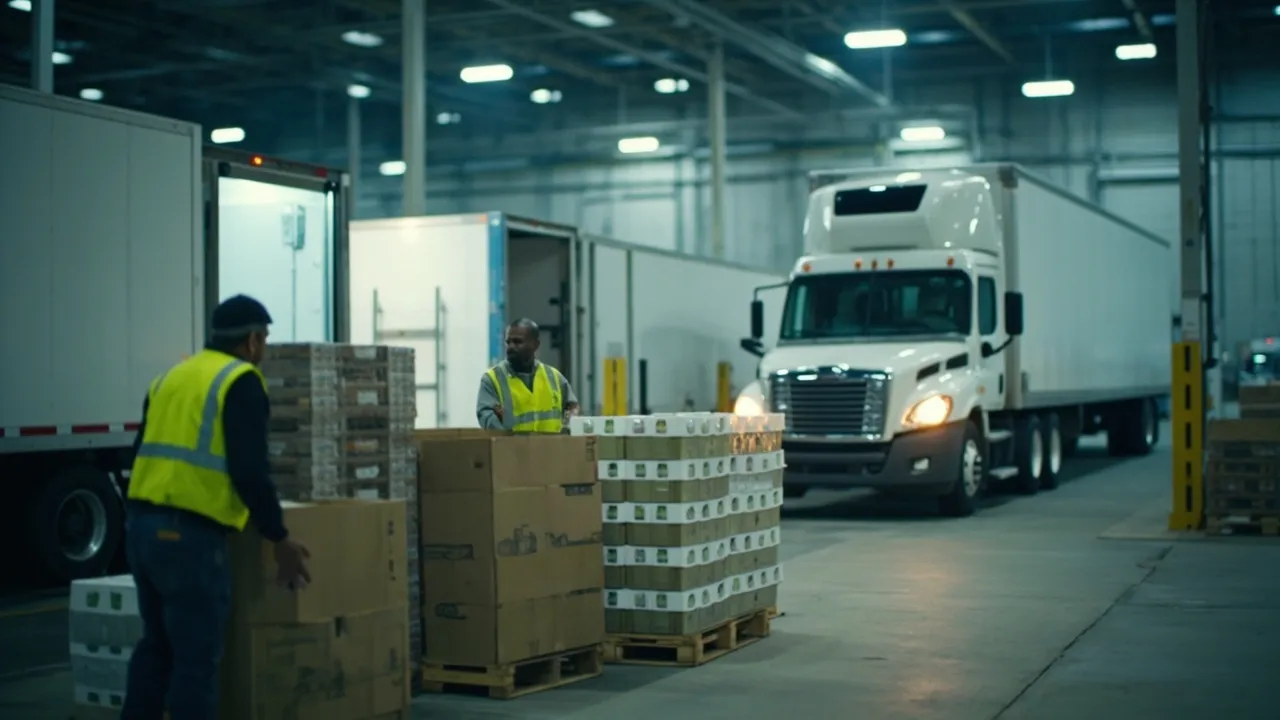
High-throughput cold facilities are increasingly designed to support goods-to-person flows, conveyorized movement, smarter dock scheduling, sensor-driven monitoring, and tighter inventory visibility. Those capabilities reduce manual handling and compress cycle times, which matters a lot when labor is expensive and temperature exposure is unforgiving.
This is also where disruption planning enters the picture. According to Food Logistics’ report on Accenture’s latest survey, 76% of global supply chain executives expect continued higher levels of change and disruption in 2026. In that environment, cold-storage tenants are not just leasing square footage. They are buying resilience.
A facility that can process volume quickly, maintain cleaner visibility, and keep service stable under labor or transport stress is far more valuable than one that merely stores product cheaply on paper.
What This Means for Food and Pharma Shippers
Food shippers, grocers, and temperature-sensitive pharmaceutical operators should take the market’s split seriously.
The wrong cold-storage partner can quietly create margin erosion through extra handling, missed turns, energy pass-throughs, shrink, and service inconsistency. The right one can improve network velocity and protect product integrity at the same time.
A practical selection framework for 2026 should include five tests.
1. Measure throughput, not just capacity
Ask how quickly a facility can receive, put away, pick, stage, and reload under peak conditions. Cubic capacity without cycle-speed discipline is a trap.
2. Pressure-test the energy model
Refrigerated operations live and die by utility performance. Look for insulation quality, refrigeration-system modernization, dock-seal discipline, and evidence of energy-management controls.
3. Check automation readiness
Not every operator needs a fully automated site, but every shipper should understand whether the building can support automation, sensors, and modern warehouse execution workflows over time.
4. Evaluate labor resilience
Cold labor is hard labor. Ask about retention, training, safety design, and how much the operation still depends on manual touches in frozen or chilled environments.
5. Align the site to network proximity
The closer inventory is to end demand, the more valuable rapid-turn cold facilities become. Site selection should be tied to service promise, not just real-estate availability.
The Real Cold-Storage Market Story in 2026
The cold-storage market is not collapsing. It is becoming less forgiving.
Newer high-throughput facilities are winning because they fit the way refrigerated supply chains now need to operate: faster, leaner, more automated, and more resilient under disruption. Older buildings are losing share because too many of them impose hidden operating penalties that tenants no longer want to absorb.
That is the split. And it is going to shape cold-chain network strategy all through 2026.
For shippers, the lesson is simple. Stop evaluating cold-storage partners like they are interchangeable. They are not. In this market, building quality is operating quality.
Want better visibility across refrigerated freight, warehouse handoffs, and carrier execution? Book a CXTMS demo to see how CXTMS helps logistics teams manage cold-chain complexity with fewer blind spots.