Yard Management Systems Meet AI: How Smart Dock Scheduling Cuts Dwell Times by 40%

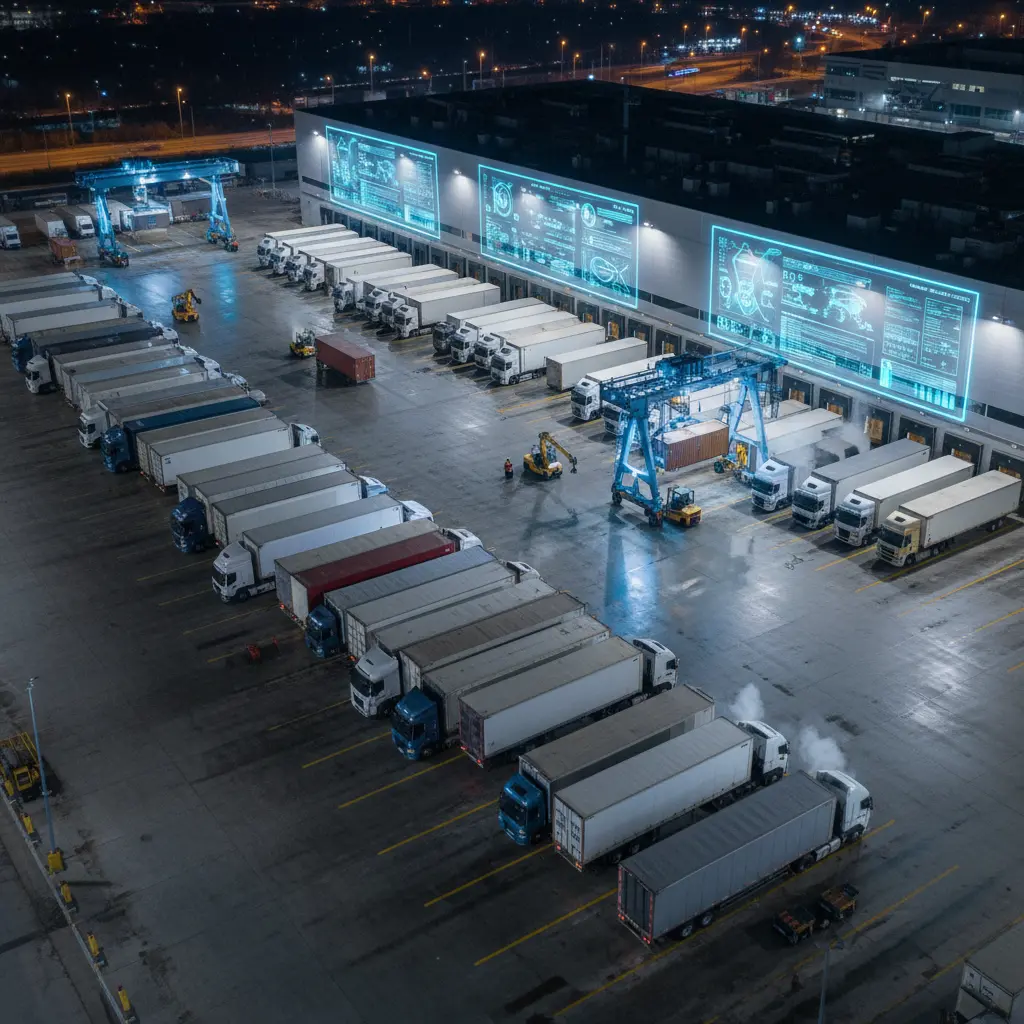
The yard behind your distribution center might be costing you millions — and you don't even know it. While warehouse automation and TMS platforms get all the attention, the space between the gate and the dock remains one of logistics' most expensive blind spots. But that's changing fast in 2026, as AI-powered yard management systems (YMS) emerge as the missing link in supply chain optimization.
The $3 Billion Hidden Cost Center
According to the Federal Motor Carrier Safety Administration, detention and excessive dwell times cost the trucking industry $3 billion annually. That's money lost to idle trailers, frustrated drivers, and broken appointment windows. A recent case study showed one food distributor discovered their average trailer dwell time was 3.8 hours, with 22% of trailers exceeding the standard two-hour free window — resulting in $180,000 per year in detention fees alone.
The problem compounds across every touchpoint: carriers lose driver hours and truck capacity, shippers pay escalating detention charges ($50-$100 per hour after the grace period), and warehouse teams struggle with dock congestion that cascades into missed pickups and delayed deliveries.
Logistics Management's 2025 YMS Update identified the top yard and dock challenges plaguing modern supply chains:
- 39% cite inefficient manual processes — clipboard-based check-ins and phone tag between yard jockeys and dock supervisors
- 36% struggle with yard congestion — trailers parked haphazardly with no clear visibility into what's staged where
- 35% face labor shortages — not enough hands to move trailers efficiently or manage dock assignments
- 31% lack real-time visibility — the yard remains a "black hole" between inbound transportation and warehouse systems
These aren't minor inefficiencies. They're structural bottlenecks that throttle the entire supply chain's throughput.
Enter AI: The Yard Gets Smart
Modern yard management systems have evolved far beyond basic trailer tracking. Today's platforms integrate AI-driven dock scheduling, predictive analytics, and real-time orchestration across gate, yard, and dock operations. The result? Dwell time reductions of 40% or more and detention cost savings approaching six figures annually for mid-sized operations.
Here's how AI transforms the yard:
1. Intelligent Dock Appointment Scheduling
Traditional dock scheduling relies on static time slots and manual coordination. AI-powered systems analyze historical patterns, live traffic conditions, and warehouse labor availability to dynamically optimize appointment windows. They factor in:
- Trailer type and load complexity — reefer units get priority at temperature-controlled docks; live loads scheduled during peak labor shifts
- Carrier performance history — frequent no-shows or late arrivals trigger buffer time adjustments
- Upstream delays — integrations with TMS and telematics flag inbound shipments running behind schedule, triggering automatic rescheduling before the trailer even arrives
The outcome: fewer empty docks waiting for delayed trucks, fewer trucks waiting for occupied docks, and smoother flow throughout the day.
2. Predictive Yard Orchestration
Modern YMS platforms use computer vision and IoT sensors to track every trailer in real time — eliminating the "where's trailer #4327?" phone calls that plague manual yards. But AI takes this further by predicting bottlenecks before they form.
Machine learning models analyze:
- Current yard density and dock utilization rates
- Inbound appointment schedule vs. actual arrival patterns
- Outbound pickup windows and carrier availability
When the system detects potential congestion (e.g., six inbound deliveries scheduled within the same 30-minute window), it proactively suggests rescheduling or pre-stages trailers to expedite dock turns.
3. Automated Yard Moves and Jockey Routing
Yard jockeys — the specialized drivers who move trailers within the facility — often operate reactively, responding to radio calls and visual cues. AI-powered YMS platforms optimize jockey routes in real time, sequencing moves to minimize deadhead distance and idle time.
One case study showed a 55-100% reduction in detention costs after implementing automated yard workflows, including optimized jockey dispatch rules and smart trailer pre-staging based on predicted dock availability.
The YMS-TMS-WMS Integration Imperative
Yard management doesn't exist in a vacuum. The real power emerges when YMS integrates seamlessly with transportation management systems (TMS) and warehouse management systems (WMS) — creating a unified orchestration layer across inbound, yard, and outbound operations.
From TMS to YMS: Appointment requests, carrier details, and shipment priorities flow automatically into the yard system, eliminating manual data entry and ensuring dock schedules align with broader transportation plans.
From YMS to WMS: Real-time trailer location and dock assignment data feed into warehouse picking and staging workflows, so teams know exactly which trailers are ready for unloading and which outbound orders should stage for which docks.
The result: Synchronized inbound and outbound flows, reduced cross-dock times, and the ability to adapt dynamically to disruptions like late arrivals or expedited orders.
Logistics Management research emphasizes that shippers increasingly view YMS as "the bridge" connecting warehouse and transportation operations — especially critical amid ongoing labor shortages and supply chain volatility.
Cloud, AI, and the 2026 Adoption Wave
Industry forecasts project that cloud-based scheduling and YMS adoption will reach 75% in 2026, up from less than half of facilities just two years ago. The shift is driven by several converging trends:
- Lower barriers to entry: SaaS-based YMS platforms eliminate the need for on-premises infrastructure and lengthy implementations
- AI accessibility: Pre-trained models and vendor-managed machine learning pipelines mean even small-to-mid-sized operations can leverage predictive optimization
- Ecosystem integrations: Open APIs and pre-built connectors to popular TMS and WMS platforms accelerate time-to-value
In February 2025, Loadsmar launched a next-gen YMS integrating gate operations (Opendock), yard tracking (NavTrac), and dock scheduling into a single unified platform — signaling the industry's move toward holistic, AI-native solutions rather than bolt-on point tools.
CXTMS: Your Dock Scheduling Command Center
At CXTMS, we've embedded intelligent dock scheduling directly into our transportation management platform, eliminating the integration headaches that plague legacy systems. Our dock scheduling module:
- Syncs automatically with inbound shipments — TMS appointment requests populate dock calendars in real time, with AI-optimized slot recommendations
- Reduces trailer dwell times — predictive analytics and proactive alerts keep operations flowing smoothly, cutting detention charges by an average of 40%
- Integrates with your WMS and telematics — we pull live data from upstream systems to adjust schedules dynamically, ensuring your dock plan always reflects reality
- Provides real-time visibility — operations teams, carriers, and warehouse managers all see the same live yard map and dock status, eliminating miscommunication
Whether you're managing a single DC or a network of cross-dock hubs, CXTMS gives you the visibility and control to turn your yard from a cost center into a competitive advantage.
Ready to cut dwell times and detention costs? Contact CXTMS to see our intelligent dock scheduling in action.