USPS Opens Last-Mile Delivery Bidding: What Every Shipper Needs to Know About DDU Access in 2026

The U.S. Postal Service just made one of the most significant moves in parcel logistics in years: opening its 18,000+ Destination Delivery Units to competitive bidding. For mid-size shippers who've long been locked out of premium last-mile access, this changes everything.
What USPS Actually Announced
On January 20, 2026, USPS launched its online bid solicitation platform, formalizing access to its massive last-mile delivery network. The program offers same-day or next-day direct-to-customer delivery through more than 18,000 DDUs nationwide.
The response has been overwhelming. According to Postmaster General David Steiner, more than 1,200 companies and individuals requested portal access within weeks — what he called "dramatic interest in our last mile."
USPS expects to notify winning bidders in Q2 2026, with service under those agreements beginning in Q3.
Why This Matters Now
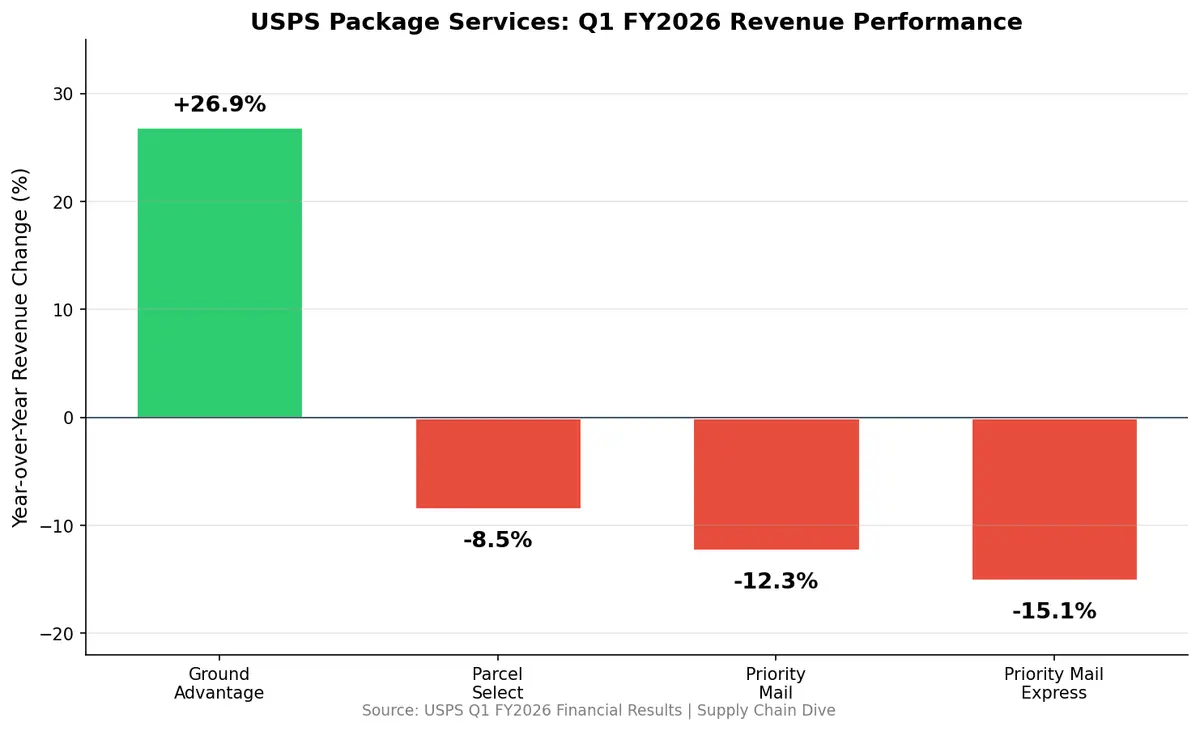
USPS isn't doing this out of generosity — it's a strategic pivot. The agency posted year-over-year revenue and volume declines for package shipping services in Q1 FY2026 (ending December 2025). While USPS Ground Advantage surged 26.9% in revenue and 24.1% in volume year over year, segments like Parcel Select, Priority Mail, and Priority Mail Express declined steeply enough to offset that growth.
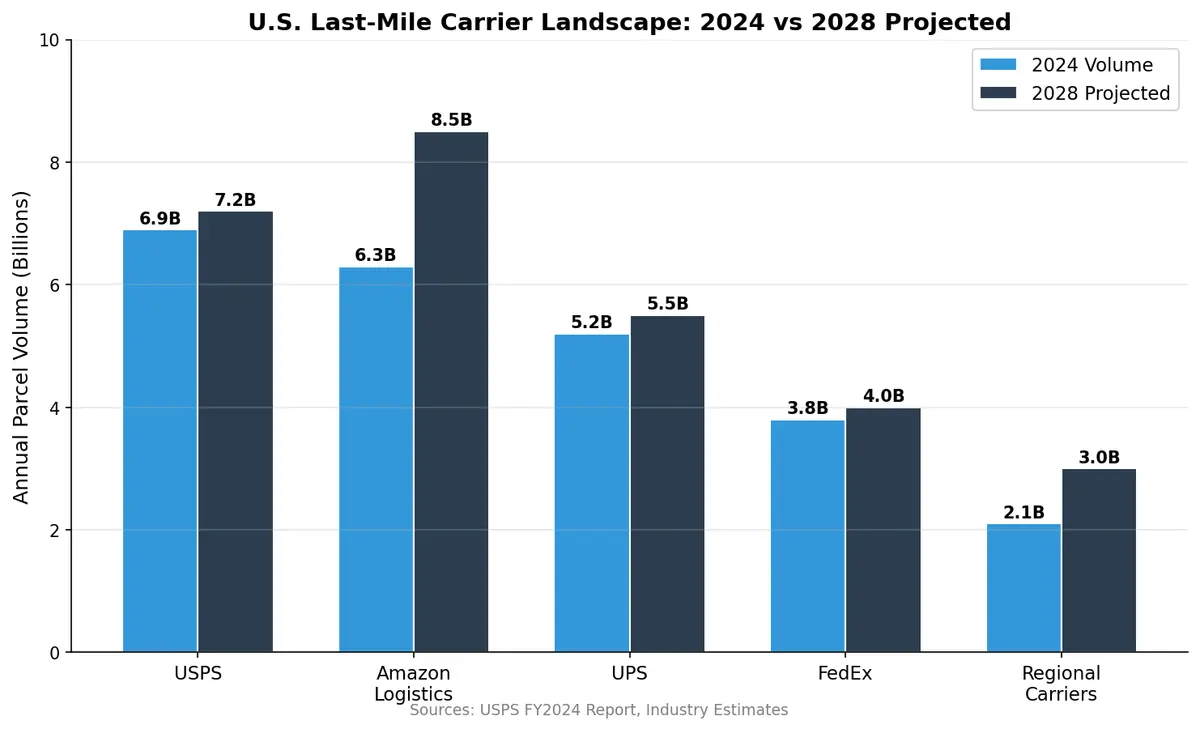
The numbers tell the story: USPS delivered 6.9 billion parcels in 2024, but Amazon Logistics is closing fast at 6.3 billion — and is projected to surpass USPS by 2028. Opening DDU access is USPS fighting to stay relevant in the last-mile game.
How the Bidding Process Works
The DDU bid program isn't a free-for-all. Here's what shippers need to understand:
Eligibility: Shippers of all sizes can participate — this isn't limited to enterprise players. The solicitation process is designed to be accessible to mid-market operators who previously couldn't negotiate direct DDU access.
What you get: Direct entry to USPS's last-mile network, bypassing traditional mail processing. Packages go straight to local DDUs for same-day or next-day delivery to residential addresses. This is the same infrastructure that handles 6.9 billion parcels annually.
Timeline:
- Now: Bid portal open, accepting proposals
- Q2 2026: Winning bidders notified
- Q3 2026: Service agreements go live
Key consideration: USPS has been selling DDU delivery access for years, but only through individually negotiated Negotiated Service Agreements (NSAs). The new platform standardizes and democratizes the process.
What This Means for Mid-Size Shippers
This is where things get interesting. Previously, only the largest shippers could negotiate DDU access directly. The formalized bidding platform levels the playing field in three critical ways:
1. Cost reduction potential. Direct DDU injection eliminates intermediate processing steps. Shippers who currently route through USPS regional facilities can expect meaningful per-package savings, particularly on lightweight residential deliveries.
2. Speed improvements. Same-day and next-day delivery from DDUs means packages reach customers faster. For e-commerce brands competing on delivery speed, this is a viable alternative to building out proprietary delivery networks.
3. Multi-carrier flexibility. Smart shippers won't go all-in on DDU access alone. The real advantage is adding USPS DDU as another lane in a multi-carrier strategy — routing packages to whichever carrier offers the best cost-speed tradeoff for each specific delivery.
The Multi-Carrier TMS Advantage
Here's the operational reality: managing DDU access alongside UPS, FedEx, regional carriers, and potentially Amazon's delivery network requires sophisticated routing logic. You can't optimize across five or six carrier options with spreadsheets.
A modern Transportation Management System becomes essential for:
- Rate shopping across carriers including USPS DDU rates for specific zones
- Automated routing decisions based on package dimensions, destination, delivery speed requirements, and cost
- Volume tracking to ensure you meet minimum commitments under your DDU agreement
- Performance analytics to measure actual delivery times and costs against carrier SLAs
What to Do Right Now
If you ship more than a few hundred packages per day to residential addresses, here's your action plan:
- Register for the USPS bid portal if you haven't already. The window is open now.
- Analyze your current last-mile spend by zone and carrier. Know your baseline before bidding.
- Model the DDU cost impact. Compare your current per-package costs against projected DDU rates for your top delivery zones.
- Ensure your TMS can handle multi-carrier optimization. If you're still manually routing shipments, you'll leave money on the table regardless of what USPS offers.
- Plan for Q3 2026 integration. Winning bidders will need to operationalize DDU injection quickly.
The Bigger Picture
USPS's DDU bid program is part of a broader transformation in last-mile logistics. The days of single-carrier dependency are ending. The winners will be shippers who build flexible, data-driven delivery networks that can shift volume dynamically based on cost, speed, and reliability.
The Postal Service is betting its future on becoming the infrastructure layer for American e-commerce. For shippers willing to invest in the technology to manage that complexity, the opportunity is real.
Need multi-carrier optimization that includes USPS DDU routing? Contact CXTMS for a demo of our parcel shipping module.