Tractor Supply’s Final-Mile Hub Model Shows How Rural Delivery Networks Scale Without Killing Margin

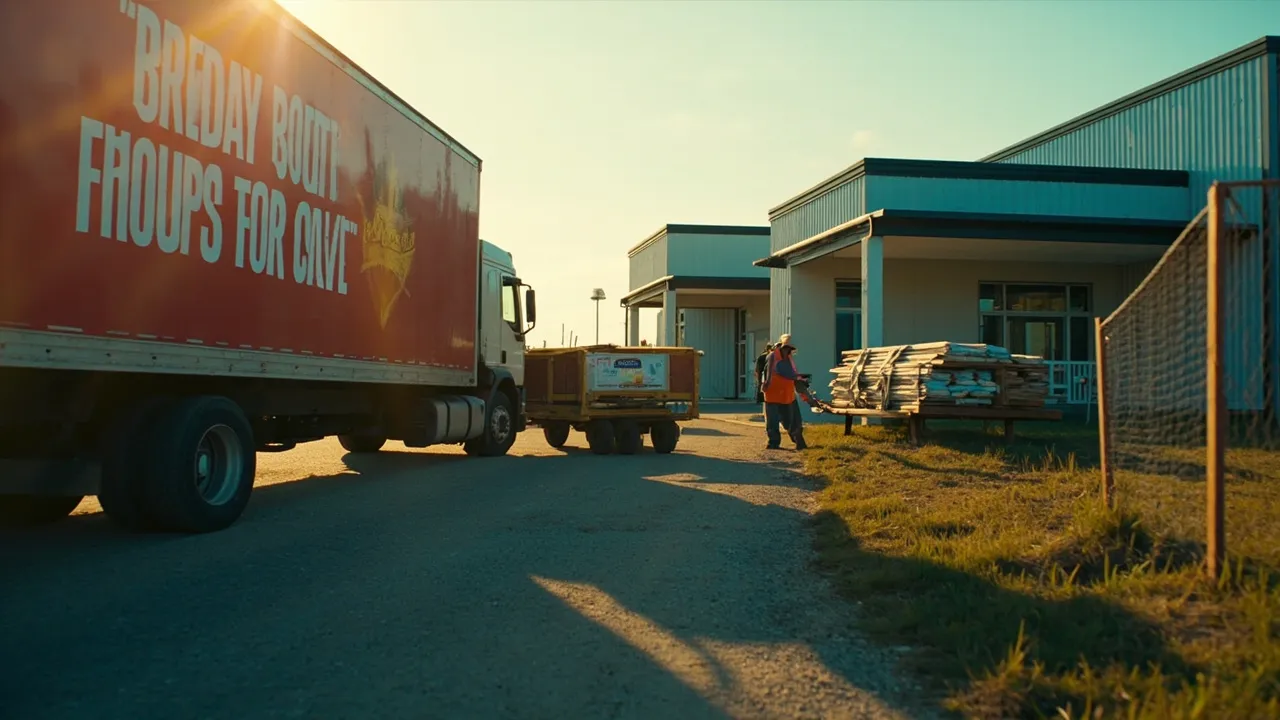
Rural final mile is usually where omnichannel economics go to die.
Stops are farther apart, order sizes swing wildly, parcel carriers pile on surcharges for bulky goods, and the customer still expects delivery to feel simple. That is why Tractor Supply’s latest network buildout matters. It is not just another retail expansion story. It is a useful case study in how rural delivery can scale without crushing margin.
According to Supply Chain Dive’s April 23 report on Tractor Supply’s delivery expansion, the retailer posted a double-digit increase in delivery volume in the quarter ended March 28. The company also said it opened about 200 final-mile hubs last year and plans to add 176 more this year. That kind of rollout is not about experimentation anymore. It is network design.
The logic is pretty sharp. Instead of treating every store like an isolated fulfillment point or handing oversized deliveries to expensive third parties, Tractor Supply is creating hub locations that bring together drivers and inventory from multiple facilities for nearby deliveries. In practical terms, that means a tighter dispatch radius, better route consolidation, and more control over large, awkward, high-quantity orders that do not fit neatly into parcel networks.
That matters because rural customers often buy exactly the kinds of products that break standard last-mile models. Tractor Supply’s own example is almost comically perfect: orders such as 250 bags of shavings or 75 16-foot fence panels. Those are not lightweight e-commerce cartons. They are freight-like orders wearing a retail label. If a retailer tries to serve that demand through generic parcel workflows, transportation cost balloons fast.
The hub model changes the math by creating delivery density where little existed before. Density is the whole game in final mile. When a retailer can cluster more eligible deliveries within a service area, it spreads driver time, vehicle cost, and route planning effort across more revenue per trip. That is why Tractor Supply says scaling the program is helping lower its cost per delivery while demand keeps growing, again as reported by Supply Chain Dive.
There is a second layer here that many retailers miss. The network is not only cutting cost. It is also unlocking demand that was previously hard to capture. In its coverage of the company’s earlier 2026 delivery strategy, Supply Chain Dive reported that Tractor Supply expected more than 150 new hub locations this year, bringing the total to about 375 hubs. Leadership said that level of coverage would support last-mile delivery capabilities across more than 1,200 stores and reach over 15 million customers.
That is the part operators should pay attention to. Better delivery networks do not just protect service. They expand the addressable basket.
When customers know a retailer can reliably deliver bulky items, they buy differently. They stop trimming orders down to what fits in a pickup truck. They become more willing to bundle larger quantities into one transaction. That is especially relevant in rural and semi-rural markets, where shoppers may prefer fewer, larger replenishment trips and where products like fencing, feed, animal bedding, lawn equipment, and seasonal goods create naturally oversized orders.
This is why Tractor Supply’s approach looks less like a last-mile add-on and more like a local freight network embedded inside retail. The company still uses delivery partners for smaller and medium-sized items, but it is reserving its own delivery capacity for the orders where control matters most. That split model is smart. It avoids overbuilding internal capacity for simple shipments while protecting margin on shipments that would otherwise trigger oversized handling costs and carrier surcharges.
There is margin evidence behind that strategy too. Supply Chain Dive’s February report said Tractor Supply identified about $10 million a year in freight-related savings tied to the initiative. At the same time, the company framed the network as a way to improve efficiency and support digital growth. Those two outcomes belong together. E-commerce in bulky retail categories only scales if the delivery model gets better as volume rises, not worse.
For regional retailers, distributors, and omnichannel networks, the playbook is pretty clear.
First, do not measure final mile only as a transportation expense. In low-density geographies, delivery capability shapes what customers are willing to order in the first place. If bigger baskets depend on controlled delivery, then the network is a revenue lever, not just a cost center.
Second, build around product reality. Hub-based delivery works best when order profiles include large, heavy, or high-quantity goods that are painful for parcel carriers and too inconsistent for static store-level dispatch. If your assortment includes farm supplies, building materials, furniture, appliances, or commercial replenishment orders, generic last mile is probably the wrong tool.
Third, chase density surgically. The point is not to blanket every market with the same operating model. The point is to identify clusters where nearby stores, customer demand, and delivery frequency can support route economics. Tractor Supply’s rollout shows that once those clusters are established, the model can scale in repeatable increments.
Fourth, separate bulky-item execution from standard parcel execution. One network rarely does both equally well. Retailers that force everything through one operating model usually end up paying too much for the hard deliveries and under-serving the easy ones.
The bigger takeaway is that rural delivery no longer has to be treated as an unavoidable margin penalty. With the right hub structure, the right product mix, and enough local density, it can become a competitive advantage.
Tractor Supply’s network is proving exactly that. More hubs are creating more coverage, more coverage is supporting more volume, and more volume is improving delivery economics. That is the flywheel. And for retailers trying to serve low-density markets with high-bulk orders, it is a much better answer than hoping parcel carriers solve a problem they were never built for.
Want to design a smarter delivery network for bulky freight, omnichannel fulfillment, and regional coverage? Request a CXTMS demo to see how CXTMS helps logistics teams model routes, manage execution, and control transportation cost across complex delivery networks.