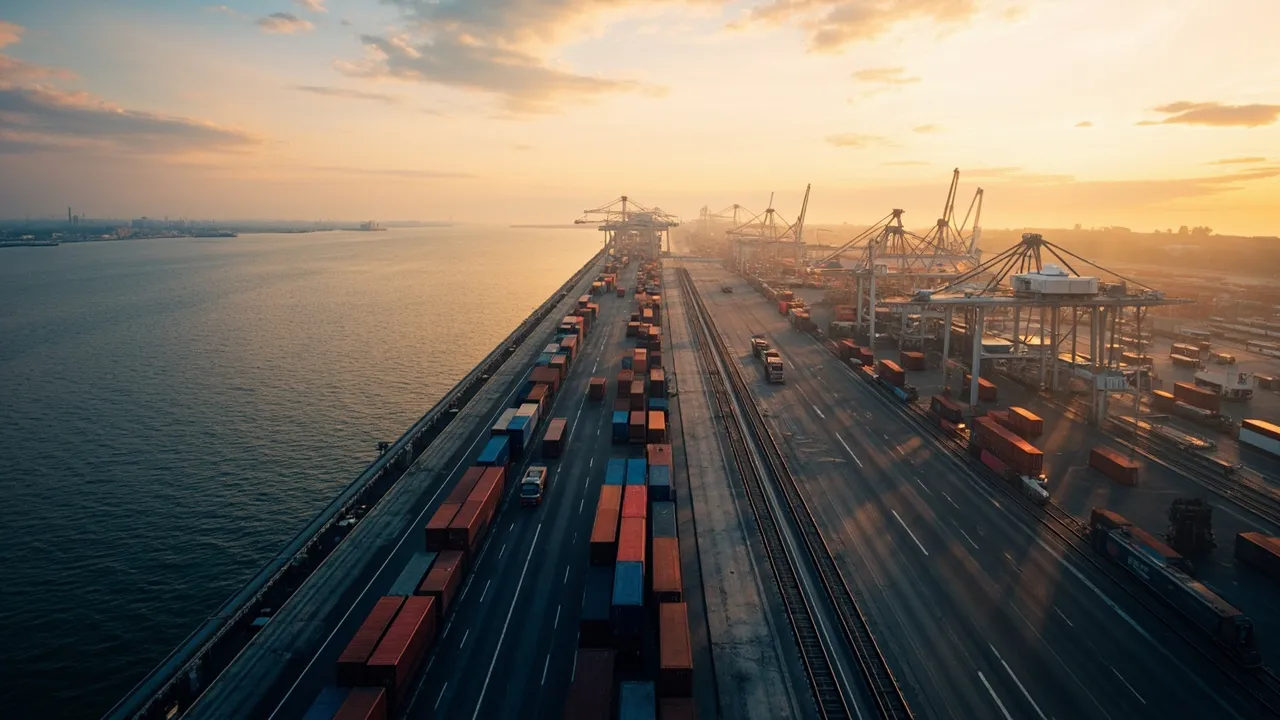
Tesla's 538,720-Square-Foot Texas Distribution Center: Build the Inbound Plan Before 2028

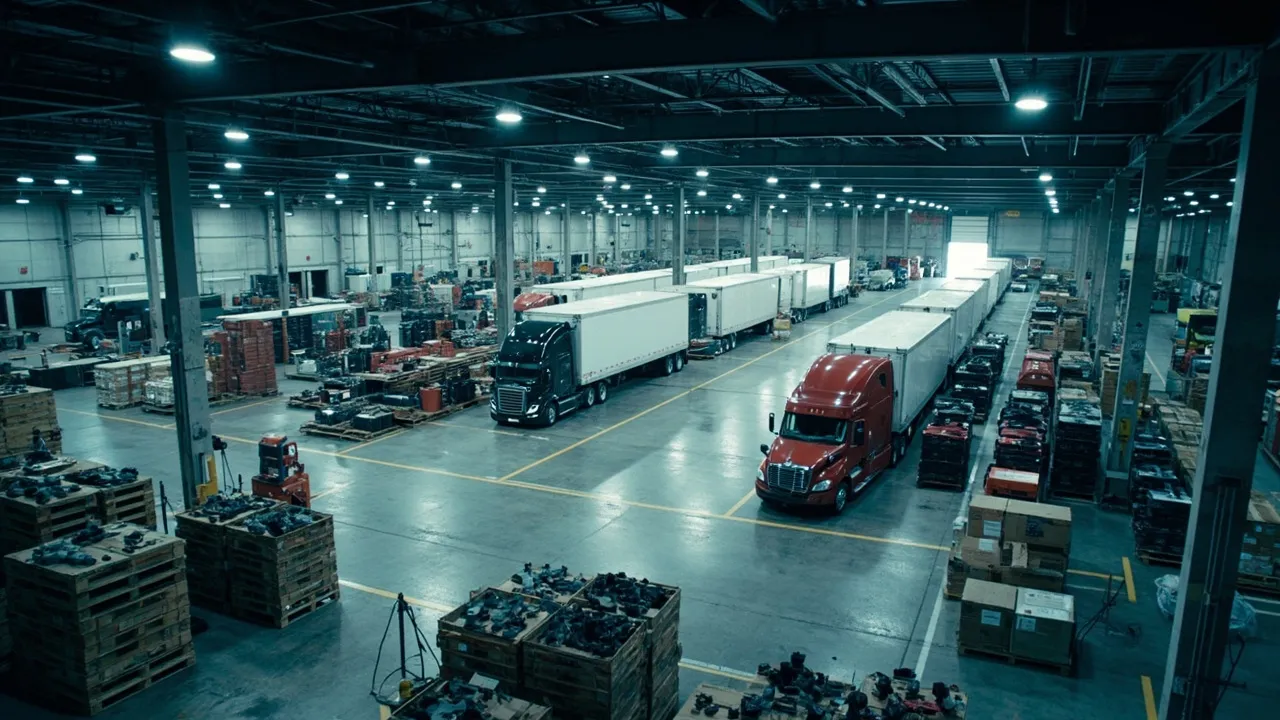
Tesla's planned Texas distribution center may not open until 2028, but the inbound operating model should be taking shape now. A facility can be physically complete and still struggle at launch if suppliers, carriers, inventory rules, and dock schedules have not been tested as one system.
Supply Chain Dive reports that Tesla expects to spend just over $1.4 million on the build-out of 538,720 square feet of existing lease space. Construction is slated to begin December 7. Those figures describe the real-estate project; they do not describe the transportation workload that will determine whether the building performs.
For logistics leaders, the useful question is not simply when the doors open. It is whether the network can move from commissioning volume to steady-state volume without burying receiving teams in late trucks, unidentified parts, excess inventory, or urgent replenishment moves.
Start with the flows, not the floor plan
An automotive parts distribution center has at least four connected flows: supplier arrivals, receiving and putaway, outbound staging, and replenishment to delivery or service locations. Each flow needs an explicit planning object.
Supplier arrivals should be modeled by origin, part family, packaging, handling requirements, shipment frequency, and expected arrival window. A pallet of routine service parts should not consume the same appointment logic as high-value electronics, batteries, oversized assemblies, or returns requiring inspection.
The plan should also distinguish storage-bound freight from cross-dock candidates. Parts with predictable downstream demand may move directly from receiving to an outbound lane. Slow movers may require reserve storage and tighter slotting controls. Returns, damaged goods, and unidentified material need quarantine capacity so exceptions do not contaminate available inventory.
This matters at scale. Tesla's proposed footprint is roughly equivalent to nine football fields when end zones are included. Even a small mismatch between the transportation schedule and the internal material-flow design can create long travel distances, congested staging areas, and trailers waiting for doors.
Build an appointment model before booking carriers
Dock capacity is not the number of physical doors. It is the number of loads that can be processed by door type, shift, labor team, equipment availability, and unloading standard. Planners should calculate capacity in 15- or 30-minute intervals, then reserve a portion for variability rather than scheduling every minute.
The appointment policy should define:
- which suppliers receive fixed recurring windows;
- which loads require advance shipment notices and serial-level detail;
- how early and late arrivals are handled;
- when a load can be redirected to another door or overflow yard;
- which exceptions trigger expedited receiving; and
- how missed appointments affect the supplier and carrier scorecards.
Inbound cross-dock failures elsewhere show why this discipline matters. In a separate report, Supply Chain Dive noted that Amazon had 61 active U.S. inbound cross-dock facilities and 13 more in development as of the first quarter of 2025, while capacity constraints and inbound delays had previously forced shipment rerouting. Network size does not compensate for weak arrival control.
Set launch gates that operations can measure
A 2028 target creates time for staged validation. It should not create one distant go-live deadline. A practical ramp plan uses measurable gates.
Inventory accuracy: Test receiving against purchase orders, advance shipment notices, labels, serial numbers, and storage locations. Track both unit accuracy and the time from trailer arrival to inventory availability. Accuracy that takes two days to achieve is not launch-ready.
Dock turns: Measure gate-in to gate-out time by load type, not only as a sitewide average. Averages can hide repeated delays for floor-loaded trailers, oversized parts, or loads requiring quality inspection.
Labor readiness: Certify teams by process and equipment. Include supervisors, yard drivers, inventory-control specialists, and exception owners—not only unloaders. Simulate peak shifts and absentee scenarios before adding volume.
Carrier capacity: Secure primary and backup coverage by lane, equipment type, and day of week. Validate lead times and tender acceptance with real pilot moves. Confirm that backup carriers can meet site, insurance, tracking, and handling requirements before an emergency.
Outbound service: Connect each inbound part family to downstream demand and a replenishment promise. The facility should prove it can protect delivery-center or service-location availability without relying on premium transportation.
Connect commissioning to an executable forecast
A spreadsheet listing projected weekly loads is not enough. The forecast must become shipment-level work. A transportation management system can translate supplier releases and inventory plans into expected loads, appointment demand, carrier tenders, and capacity warnings.
That connection is especially important when assumptions change. If a supplier moves production, packaging density changes, or a downstream location ramps earlier than expected, planners should see the effect on trailers, dock hours, labor demand, and transport cost before freight arrives.
The broader investment environment supports building that digital layer early. The 2025 MHI Annual Industry Report found that 74% of supply chain leaders were increasing technology and innovation investment; 90% planned to spend more than $1 million and 36% planned to spend more than $10 million. The competitive advantage, however, comes from linking systems to operating decisions—not merely installing technology.
For this Texas site, the TMS should maintain one version of the inbound truth: forecast load, ordered load, tendered load, scheduled appointment, in-transit status, received quantity, and exception reason. That timeline lets teams distinguish a supplier miss from a carrier delay or a receiving bottleneck.
Treat opening day as the final test, not the first
The strongest launch sequence begins with a limited group of stable suppliers, adds difficult part families, tests peak-day volume, and rehearses failures. Teams should deliberately simulate a late inbound wave, a closed dock, missing shipment data, and a carrier rejection. Recovery performance is a better readiness signal than a perfect demonstration.
Tesla's proposed investment puts a date and dimensions around the building. The next job is to turn those dimensions into capacity rules, data standards, accountable milestones, and transportation commitments. By 2028, every recurring inbound flow should already have an owner, a tested path, and an exception playbook.
Planning a new distribution operation or tightening an existing one? Request a CXTMS demo to connect inbound forecasts, carrier capacity, appointments, and shipment execution in one workflow.