Supply Chain Visibility Software Market Hits $3.5B in 2026: What Shippers Need to Know

The supply chain visibility software market isn't just growing—it's accelerating at a pace that's reshaping how every shipper, carrier, and freight forwarder operates. With the global market valued at $3.5 billion in 2026 and projected to reach $10.9 billion by 2034 at a 13.4% CAGR, according to GM Insights, visibility has moved from competitive advantage to operational necessity.
The Numbers Tell the Story
Multiple research firms are converging on the same conclusion: visibility software is one of the fastest-growing segments in logistics technology. Industry Research projects even more aggressive growth, estimating the market could reach $16.2 billion by 2035 at a 24.98% CAGR—fueled by exploding cross-border trade volumes and mounting regulatory compliance demands.
What's driving this surge? Three forces are colliding simultaneously:
- Customer expectations have permanently shifted. Same-day and next-day delivery trained consumers to expect real-time tracking on everything, and that expectation is migrating upstream into B2B freight.
- Regulatory pressure is intensifying. From EU supply chain due diligence laws to U.S. Customs modernization, governments are requiring granular shipment data that only digital visibility platforms can provide.
- Disruption fatigue has made the ROI case undeniable. After years of port congestion, container shortages, and geopolitical rerouting, companies that invested in visibility weathered disruptions measurably better than those flying blind.
IoT: The Infrastructure Layer Powering Visibility
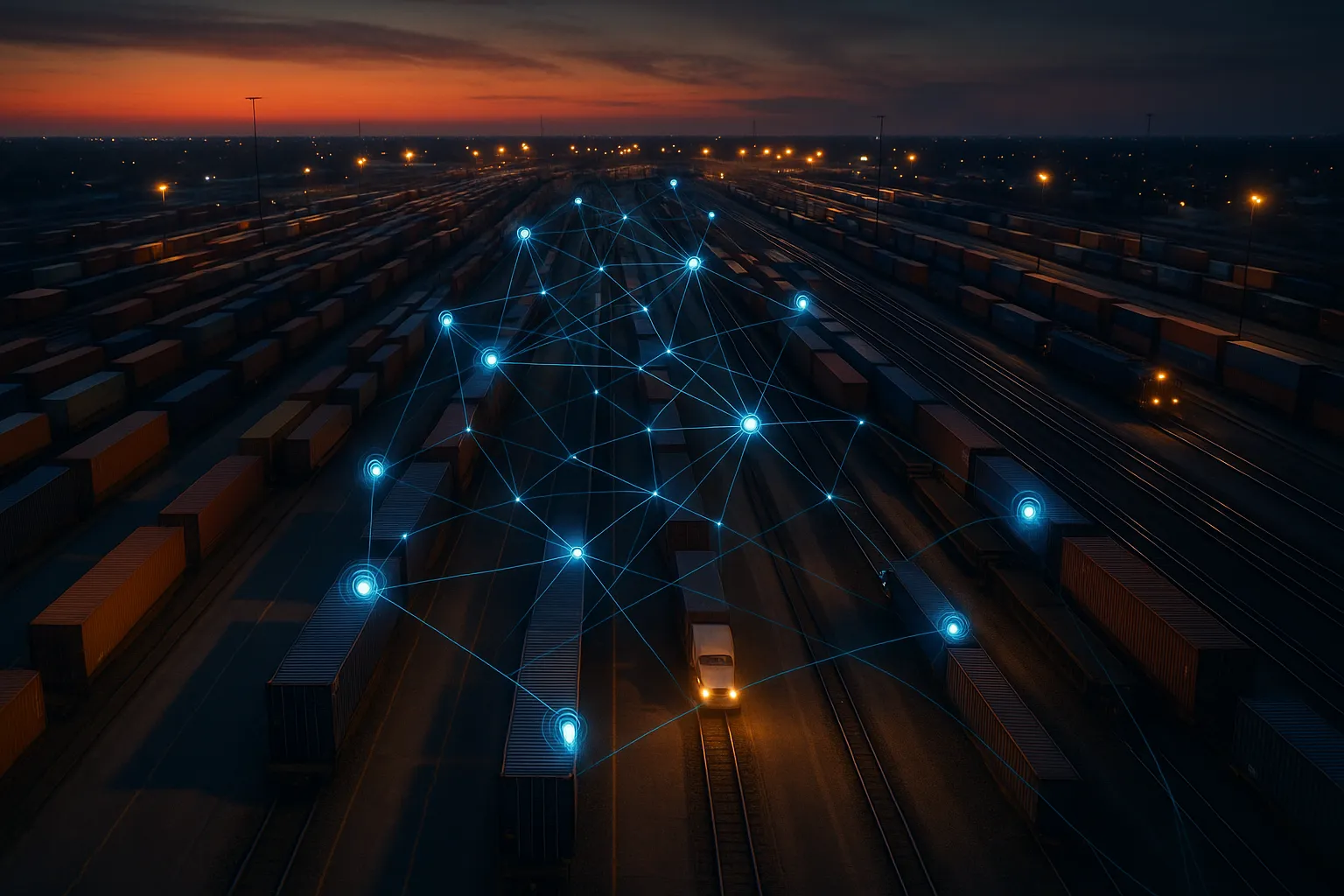
The physical backbone of supply chain visibility is IoT—and adoption is surging. Connected asset-tracking devices are projected to grow from 6.1 million in 2024 to 19.2 million by 2034, with an estimated 25% of all shipping containers carrying IoT sensors by 2026. In the U.S. alone, more than 68% of logistics companies have now implemented real-time visibility systems for domestic and cross-border shipments.
This isn't just GPS dots on a map anymore. Modern IoT sensors capture temperature, humidity, shock, light exposure, and door-open events—creating a rich data stream that transforms passive tracking into active supply chain intelligence.
The IoT logistics sector itself is valued at $61.17 billion in 2025, reflecting how deeply embedded sensor technology has become in freight operations. For shippers handling temperature-sensitive goods, pharmaceuticals, or high-value electronics, IoT-powered visibility isn't optional—it's a compliance requirement.
From "Where Is My Shipment?" to Proactive Intervention
The most significant shift in visibility software isn't technological—it's philosophical. Early platforms answered a simple question: where is my shipment? The current generation answers a far more valuable one: what should I do about it?
Gartner identified advanced data visibility and scenario planning as top priorities for supply chain leaders in 2025, emphasizing that visibility without actionable intelligence is just expensive noise. The leaders in this space are integrating:
- Predictive ETA algorithms that learn from historical patterns, weather, and port congestion data to provide arrival windows accurate to within hours, not days.
- Automated exception management that detects delays, temperature excursions, or route deviations and triggers corrective workflows before a human even notices the problem.
- AI-powered analytics that correlate visibility data across thousands of shipments to identify systemic bottlenecks and optimize carrier selection, routing, and inventory positioning.
Over 57% of retailers have adopted omnichannel visibility tools to synchronize inventory across e-commerce and physical stores—a figure that underscores how visibility is becoming the connective tissue between supply chain execution and customer experience.
The Multimodal Challenge
Most supply chains don't operate on a single mode. A shipment might travel by ocean from Asia, transfer to rail at the port, move to a regional distribution center by truck, and reach the final destination via last-mile delivery van. Each handoff is a visibility gap—and gaps are where shipments get lost, delayed, or damaged without anyone knowing until it's too late.
This multimodal complexity is precisely why integrated TMS platforms with native visibility capabilities are winning over standalone tracking tools. Shippers don't want five dashboards for five modes; they want a single pane of glass that tracks a shipment from origin to destination regardless of how many carriers, modes, and borders it crosses.
What Smart Shippers Are Doing Now
The organizations capturing the most value from visibility investments share three common strategies:
1. They're integrating visibility into procurement decisions. Carrier selection increasingly factors in a carrier's ability to provide real-time data. Carriers that can't share tracking data via API are losing bids to those that can—even at slightly higher rates.
2. They're using visibility data to renegotiate contracts. With granular on-time performance data, shippers can identify underperforming carriers with evidence, not anecdotes. This shifts contract negotiations from relationship-based to data-driven.
3. They're connecting visibility to financial outcomes. Leading shippers are correlating detention and demurrage charges, inventory carrying costs, and customer satisfaction scores directly to visibility gaps—building CFO-friendly business cases for continued investment.
The Bottom Line
The $3.5 billion question isn't whether to invest in supply chain visibility—it's how quickly you can deploy it. With IoT costs falling, API standards maturing, and AI making raw data actionable, the barriers to entry have never been lower. The cost of not having visibility, however, keeps climbing.
The market's explosive growth trajectory reflects a simple truth: in modern logistics, what you can't see will cost you. Every delayed shipment you don't catch, every temperature excursion you don't detect, and every carrier underperformance you can't prove is margin walking out the door.
Ready to gain unified visibility across your entire supply chain? Contact CXTMS for a demo and see how real-time tracking transforms freight operations.