Right-Sized Packaging Is Quietly Becoming One of the Smartest Warehouse Automation Bets in 2026

Warehouse automation gets plenty of hype when there is a robot arm, an AMR fleet, or a sexy demo reel involved. Packaging lines usually get treated like background noise. That is a mistake.
Right-sized packaging is turning into one of the most practical automation bets in logistics because it attacks four ugly costs at once: corrugated waste, void fill, labor, and parcel charges driven by dimensional weight. In 2026, that combination is hard to ignore.
The showcase angle is real enough. In a recent Modern Materials Handling report, Packsize highlighted automated systems that can pack items into ready-to-ship cartons in seconds while reducing material use and replacing slow manual packing steps. Strip away the trade-show polish, and the operational point still lands: packaging automation can move faster and waste less at the same time.
The stronger business case comes from the harder numbers. In a detailed Logistics Management analysis, Packsize said customer before-and-after parcel snapshots often show about $1.10 in total impact per order once corrugated use, void fill, dimensional-weight charges, and labor are considered. The same piece says corrugated use can fall to roughly one-third of prior need, while damage can drop by about 12%.
That is not a cute sustainability win. That is real margin.
DIM weight is where the pain gets expensive
Too many warehouse leaders still think packaging is mostly a materials discussion. Carriers fixed that years ago.
Another Logistics Management report notes that the average box is 40% too big. That is brutal when parcel carriers price for cube as well as weight. The same report makes the geometry painfully clear: if each box dimension is reduced by 20%, corrugated demand falls by 34% and cube size drops by 49%. That directly improves the dimensional-weight math used by UPS, USPS, FedEx, and other parcel networks.
This is why right-sizing matters beyond the pack station. Smaller cartons mean more efficient trailer and parcel network utilization, fewer air pillows and inserts, and less dead space moving through the system. When parcel volume is high, shaving wasted cube is one of the rare improvements that helps transportation, warehouse labor, and sustainability teams all at once.
The throughput case is better than people think
There is also a lazy assumption that packaging automation is slower than human improvisation. Usually, it is the opposite.
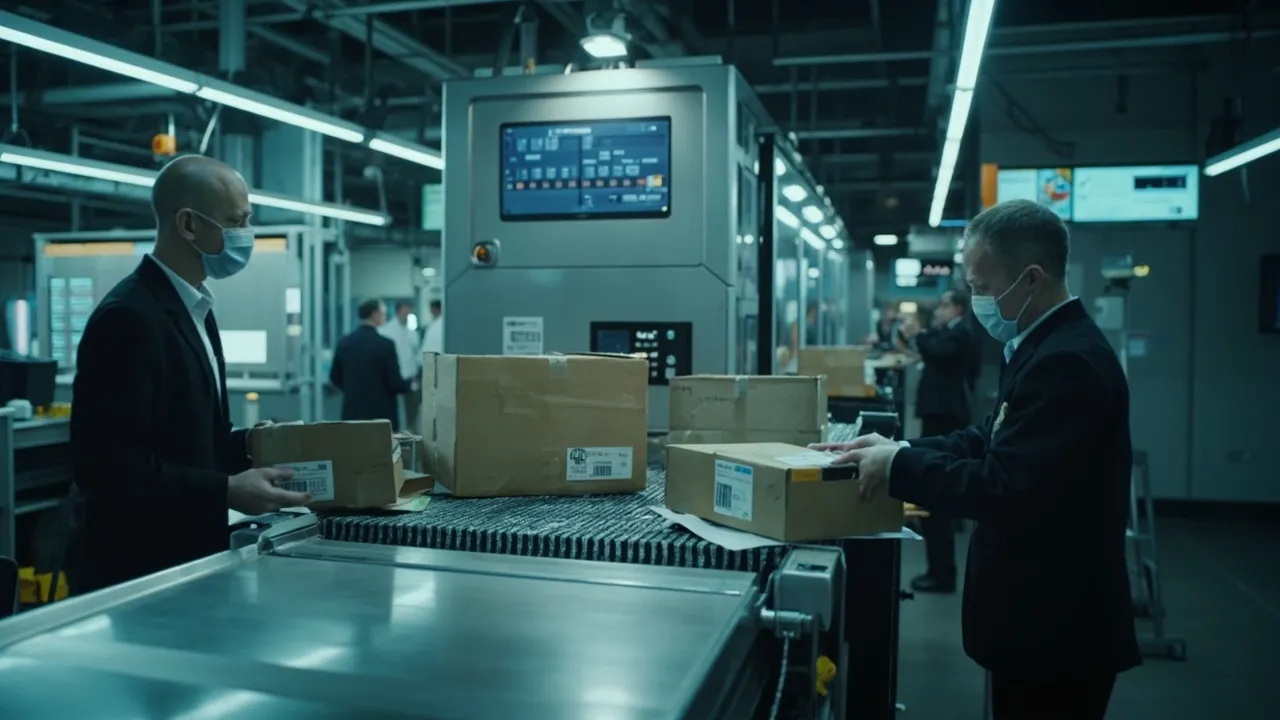
The same Logistics Management report describes Packsize’s X7 system as capable of producing a right-sized package every three seconds, or up to 1,200 packages per hour, within a footprint of roughly 50 to 150 square feet. Sealed Air’s I-Pack is described at up to 900 corrugated trays per hour, while pouch-based equipment can run 650 to 700 packages per hour. Those numbers matter because they shift packaging from a labor sink into a controlled, measurable flow cell.
And that is before you count the hidden benefit: bottleneck removal. Packaging is often where supposedly automated facilities quietly lose the gains created upstream. You can invest in picking automation, better sortation, and labor-saving conveyance, then choke the whole thing at the last 30 feet because cartons, void fill, taping, and labeling still rely on manual guesswork.
That is why automated packaging deserves a seat in the same conversation as robotics. It is not glamorous, but it fixes a real choke point.
Sustainability is no longer separate from economics
The sustainability argument is also getting sharper, not softer. Logistics Management notes that surveys show 80% of customers prefer packages that arrive in corrugated with less void fill. It also points to new EU packaging rules targeting recyclability, empty-space ratios, and limits on void fill, with additional requirements scheduled for 2028 and 2030.
So yes, right-sized packaging reduces waste. But more importantly, it reduces waste in ways that increasingly line up with customer expectations, parcel economics, and regulatory pressure. That is the sweet spot. When sustainability projects save money and improve service, they stop being side quests.
How warehouses should evaluate the ROI
My take is simple: if you are evaluating automation and packaging is not in the first wave, your priority list probably sucks.
A practical packaging-automation ROI review should ask five questions.
First, how much parcel spend is being inflated by oversize cartons and DIM pricing? Second, how much corrugated and void fill can actually be removed? Third, where is packaging creating labor or throughput bottlenecks at end of line? Fourth, what is the damage and reship cost tied to poor carton fit? Fifth, how much trailer and dock efficiency is being lost because you are shipping air?
Those are adult questions. They get you to real savings fast.
The broader software point matters too. Packaging decisions should not live as an isolated machine purchase. They should plug into the same execution layer that coordinates order flow, warehouse activity, and transportation planning. As Modern Materials Handling noted in its Infios coverage, resilience improves when orders, warehouses, transport, and automation operate as one connected flow instead of as disconnected tools.
That is exactly where CXTMS-style orchestration helps. If cartonization logic, order profiles, shipping service selection, and exception alerts are connected, packaging automation stops being an island and starts acting like a network optimization tool.
Right-sized packaging is not the flashiest warehouse investment in 2026. It might be the smartest one.
If you want tighter execution across warehouse, parcel, and transportation workflows, book a CXTMS demo and see how connected logistics orchestration turns small packaging decisions into big operational gains.