Mexico Freight Growth Is Shifting the Nearshoring Question From Location to Lane Control

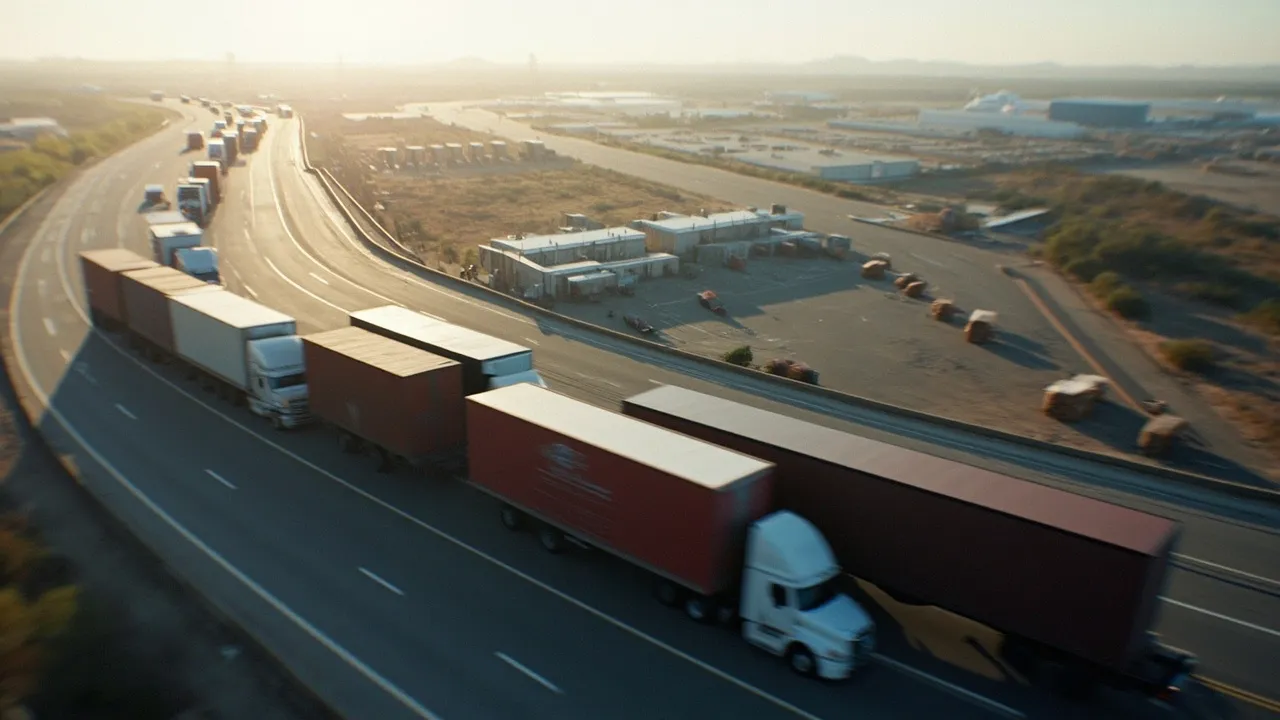
Nearshoring is no longer just a real estate question. For manufacturers, retailers, and freight forwarders building around Mexico, the harder question is whether the lane can actually perform every week.
A supplier in Monterrey, Querétaro, Saltillo, Tijuana, or the Bajío may shorten the map compared with Asia. That does not automatically reduce operating risk. Cross-border freight still has to clear customs, hit border appointments, align carriers, manage handoffs, absorb highway disruption, and produce clean documentation before a customer asks why a supposedly “nearshore” shipment is late.
Mexico’s logistics growth is less a simple capacity story than a control story. The next advantage will belong to shippers that manage nearshoring by lane reliability, documentation discipline, and exception response—not just by moving production closer to the U.S. market.
Mexico freight is becoming a strategic control point
Mordor Intelligence estimates that the Mexico freight and logistics market will reach $131.06 billion in 2026 and grow to $170.39 billion by 2031, a 5.39% compound annual growth rate. That is a large national freight market being pulled by manufacturing investment, e-commerce, infrastructure spending, cold chain buildout, warehouse automation, and cross-border trade.
Mordor’s analysis also identifies nearshoring as the largest positive growth driver, adding an estimated 1.8 percentage points to the forecast CAGR. Production closer to the end market can reduce ocean exposure and lead times, but it often increases shipment frequency. Instead of large offshore replenishment flows on long planning cycles, companies may rely on smaller, faster road, rail, intermodal, parcel, and warehouse replenishment moves.
That operating model is unforgiving. A monthly container delay is painful. A daily cross-border missed appointment can break customer service, inventory planning, and plant scheduling in real time.
Investment is rising, but execution is the bottleneck
FreightWaves reported that Mexico climbed from 25th to 19th in Kearney’s 2026 Foreign Direct Investment Confidence Index, one of the largest gains globally. The same report noted that 88% of surveyed executives plan to increase foreign direct investment over the next three years, while industrial policy alignment was cited as critical by 84%.
For freight markets, that confidence usually means more factories, supplier parks, cross-dock activity, customs brokerage demand, border pressure, and regional carrier complexity. FreightWaves also cited Morgan Stanley’s view that Mexico’s manufacturing exports to the United States rose by $150 billion since 2021 to reach $535 billion in 2025.
Those numbers explain why the conversation has moved past “Should we nearshore?” Many companies already have. The operational question is now more precise: which lanes can support the service promise, landed cost, compliance burden, and exception profile of the new network?
A plant location may look excellent on a sourcing map. But if the lane depends on weak appointment discipline, inconsistent carrier communication, paper-heavy customs processes, or manual status updates, the network will still behave like a fragile one.
The border turns weak data into late freight
Cross-border freight creates more handoffs than many teams expect. A single shipment may involve a Mexican origin carrier, a customs broker, a drayage or transfer operator, a U.S. linehaul carrier, warehouse appointment staff, security procedures, and customer-facing milestone updates. Each handoff is a place where vague data becomes operational delay.
Inbound Logistics, in its coverage of North American cross-border trade, reported that U.S. goods trade with Mexico totaled about $840 billion in 2024, according to U.S. Census data. It also emphasized that nearshoring can shorten transit times and reduce exposure to port delays, container congestion, and geopolitical disruption, but still depends on logistics providers that understand customs, regulations, technology, and capacity.
That is the correct framing. Nearshoring reduces some risks while concentrating others. Ocean variability may fall, but border execution risk rises. Long international lead times may shrink, but appointment precision becomes more important. Fewer weeks on the water can mean more pressure on same-week exception management.
In Mexico-U.S. freight, the most dangerous failure is often not the truck itself. It is the missing commercial invoice detail, the unclear customs status, the late carrier milestone, the unmatched trailer number, the warehouse appointment that was never updated, or the customer service promise made before the crossing was actually confirmed.
Lane control beats location optimism
Shippers evaluating Mexico networks should score each lane like an operating asset, not a line on a sourcing slide.
The first metric is border predictability. How often does the lane cross within the expected window? Where does dwell accumulate: origin dock, broker queue, transfer yard, inspection, U.S. carrier pickup, or destination appointment?
The second metric is documentation quality. Cross-border freight depends on clean commercial data, harmonized product information, accurate parties, carrier instructions, and customs milestone visibility. If documentation errors are treated as clerical cleanup, they will keep showing up as late freight, detention, chargebacks, and emergency expediting.
The third metric is handoff quality. A nearshored shipment is only as good as the weakest transition between origin, broker, carrier, border, warehouse, and customer. Teams need event-level visibility into when responsibility changes, who owns the next action, and what happens when the plan slips.
The fourth metric is exception speed. A disrupted Mexico lane should not require a chain of emails before anyone can decide what to do. Exceptions need owner assignment, escalation thresholds, alternate carrier logic, and customer communication rules.
What forwarders should build now
Freight forwarders and 3PLs serving Mexico lanes should prepare for customers to demand more than capacity quotes. They will want evidence that the provider can control the lane.
That means maintaining carrier performance history by border crossing and commodity type. It means connecting customs brokerage milestones to transportation execution instead of treating clearance as a separate black box. It means mapping appointment windows and known congestion points. It means keeping a structured record of why delays happened, not just when they were reported.
It also means designing workflows for common failure patterns: missing documents, carrier falloff, rejected appointments, delayed customs releases, transfer-yard dwell, security holds, weather disruption, and last-minute customer changes. The forwarder with a repeatable exception playbook will be more valuable than the one that only promises access to trucks.
How CXTMS supports Mexico lane control
CXTMS gives logistics teams a practical coordination layer for cross-border execution. Instead of managing Mexico freight through disconnected emails, spreadsheets, broker portals, and carrier calls, teams can centralize shipment milestones, document status, carrier assignments, appointment details, and exception workflows in one operating view.
For Mexico nearshoring programs, that control layer matters. Dispatch teams can see whether a border milestone is confirmed or merely expected. Customer-service teams can communicate from verified events. Managers can compare lane performance by carrier, crossing, facility, and exception reason. Finance teams can connect accessorials and detention back to the events that caused them.
Nearshoring can absolutely improve resilience. But proximity is not a strategy by itself. The companies that win in Mexico freight will be the ones that turn shorter geography into tighter lane control.
Ready to bring more discipline to cross-border freight? Schedule a CXTMS demo and see how better milestone visibility, documentation workflows, and exception management can strengthen your Mexico logistics network.