May Cass Freight Index Shows the Real Problem Is Cost per Shipment, Not Volume

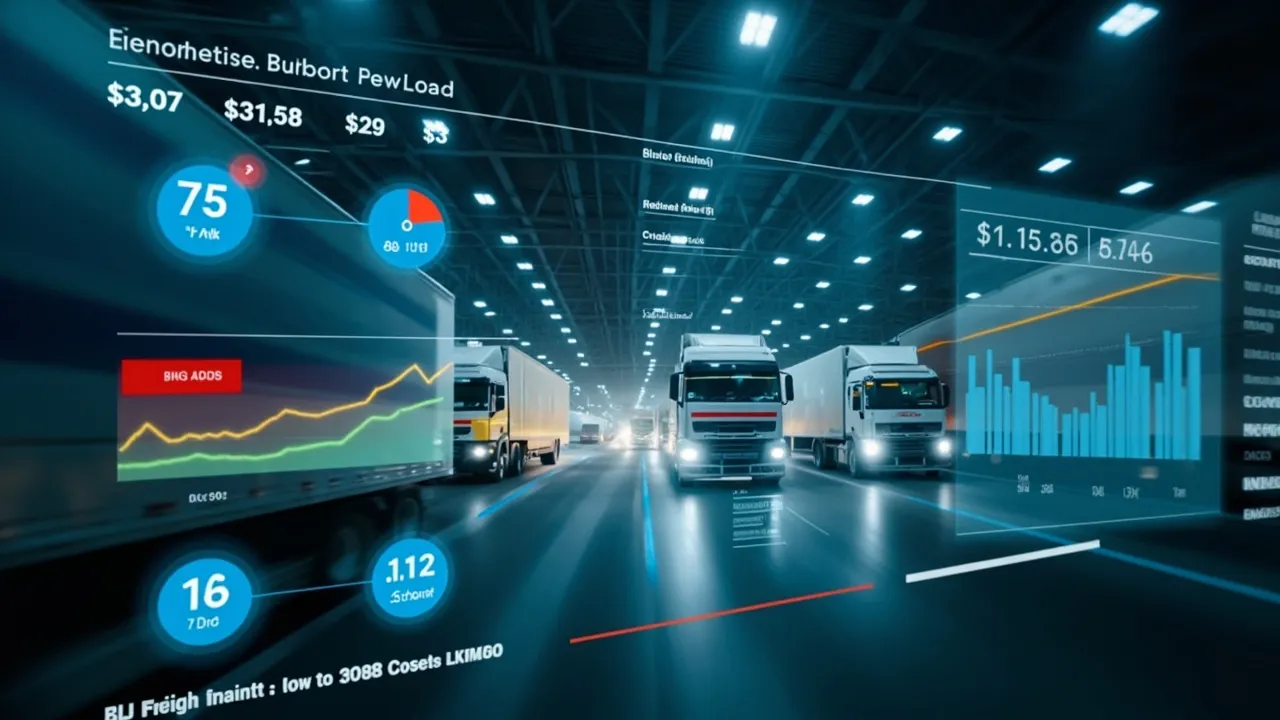
Freight volume is improving enough to confuse people. Freight cost is rising enough to hurt them.
That is the useful read from the May Cass Freight Index. According to Logistics Management's coverage of the latest Cass Freight Index, the May shipments index fell just 1.2% year over year, a much narrower decline than April's 4.4% drop. Shipments also rose 3.0% sequentially, marking a fourth straight sequential increase.
That sounds like recovery. Then the cost line lands.
Cass expenditures rose 7.5% year over year in May, after a 3.5% annual gain in April, and increased 5.3% sequentially. The index also sits on a large dataset: Logistics Management notes Cass measures North American freight activity and costs from $37 billion in paid freight expenses across hundreds of large shippers.
For transportation teams, the headline is not simply "shipments are down" or "costs are up." The real problem is that both can be true at once. If shipments are down 1.2% while expenditures are up 7.5%, the operating question becomes brutally practical: what is happening to cost per shipment, and which part of the freight program is driving it?
Volume Recovery Does Not Automatically Fix Freight Budgets
A mild shipment decline can hide a nasty budget problem. If freight teams only review load counts, weight, or shipment volume, May looks manageable. The year-over-year shipment gap was the smallest in 18 months, and Cass report author Tim Denoyer pointed to tight inventories, falling tariffs, a softer U.S. dollar, and domestic intermodal growth as reasons a second-half volume recovery remains likely.
But a transportation budget does not pay for optimism. It pays invoices.
When expenditures rise faster than shipments, the shipper is buying fewer or similar moves at a higher effective cost. That can come from rate movement, fuel, accessorials, mode mix, shipment profile changes, carrier compliance issues, premium freight, or a loss of consolidation discipline. Sometimes the base rate is not even the villain. The leakage shows up in liftgate charges, detention, reclassification, residential delivery, excessive length, storage, appointment failures, or minimum charges that quietly turn small shipments into expensive exceptions.
This is why cost per shipment is a better management signal than volume alone. It turns the Cass split into a workflow question instead of a market commentary question.
The Three Metrics Shippers Should Read Together
A useful freight cadence should put three metrics in the same conversation: cost per shipment, accessorial mix, and tender acceptance.
First, cost per shipment shows whether the business is paying more for the same operating output. That number should be tracked by mode, lane, customer, business unit, carrier, origin, destination, weight break, and service level. A blended average is a place to start, not a place to stop.
Second, accessorial mix explains whether costs are rising because the rate market changed or because the operation is creating billable friction. Inbound Logistics' LTL KPI guidance makes the same point in practical terms: accessorial fees such as liftgate, inside delivery, and excessive length charges can erode budgets if they are not separated from base transportation cost. The article also notes that transportation expenses typically consume 7% to 10% of annual sales revenue for the average company, which is too large a line item to manage with month-end summaries.
Third, tender acceptance tells teams whether planned routing guides are still real. A budget can look clean in a spreadsheet while planners are quietly moving freight through backups, spot buys, premium modes, or carriers that accept freight but create claims and service failures. If cost per shipment rises while tender acceptance weakens, the network is paying for capacity risk. If cost per shipment rises while tender acceptance is stable, the issue may be fuel, accessorials, commodity mix, delivery profile, or pricing discipline.
The point is not to create a bigger dashboard. The point is to make the dashboard explain the operating decision.
Cost Per Shipment Needs an Owner, Not Just a Report
A monthly freight report is too slow for this market. By the time the transportation team sees a blended cost increase, invoices have already posted, customers have already been served, and the same exception may have repeated hundreds of times.
A better operating cadence looks more like this:
- Review cost per shipment weekly by mode and lane.
- Split base freight, fuel, and accessorials into separate trend lines.
- Flag lanes where shipment count is flat or down but spend is up.
- Compare primary tender acceptance against backup carrier usage.
- Tie expensive exceptions to root causes: appointment miss, bad dimensions, late order release, poor consolidation, carrier rule, customer requirement, or inventory location.
- Assign the fix to a person, not a generic "transportation" bucket.
That last step matters. Freight analytics only become useful when they change behavior. If detention is rising at one facility, the answer may be dock scheduling. If excessive-length fees are rising on a product family, the answer may be packaging engineering or carrier rules. If minimum charges are rising, the answer may be order consolidation. If spot exposure is rising, the answer may be procurement, lead-time discipline, or inventory planning.
Cost per shipment is not one KPI. It is the door into a set of controllable decisions.
Why This Matters for the Second Half of 2026
The May Cass data does not say shippers should panic. It says they should stop treating volume recovery as budget recovery.
A market can recover in tonnage while still punishing shippers that lack cost visibility. A route guide can look stable while accessorials drift. A carrier portfolio can look cheap while service failures create premium freight later. A warehouse can hit outbound volume targets while poor order timing forces transportation to buy expensive capacity at the edge of the day.
That is exactly where CXTMS-style freight analytics should sit: inside the operating cadence, not at the end of the month. Teams need shipment-level cost, carrier performance, invoice detail, accessorial classification, tender history, and exception reasons in one place so they can see the difference between a market problem and a process problem.
The best transportation teams will not ask, "Are shipments up or down?" They will ask sharper questions:
- Which lanes are getting more expensive per shipment?
- Which charges are growing faster than volume?
- Which carriers are accepting tenders but creating downstream cost?
- Which customer, SKU, facility, or delivery profile changed the cost curve?
- Which exceptions can be prevented before the next invoice cycle?
May's Cass Freight Index is a useful warning because the numbers are mixed. Mixed signals are where weak freight processes get exposed. Shipment volume may be stabilizing, but the cost side is already telling shippers to tighten the operating rhythm.
If your team is trying to connect freight spend, carrier performance, accessorials, and exception management before costs show up as surprises, schedule a CXTMS demo and see how transportation execution can become a weekly control system instead of a monthly autopsy.