Hardware Still Takes 42.6% of Material Handling Integration Spend—Budget the Interfaces Too

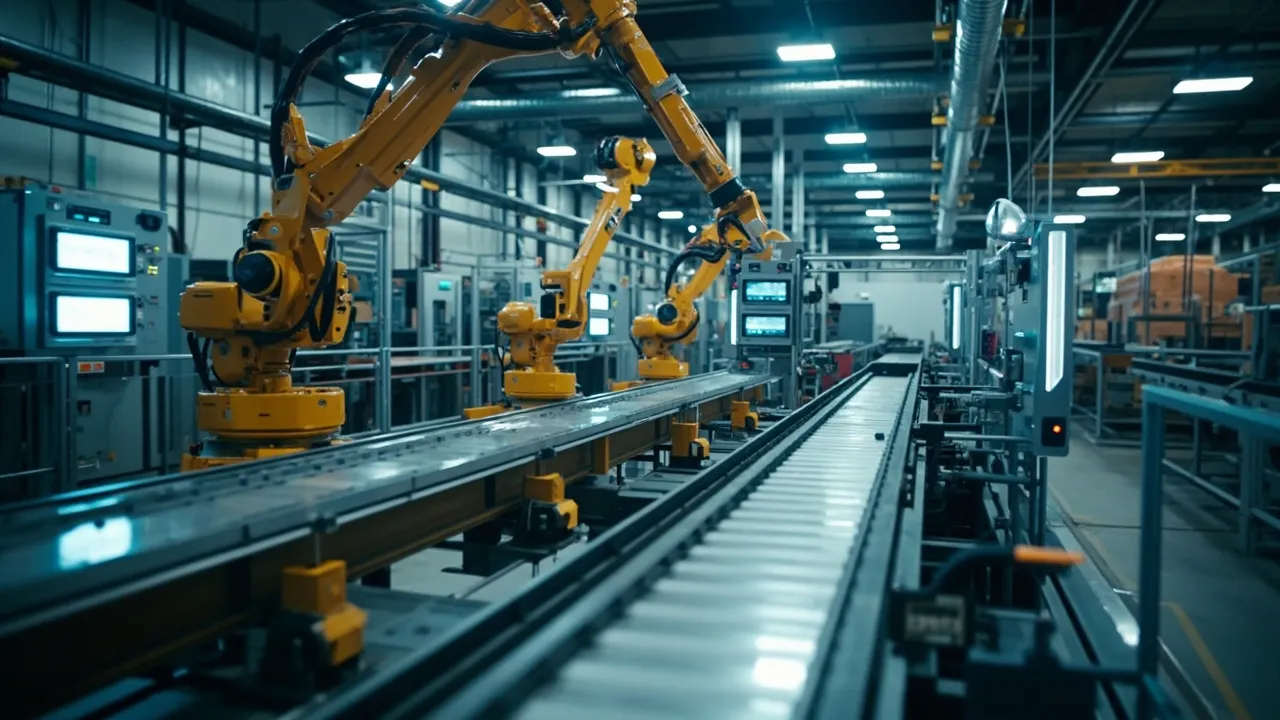
The largest line in a warehouse automation proposal is usually easy to see: conveyors, sorters, robots, storage systems, scanners, and controls. The costs most likely to undermine the business case are harder to spot. They sit between the machines and the operation—in interfaces, data mapping, testing, exception handling, training, and lifecycle support.
That distinction matters as investment accelerates. Modern Materials Handling reports that hardware is expected to represent 42.6% of material handling integration component demand in 2026, while the overall market is forecast to reach $129.53 billion by 2036. A separate MMH market report projects the automated material handling market at $51.22 billion by 2030, growing at a 9.4% compound annual rate.
Those numbers make hardware a major budget category—but not a complete automation budget. A machine can meet its rated speed and still fail to improve order flow if the surrounding systems cannot release, prioritize, reroute, and confirm work accurately.
The equipment price is only the visible layer
Physical assets are tangible and relatively straightforward to quote. An integrator can specify quantities, speeds, dimensions, and installation labor. The interface layer is more dependent on operating detail: product mix, order profiles, carrier cutoffs, replenishment rules, data quality, and how the team responds when normal flow breaks.
A realistic total-integration budget should separate at least five categories:
- Equipment and physical installation: machines, guarding, electrical work, network drops, safety systems, and site preparation.
- Controls and software: PLC programming, warehouse control or execution software, device management, licenses, and configuration.
- Interfaces and data: connections among the WMS, WES/WCS, ERP, TMS, carrier systems, and automation; message mapping; master-data cleanup; and monitoring.
- Commissioning and change: factory and site acceptance testing, volume tests, contingency rehearsals, standard operating procedures, training, and go-live coverage.
- Lifecycle support: software maintenance, cybersecurity updates, spares, remote monitoring, optimization, and enhancement capacity.
This structure does more than improve accounting. It prevents project teams from treating essential integration work as late-stage change orders. It also lets leaders compare bids on a common scope instead of rewarding the proposal that simply leaves the most work unstated.
Define the events before selecting the interface
Integration design should begin with operational events, not API names. Before acceptance, warehouse and transportation systems should be able to exchange the events that govern real flow.
At minimum, define how systems communicate order release, inventory allocation, replenishment need, tote or carton induction, work completion, short pick, damage, equipment fault, lane full, quality hold, pack completion, label creation, dock assignment, load readiness, carrier cutoff risk, shipment confirmation, and proof of handoff.
For each event, specify the system of record, required data, response time, acknowledgement, retry behavior, and escalation owner. “Connected” is not an adequate acceptance criterion. A useful criterion sounds more like: when a sorter lane becomes unavailable, affected cartons are diverted, their status remains visible, priority orders are reallocated, and the dock plan reflects the delay within a defined number of seconds.
This is where the TMS belongs in the automation conversation. Warehouse equipment may optimize local throughput, but customer service depends on transportation constraints. Carrier cutoffs, appointment windows, trailer availability, consolidation opportunities, and route priorities should influence the work released to automation. Likewise, pack and load events should return to transportation planning without manual re-entry.
Test the ugly day, not only the perfect demo
Functional demonstrations tend to feature clean master data, balanced volume, available equipment, and experienced project staff. Operations rarely stay that cooperative.
Testing must include peak volume, uneven SKU velocity, unreadable barcodes, duplicate messages, network latency, inventory discrepancies, full lanes, unavailable robots, late trailers, changed carrier assignments, and restart after an outage. MHI's guidance on implementing a warehouse control system specifically identifies both functional and integration testing as critical, including validation of communication among the WCS, WMS, and automation equipment.
Acceptance should use business outcomes as well as technical checks. Measure sustained units per hour, order cycle time, exception rate, manual touches, inventory accuracy, on-time dock readiness, recovery time, and the percentage of transactions requiring intervention. Rated machine speed is useful, but sustained end-to-end flow is what pays the invoice.
Fund readiness and ownership
Training is often compressed when construction or programming runs late. That transfers project risk directly to supervisors and operators. Budget role-based instruction for operators, maintenance technicians, control-room staff, planners, IT support, and managers. Include practice with exceptions and recovery, not only normal screens.
Ownership also needs to survive go-live. Name who monitors interface failures, who may change routing rules, who approves software releases, who maintains event mappings, and who reviews performance against the business case. Reserve funds and capacity for stabilization and optimization after launch; actual operating patterns will expose improvements that design workshops cannot predict.
The central budgeting lesson is simple: do not interpret a 42.6% hardware share as permission to focus 100% of management attention on hardware. Equipment creates capability. Interfaces, operating rules, testing, and people convert that capability into reliable customer service.
If your warehouse automation roadmap needs transportation events, carrier commitments, and shipment execution to move in sync, request a CXTMS demo to see how an integrated TMS can connect planning with operational flow.