Dematic’s $50 Million Solutions Center Makes Warehouse Acceptance Testing a Buying Requirement

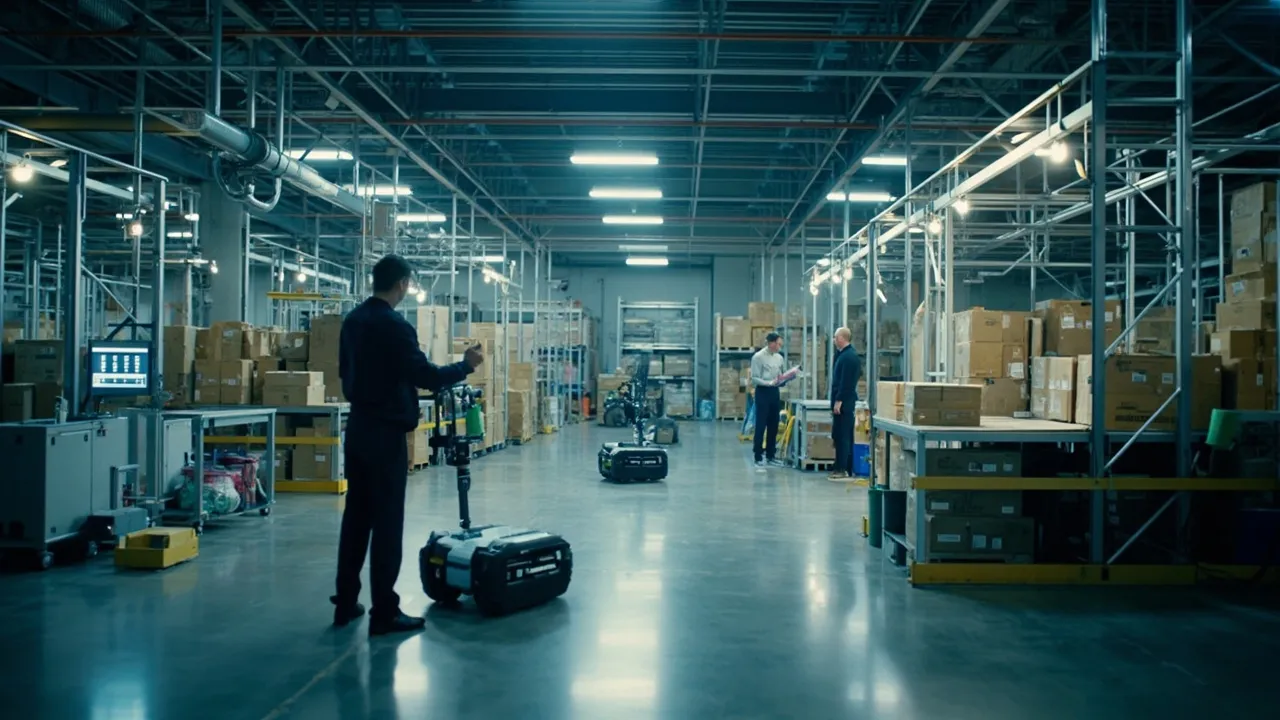
Warehouse automation buyers have traditionally been shown individual machines running polished demonstrations: a robot executes a pick, a shuttle retrieves a tote, or a palletizer builds a stable load. Those demonstrations prove that equipment works. They do not prove that a complete system can process a customer’s actual order mix at the promised rate, recover from failures, and exchange accurate data across software layers.
Dematic’s new Solutions Center in Grand Rapids, Michigan, puts that distinction in sharp focus. The nearly $50 million investment should prompt buyers to make integrated warehouse acceptance testing a contractual requirement—not an optional visit near the end of a project.
A $50 Million Case for Testing the Whole Workflow
Modern Materials Handling reports that the facility opened July 15 at Dematic’s Americas headquarters. The nearly 40,000-square-foot center operates as a functional fulfillment environment, connecting autonomous mobile robots, goods-to-person systems, robotic piece picking, palletizing, warehouse software, and lifecycle services.
That scale matters because automation value is created at the handoffs. A robot may achieve its advertised cycle time while the overall operation misses throughput because replenishment arrives late, a scanner rejects labels, the warehouse control system queues work poorly, or completed orders wait for transportation instructions.
The center also reflects a broader shift in automation buying. Hardware capacity remains important, but customers increasingly need evidence that software, data, labor, and equipment can behave as one operating system. A live, end-to-end environment creates the opportunity to test that claim before equipment is installed in a live distribution center.
The Customer’s Order Profile Is the Real Test
A generic demonstration usually runs favorable products through a controlled sequence. A meaningful acceptance test uses representative operational data: the buyer’s SKU dimensions, order-line distribution, peak-hour release pattern, replenishment rules, cartonization logic, priorities, and exception rates.
Average throughput is especially misleading. A system that averages 10,000 units per hour across a shift may still create an unacceptable backlog during the two-hour order-release peak. Likewise, an impressive robot pick rate says little about completed orders if downstream packing or sortation cannot absorb the flow.
The test set should include fast and slow movers, awkward items, short orders, multi-line orders, rush work, partial inventory, and normal data errors. Buyers should also define the measurement boundary. “System throughput” must mean completed units at an agreed endpoint—not tasks dispatched to equipment or totes entering a subsystem.
This performance discipline aligns with the operating model described by Inbound Logistics. The publication identifies workforce resilience, operational flexibility, automation readiness, and performance management as four connected capabilities. It also cites a warehouse automation market projected to reach $51 billion by 2030 and reports that performance-based operating models can lower operating costs by up to 25% while maintaining safety, service, and control.
Five Acceptance Gates Every Contract Needs
An effective factory or solution acceptance test should convert the proposed design into measurable pass-or-fail conditions.
1. Peak rate. Run the agreed peak order profile for a sustained period, not a short burst. Measure completed orders, lines, units, backlog growth, resource utilization, and the slowest process step. Specify permitted warm-up time and exclude no downtime unless the contract says so.
2. Recovery. Stop a conveyor, robot, workstation, network connection, or software service. Verify safe shutdown, queued-work integrity, restart time, and return to target output. The test should prove that a single fault does not create duplicate inventory moves or require hours of manual reconciliation.
3. Exception handling. Introduce unreadable barcodes, inventory mismatches, damaged products, full destinations, rejected picks, and late replenishment. Record whether the system routes each case correctly, alerts the right role, preserves traceability, and keeps unaffected work moving.
4. Software handoffs. Validate messages among the warehouse management system, warehouse execution or control layer, automation, labor tools, and transportation platform. Test acknowledgments, retries, sequencing, timestamps, master-data errors, and idempotency. A lost shipment-confirmation message can erase the value of otherwise flawless physical automation.
5. Maintainability. Have the buyer’s technicians diagnose seeded faults using the delivered documentation and tools. Measure mean time to identify and restore. Confirm access to logs, spare-parts lists, preventive-maintenance tasks, training materials, and escalation paths.
Safety, accuracy, and availability should sit beside throughput in every gate. A faster system is not acceptable if it creates mispicks, unsafe intervention, or fragile recovery.
Turn Demonstrations Into Contractual Protection
The request for proposal should define the test before vendor selection. Attach the representative data set, scenarios, formulas, instruments, test duration, environmental assumptions, and required evidence. Name who observes, who decides whether a condition passes, and how disputed results will be handled.
Payment milestones should follow demonstrated outcomes. A practical structure can reserve a portion of payment for the integrated pre-deployment test, another portion for site acceptance after installation, and final retention for a stability period under production demand. Failed gates should trigger a documented correction plan and retest rather than an informal promise to tune the system later.
Buyers must also control substitutions and configuration changes. If tested equipment, software versions, interfaces, or logic differ from what will be installed, the evidence no longer maps cleanly to the purchased system. The contract should define which changes require regression testing.
No test facility can perfectly reproduce a live warehouse. Building conditions, workforce behavior, upstream variability, and transportation schedules will differ. That is why solution-center testing and on-site acceptance are complementary. The first reduces design and integration risk; the second proves performance in the customer’s environment.
Connect Warehouse Performance to Transportation Execution
Warehouse acceptance should not stop at the shipping dock. Completed orders need carrier assignments, appointment data, labels, load plans, and shipment status updates. Testing those exchanges ensures that automation output becomes executable freight instead of a queue of finished cartons awaiting manual coordination.
CXTMS connects shipment planning, carrier execution, milestones, and transportation data so warehouse teams can validate the outbound handoff as part of an end-to-end operating flow. Request a CXTMS demo to see how transportation visibility can extend warehouse performance testing beyond the four walls.