Lithium-Ion Forklift Batteries Are Becoming a Fleet Strategy, Not Just an Equipment Upgrade

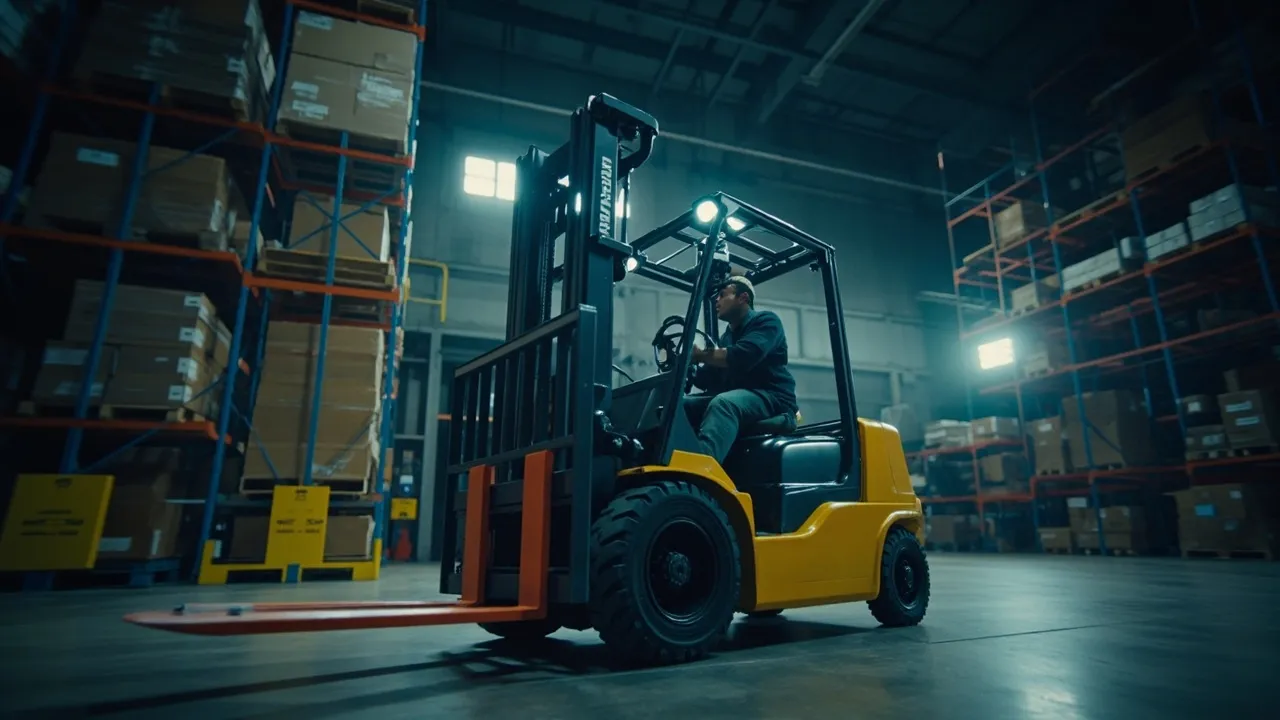
Forklift electrification is getting treated like a parts decision when it should be treated like a fleet decision.
That distinction matters. A battery swap is not just a maintenance event anymore. In a multi-shift warehouse, the power system behind a forklift now affects uptime, labor scheduling, charging behavior, maintenance planning, and how much usable throughput a facility can squeeze out of the same square footage.
Bobcat’s latest launch makes that shift obvious. According to Modern Materials Handling, the company introduced a new lithium-ion battery line for Class 1 forklifts with 48-volt and 80-volt models offered in 400Ah and 600Ah capacities, and the packs are UL 2580 certified. Bobcat also noted that when the battery is installed, the truck’s certification is updated accordingly to confirm compliance with electric forklift equipment requirements. Source: Bobcat introduces new lithium-ion battery technology for Class 1 forklifts.
That is the real story. The interesting part is not that lithium-ion exists. Everyone already knows that. The interesting part is that OEMs are packaging battery options around duty cycles, compliance, and operational reliability instead of just selling "better chemistry."
Why voltage and amp-hours suddenly matter to operations teams
Warehouse leaders love to talk about automation, but a lot of facilities still win or lose on the quality of very boring decisions. Forklift power is one of them.
A 48-volt or 80-volt pack is not just a spec-sheet choice. Higher voltage configurations typically support heavier-duty applications and faster, more consistent performance under load. Capacity matters too. A 400Ah pack and a 600Ah pack create very different operating windows for facilities that run long shifts, cold environments, or high-intensity lift cycles.
That is why battery selection belongs in fleet planning. If the battery cannot support the actual duty cycle, the warehouse pays for it in charger queues, unplanned downtime, battery change work, and productivity drag that never shows up cleanly in a capital approval memo.
Lithium-ion changes that math because it supports opportunity charging and steadier power delivery during the shift. In plain English, operators spend less time babying the battery and more time moving product.
The market is shifting, even if lead-acid is not dead yet
The broader market data backs this up. Mordor Intelligence estimates the global forklift battery market will reach USD 6.55 billion in 2026 and grow to USD 9.37 billion by 2031, a 7.41% CAGR. More tellingly, its forecast says lead-acid still held 70.21% of market share in 2025, but lithium-ion units are projected to grow at an 8.11% CAGR through 2031 as ownership costs fall, especially in multi-shift and cold-storage operations. Source: Forklift Battery Market Size & Share Outlook to 2031.
That split is exactly what you would expect in a real market transition. Lead-acid is not disappearing overnight because installed bases, service models, and charging infrastructure are deeply entrenched. But growth is moving toward lithium-ion because warehouses care about labor, uptime, and space more than they care about defending yesterday’s battery room.
Mordor also estimates that in multi-shift and cold-storage environments, lithium systems can drive roughly 40% lower total ownership cost than lead-acid. Even if operators haircut that figure for their own facility, the directional point is hard to ignore. When power technology reduces battery handling labor, removes watering requirements, and cuts the need for spare battery inventory, it stops being a facilities issue and becomes a network productivity issue.
Charging strategy is the real operational battleground
This is where bad battery decisions get expensive.
In a single-shift facility with predictable usage, almost anything can look fine on paper. In a two-shift or three-shift environment, charging strategy becomes part of throughput design. If trucks need long recharge windows or frequent battery changes, labor gets pulled into non-productive work and staging areas turn into congestion points.
Lithium-ion systems offer a cleaner operating model because they are built for faster charging and opportunity charging during breaks or between tasks. That reduces the need for dedicated battery swap workflows and can free up space that used to be reserved for battery rooms, charging queues, and spare packs.
The payoff is not abstract. It shows up in more available truck hours per day, fewer interruptions to lift operations, and less maintenance overhead around watering, equalizing, and battery handling safety routines.
Safety certification is not a footnote
This part gets overlooked far too often.
Battery conversations usually get hijacked by marketing claims about runtime or sustainability. The less glamorous issue is whether the battery and truck combination is properly certified for the application. Bobcat’s emphasis on UL 2580 certification and vehicle compliance updates matters because warehouse electrification is not worth much if it creates safety ambiguity or inspection headaches.
For operators, that means battery ROI should be evaluated alongside charger compatibility, thermal management, emergency procedures, technician training, and site electrical readiness. The cheapest pack is not the cheapest decision if it creates compliance risk or forces a messy retrofit later.
How operators should evaluate lithium-ion ROI
The smartest way to evaluate lithium-ion is brutally practical.
First, map the actual duty cycle by truck class, shift pattern, and workload intensity. Second, calculate how many labor hours are currently tied up in battery changes, watering, and downtime recovery. Third, look at whether charger placement and electrical capacity can support opportunity charging without creating new bottlenecks.
Then ask the question that actually matters: does the power system improve fleet availability enough to increase throughput or defer additional equipment purchases?
That is where lithium-ion tends to win. If a warehouse can get more productive hours from the same forklift count, simplify maintenance, and reduce charging friction, the battery decision starts influencing labor efficiency and capital planning across the whole operation.
Forklift batteries are no longer a back-room consumable. They are part of warehouse operating strategy.
If your team wants better visibility into how equipment decisions, warehouse execution, and transportation planning connect, request a CXTMS demo and see how CXTMS helps operators turn operational data into smarter fleet decisions.