Latin America's Consumer Shift Is Rewriting Logistics: How Polarized Spending and an Aging Population Are Reshaping Regional Supply Chains

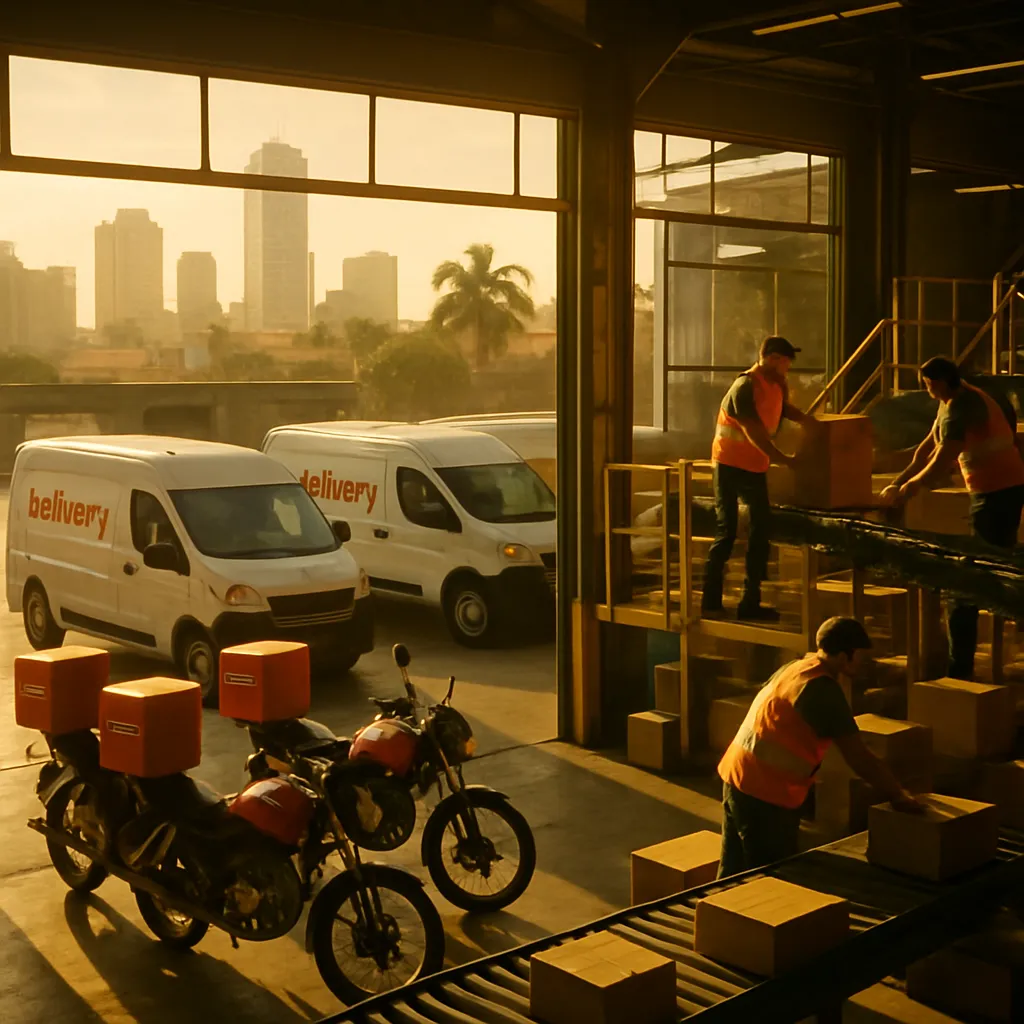
Latin America is no longer a secondary logistics market waiting for its moment. It is actively rewriting the rules of regional supply chain design — driven by consumer behaviors that look nothing like they did five years ago. From polarized spending habits splitting fulfillment into two parallel operating models, to a demographic shift that will nearly double the region's elderly population within a decade, the forces at play demand a fundamentally different approach to logistics planning.
For US shippers and global brands eyeing the region, understanding these structural shifts is not optional. It is the difference between capturing a $200 billion e-commerce opportunity and watching margins evaporate.
The Two-Speed Consumer Economy
Maersk's March 2026 Latin America market analysis identifies the defining trend reshaping the region's logistics: a sharp polarization between essential spending and what analysts are calling "little luxuries."
Persistent inflation across Latin America has eroded purchasing power for consumer goods by roughly 25% since 2020, according to NielsenIQ data cited in the report. Households are gravitating toward private labels, discount retailers, and smaller, more frequent purchases for everyday essentials. This segment prizes predictable replenishment, fewer handoffs, and cost-protected supply cycles.
But here is where it gets interesting. Categories that deliver emotional or experiential value — beauty, fashion, accessories, and electronics — continue to grow aggressively, particularly through online channels. Latin America is now the fastest-growing e-commerce region globally, with over 300 million digital shoppers according to Statista.
These two segments require entirely different logistics architectures operating simultaneously, often delivering to the same household. Essentials demand lean, direct-route efficiency. Experience-driven categories require speed, accuracy, real-time visibility, and product integrity that becomes part of the brand experience itself.
Mercado Libre's $3.4 Billion Bet on LATAM Infrastructure
No company is investing more aggressively in building the logistics backbone of Latin America than Mercado Libre. In March 2026, Reuters reported that the company announced a $3.4 billion investment plan for Argentina alone — a 30% increase over its $2.6 billion 2025 commitment.
The investment targets logistics network expansion, new distribution centers, platform technology, and the growth of its fintech arm Mercado Pago. The company also plans to create nearly 2,000 new jobs in Argentina in 2026.
This is not an isolated play. Mercado Envios, the company's logistics network, now handles over 90% of platform shipments, providing end-to-end fulfillment and last-mile delivery. With Q4 revenue surging 45% year-over-year, Mercado Libre is building infrastructure that competitors — and the shippers who rely on them — will ultimately use as a baseline for regional expectations.
Shopee vs. Mercado Libre: The Free Shipping Wars
The competitive pressure is intensifying. Shopee, the Southeast Asia-based e-commerce arm of Sea Limited, has aggressively expanded into Brazil and Mexico with ultra-low pricing, fast logistics, and fintech add-ons. The result is a free shipping threshold war that is forcing both platforms to invest heavily in delivery networks.
This competition is a net positive for logistics infrastructure development. Both companies are pouring capital into fulfillment centers, sort hubs, and last-mile capacity across Brazil, Mexico, Colombia, and Argentina. But it also raises the bar for any shipper operating in the region. Consumer expectations around delivery speed and cost are being set by well-funded platform players, not by the constraints of local infrastructure.
According to Mordor Intelligence, the Latin America e-commerce logistics market is expected to reach $6.28 billion in 2025 and grow at a CAGR of 10.3% to reach $10.25 billion by 2030. The broader e-commerce market is projected to surpass $200 billion in 2026, with cross-border international sales rising 45% compared to 36% for domestic transactions.
The Aging Population Factor Nobody Is Talking About
Perhaps the most underappreciated force reshaping Latin American logistics is demographics. Today, 65 million people in the region are aged 65 and over — 9.9% of the population. By 2035, that number will nearly double to 138 million (18.9%), according to UN Population Division projections cited in Maersk's analysis.
This shift has direct, concrete implications for supply chain design:
Proximity-based network design becomes essential. Older consumers concentrate in mature urban districts, driving demand for dark stores, micro-fulfillment centers, and pickup points. Distributed warehousing that shortens the last mile replaces centralized mega-distribution models.
Reliability outweighs speed. For aging demographics, narrow and guaranteed delivery windows of two to three hours matter more than same-day speed. Simple, low-friction tracking and fewer failed deliveries become the service promise.
Labor constraints intensify. Retiring drivers are difficult to replace, and fewer younger workers are entering transport roles. This accelerates the push toward automation, optimized routing, and better asset utilization across the region.
Order patterns shift. Older consumers purchase lighter baskets more frequently, requiring higher drop density, more frequent replenishment cycles, and standardized routes to maintain delivery margins.
Brazil and Mexico: The Two-Speed Logistics Economy
Brazil and Mexico dominate Latin American logistics, but they operate at very different speeds. Brazil has 77.4 million e-commerce users with an additional 38.8 million who shopped online in 2023. Mexico has 103 million internet users — roughly half its population — leaving enormous room for growth.
Brazil's logistics challenges center on mega-city congestion. Moving goods through São Paulo and Rio de Janeiro means navigating poor roads and severe traffic congestion, with delivery times that have improved from 7-10 days to 2-3 days but still fall short of same-day targets.
Mexico's opportunity lies in its proximity to the US market. As FreightWaves reported, Latin American economies — particularly Mexico and Brazil — are attracting significant foreign investment due to robust performance and access to critical minerals. Companies like DSV are constructing major distribution centers in Laredo, Texas, expanding cross-border logistics capabilities along the US-Mexico trade corridor.
For US shippers, this two-speed dynamic means a single LATAM logistics strategy will not work. Brazil requires deep in-country fulfillment infrastructure. Mexico requires cross-border fluency and customs efficiency.
What This Means for Your Supply Chain Strategy
The convergence of polarized consumer spending, platform-driven infrastructure investment, aging demographics, and a $200 billion e-commerce market creates both massive opportunity and real operational complexity. Companies entering or expanding in Latin America need to think in terms of differentiated service models, not uniform coverage.
Success depends on integrating demographic and behavioral data into network planning, building proximity-based fulfillment where it matters, and managing multiple service tiers — from cost-efficient essentials replenishment to experience-grade luxury delivery — under one coherent strategy.
As Maersk puts it: Latin America will increasingly "deliver less by distance and more by design."
Navigate LATAM Complexity with CXTMS
Managing multi-country compliance, cross-border documentation, and differentiated fulfillment tiers across Latin America requires visibility that most legacy systems cannot provide. CXTMS gives your team real-time control over multi-leg shipments, customs workflows, and carrier performance across every LATAM market — so you can match the right logistics model to the right consumer segment.
Request a demo → and see how CXTMS simplifies regional supply chain orchestration.