Inbound Freight Management: Why Purchase Order Visibility and Vendor Compliance Are the Biggest Blind Spots in 2026 Supply Chains

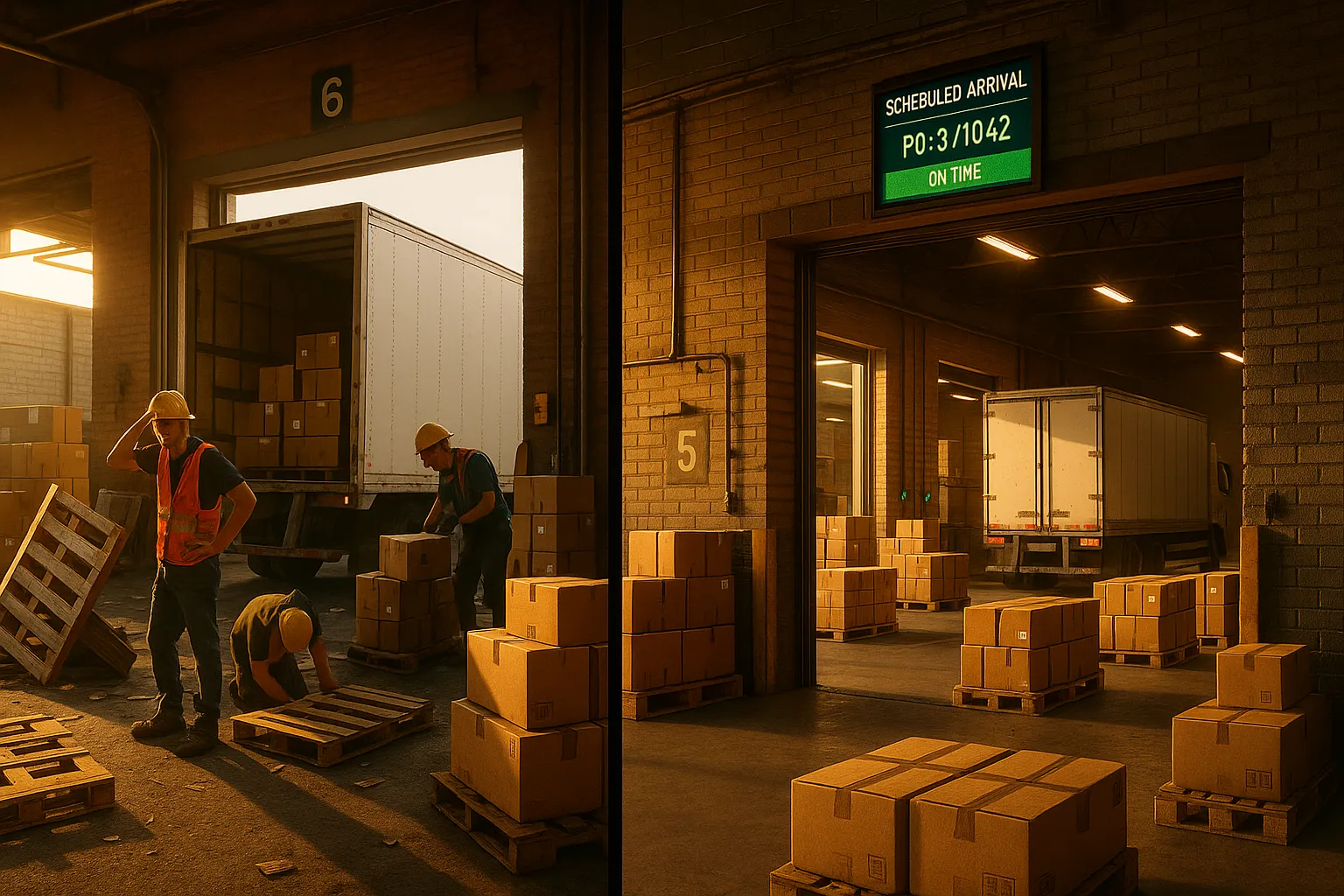
Here's a scenario that plays out at thousands of receiving docks every morning: a truck arrives unannounced, carrying a shipment that doesn't match the purchase order, sent by a vendor who ignored the routing guide, using a carrier that isn't on the approved list. The dock crew scrambles. The warehouse manager starts making phone calls. The procurement team discovers they're paying a 15% premium on freight that should have shipped collect.
Meanwhile, three other deliveries that were actually expected haven't shown up, and nobody knows why.
This is the reality of inbound freight management at most companies in 2026—and it represents one of the largest untapped cost savings opportunities in modern supply chains.
The Inbound Visibility Gap: 40% of Spend, 10% of Attention
For all the investment companies have poured into outbound logistics—rate optimization, carrier scorecards, real-time tracking, dynamic routing—the inbound side of the supply chain remains startlingly undermanaged. Industry analysts consistently estimate that inbound freight accounts for 25% to 40% of total transportation spend, yet most organizations dedicate a fraction of the management resources to inbound that they do to outbound.
The global supply chain visibility software market underscores the scale of this problem. Valued at approximately $3.08 billion in 2026, the market is projected to reach $25.47 billion by 2035 at a CAGR of 26.45%, with roughly 74% of organizations citing logistics digital transformation as a major driver, according to Business Research Insights. Yet the overwhelming majority of visibility investments focus on outbound shipments headed to customers—not inbound freight arriving from suppliers.
The math is straightforward but damning: if a mid-size manufacturer spends $50 million annually on transportation, anywhere from $12.5 million to $20 million moves on the inbound side. Without visibility into how that freight is moving, who's selecting the carriers, and whether vendors are following routing instructions, companies are effectively managing half their freight spend blind.
Vendor Compliance Programs: The Rules Nobody Follows
A vendor compliance program—built around a routing guide that specifies preferred carriers, mode selection criteria, shipping windows, and documentation requirements—is the foundational tool for controlling inbound freight. But as Inbound Logistics reports, even well-designed routing guides fail when shippers don't provide clear instructions, keep carrier information current, or enforce consequences for non-compliance.
The financial stakes are significant. Vendor non-compliance doesn't just mean paying more for freight—it cascades into receiving dock chaos, inventory inaccuracy, and production delays. Retail supply chains face particularly steep consequences: compliance chargebacks from late, inaccurate, or unreadable advance ship notices (ASNs) consume an average of 2% of top-line revenue, according to SupplyChainBrain. Major retailers like Walmart impose penalties of 3% of the cost of goods sold for non-compliant deliveries.
Best-in-class vendor compliance programs share several characteristics: routing guides hosted on accessible web portals, chargebacks clearly stipulated in purchase order terms, dedicated compliance contacts within the buying organization, and—critically—automated monitoring systems that flag violations in real time rather than discovering them during freight audit weeks or months later.
Purchase Order Visibility: Tracking What's Coming, Not Just What's Going Out
The distinction between shipment tracking and purchase order visibility is subtle but operationally critical. Most supply chain visibility platforms track shipments after they've been tendered to a carrier—useful for outbound freight, but fundamentally reactive for inbound. True purchase order visibility starts earlier: it connects procurement decisions to logistics execution, answering questions like "When will PO #47829 actually ship?" and "Is the vendor consolidating orders or sending them piecemeal?"
This upstream visibility transforms receiving operations. Instead of reactive dock scheduling where trucks show up unannounced and compete for limited dock doors, inbound-visible operations pre-schedule appointments based on confirmed ship dates. Warehouse labor can be planned against expected receiving volumes. Quality inspection resources can be staged for incoming shipments that require them.
The gap between aspiration and reality remains wide. While enterprise resource planning (ERP) systems capture purchase order data and transportation management systems (TMS) handle shipment execution, the connection between PO creation and inbound shipment status is often manual—maintained in spreadsheets, tracked through email chains with vendor contacts, or simply not tracked at all.
Collect vs. Prepaid: The Hidden Cost of Vendor-Managed Shipping
One of the most consequential decisions in inbound freight management is deceptively simple: who controls the carrier selection? When vendors ship "prepaid," they choose the carrier and add freight costs to the invoice—often at rates significantly higher than the buyer could negotiate. When buyers specify "collect" terms with their own preferred carriers, they leverage their combined freight volume for better rates and gain visibility into how the freight actually moves.
As the Supply Chain Management Review notes, the conversion from prepaid vendor-managed freight to collect buyer-managed freight is one of the most consistently effective cost reduction strategies available—yet many companies resist it because procurement teams negotiate product pricing separately from logistics terms.
The savings can be substantial. Converting vendor-prepaid shipments to collect programs routinely yields 10% to 25% transportation cost reductions on affected lanes, because buyers can consolidate inbound volumes across multiple vendors, negotiate competitive rates based on aggregate freight spend, and eliminate the margin vendors build into "free freight" pricing. One case study from PLS Logistics documented a client saving $36,000 on inbound freight alone while simultaneously achieving 12% savings on outbound transportation through a unified freight management program.
How AI Transforms Inbound Freight with Automated Appointment Scheduling
Artificial intelligence is beginning to close the inbound management gap in ways that weren't possible even two years ago. Modern AI-powered inbound platforms can automatically parse vendor ASNs, match them against purchase orders, predict arrival times based on origin-destination patterns, and schedule receiving dock appointments without human intervention.
The most impactful applications include:
- Predictive arrival windows that analyze historical vendor shipping patterns to forecast when orders will actually arrive—not when they're promised
- Automated compliance scoring that rates vendors in real time against routing guide adherence, ASN accuracy, on-time shipping performance, and documentation completeness
- Intelligent consolidation that identifies opportunities to combine multiple vendor shipments into fewer, fuller truckloads at regional consolidation points
- Exception management that immediately flags deviations—a vendor shipping via an unapproved carrier, a shipment missing its window, a PO that should have shipped three days ago—before they become receiving dock surprises
The integration of AI with existing TMS and WMS platforms means these capabilities don't require ripping out existing systems. Instead, an AI-driven inbound module sits on top of existing infrastructure, ingesting data from purchase orders, vendor portals, carrier tracking APIs, and dock scheduling systems to create a unified inbound command center.
CXTMS Inbound Freight Module: Gaining Control Over Supplier-Side Logistics
CXTMS addresses the inbound visibility gap with a purpose-built inbound freight management module that connects purchase order data to live transportation execution. The platform's vendor compliance engine automatically distributes routing guides to suppliers, monitors adherence against configurable rules, and generates compliance scorecards that procurement teams can use in vendor performance reviews.
The system's PO-to-delivery tracking creates end-to-end visibility from the moment a purchase order is issued through final receiving confirmation—giving logistics teams the same level of control over inbound freight that they've long had on the outbound side. Automated dock appointment scheduling, AI-powered arrival predictions, and real-time exception alerts ensure that receiving operations run on plan rather than on surprises.
Ready to take control of your inbound freight spend? Request a CXTMS demo and see how unified inbound-outbound visibility can transform your supply chain economics.