Geofencing Transforms Fleet Management: How Location-Based Automation Is Triggering Real-Time Logistics Workflows in 2026

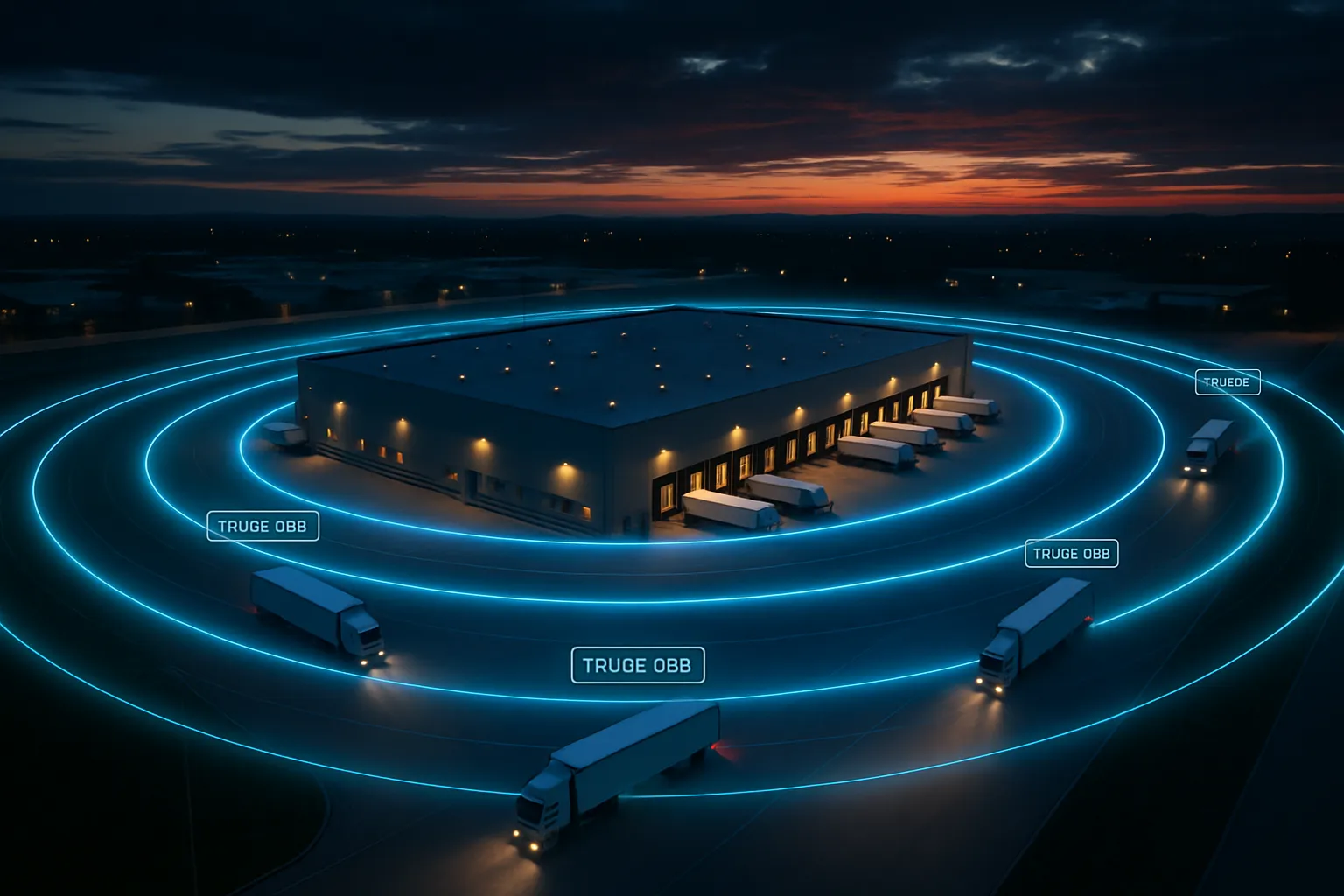
For years, fleet visibility meant watching colored dots inch across a digital map. Dispatchers tracked trucks. Customers refreshed tracking pages. And everyone still picked up the phone to ask: Where's my shipment?
That era is ending. Geofencing—the technology that creates virtual boundaries around physical locations—has matured from a passive monitoring tool into an event-driven automation engine that triggers real-time logistics workflows without human intervention. And in 2026, the economics are impossible to ignore.
The global active geofencing market is projected to reach $2.7 billion in 2026, growing at a 20.94% CAGR to $6.97 billion by 2031, according to Mordor Intelligence. Transportation and logistics is one of the fastest-growing verticals, with nearly 70% of companies reporting improved driver behavior and more accurate resource utilization after implementing geofencing solutions.
Beyond GPS Dots on a Map: Event-Driven Logistics
Traditional GPS tracking answers one question: Where is the truck right now? Geofencing answers a fundamentally different question: What should happen now that the truck is here?
The distinction matters because modern freight operations run on events, not locations. When a truck enters a distribution center's geofence perimeter, that crossing can automatically trigger a cascade of workflows:
- Dock door assignment pushed to the driver's mobile device
- Receiving crew notification sent to the warehouse management system
- Detention clock activation starting the documented timestamp for accessorial billing
- Customer ETA alert confirming delivery within the next 30 minutes
- Appointment verification checking the arrival against the scheduled window
Each of these actions previously required a phone call, a manual check-in process, or a dispatcher monitoring a screen. Geofence-triggered automation collapses minutes of coordination into milliseconds of system-to-system communication.
Core Use Cases Reshaping Fleet Operations
Automated Facility Check-In and Check-Out
The average truck driver spends 2.5 hours per day waiting at shipping and receiving facilities, according to the U.S. Department of Transportation. Much of that dwell time begins with a manual check-in process: finding the guard shack, presenting paperwork, waiting for dock assignment, and navigating an unfamiliar yard.
Geofence-triggered check-in eliminates the manual handshake. When a truck crosses the facility perimeter, the TMS automatically validates the appointment, assigns the dock door, and sends turn-by-turn yard navigation to the driver's ELD or mobile app. The warehouse receiving team gets a real-time countdown rather than a surprise arrival.
Facilities deploying automated geofence check-in report 15–25% reductions in average dwell time—translating directly to more loads per driver per week and lower detention exposure for shippers.
Detention and Demurrage Clock Management
Detention charges cost the U.S. trucking industry billions annually, yet disputes over arrival and departure times remain one of the most contentious billing issues in freight. The core problem is documentation: carrier and facility timestamps rarely agree, and manual gate logs are notoriously unreliable.
Geofencing creates an indisputable, GPS-verified record of exactly when a truck arrived and departed. When the vehicle crosses the facility geofence, the system timestamps the event, starts the free-time clock, and—if the driver exceeds the contractual window—automatically generates a detention charge with supporting location evidence.
The result is fewer billing disputes, faster settlement cycles, and transparent accountability for both carriers and shippers. Early adopters report 25–40% reductions in detention-related charges, driven primarily by better facility scheduling informed by accurate geofence arrival data.
Customer ETA Alerts and WISMO Elimination
"Where is my order?" (WISMO) inquiries consume enormous customer service bandwidth. In freight, the equivalent—"Where is my shipment?"—drives a constant stream of check calls between brokers, carriers, and shippers.
Geofence-triggered notifications eliminate the vast majority of these inquiries by proactively pushing status updates at meaningful milestones: departure from origin, approach to delivery facility, arrival at destination, and departure after unloading. Companies implementing geofence-based proactive notifications report up to 60% fewer inbound WISMO calls—freeing customer service teams to handle exceptions rather than routine status requests.
Dynamic Geofencing: AI-Adjustable Boundaries
Static geofences—fixed circles drawn around a facility address—were the first generation. They work, but they're crude. A 500-meter radius around a distribution center catches trucks on the adjacent highway. A tight perimeter misses the overflow parking lot where drivers stage before appointments.
Dynamic geofencing represents the next evolution. AI-powered systems analyze historical traffic patterns, facility congestion data, and real-time conditions to automatically adjust geofence shapes and trigger distances. During peak receiving hours, the approach geofence expands to give the warehouse earlier warning. During off-peak windows, it contracts to reduce false triggers.
The most sophisticated implementations use polygonal geofences that trace the actual facility footprint—including yard boundaries, staging areas, and individual dock zones—rather than simple circular radiuses. This granularity enables dock-level automation: different workflows trigger depending on whether a truck enters the inbound receiving zone versus the outbound staging area.
Integration With TMS and WMS: The Automation Stack
Geofencing delivers maximum value when it feeds directly into transportation and warehouse management systems. The integration architecture follows an event-driven pattern:
- Geofence event generated — GPS/cellular position crosses virtual boundary
- Event published to message bus — real-time notification to all subscribed systems
- TMS workflow triggered — appointment validation, detention tracking, status update
- WMS workflow triggered — dock scheduling, labor allocation, receiving preparation
- Customer notification dispatched — email, SMS, or portal update with predicted arrival time
This event-driven architecture means geofencing doesn't replace existing systems—it activates them. The TMS still manages appointments. The WMS still schedules docks. But instead of waiting for manual input, both systems respond automatically to location-based triggers.
According to FreightWaves, AI dispatch platforms are already leveraging geofencing technology to handle check calls and on-time tracking autonomously, allowing dispatchers to focus on exception management rather than routine location monitoring.
Privacy, Compliance, and FMCSA ELD Integration
Geofencing in fleet management operates within a regulatory framework that demands careful implementation. Driver privacy laws vary by state, and the FMCSA's ELD mandate creates both opportunities and constraints for location-based automation.
Driver consent is foundational. While company-owned vehicles generally permit employer GPS tracking, many states require explicit disclosure of monitoring practices. Best practice: clear written policies that specify what location data is collected, how it's used, and who can access it.
ELD integration creates a natural data source for geofencing. Since every commercial vehicle already transmits location data through its ELD, geofencing systems can tap into existing hardware rather than requiring separate GPS devices. This reduces deployment cost and driver friction while ensuring location data aligns with Hours of Service records.
Data retention policies matter. Geofence crossing records constitute business records that may be relevant in detention disputes, accident investigations, or compliance audits. Organizations should establish clear retention schedules—typically 6 to 24 months—aligned with statute of limitations requirements for freight claims.
The ROI Case: What the Numbers Show
The business case for geofence-driven fleet automation compounds across multiple value streams:
| Metric | Typical Improvement |
|---|---|
| Facility dwell time | 15–25% reduction |
| Detention charges | 25–40% reduction |
| WISMO call volume | Up to 60% reduction |
| Driver productivity | 8–12% more loads per week |
| ETA accuracy | Within 15-minute windows |
The U.S. fleet management market is projected to reach $17.63 billion by 2030, with fleet tracking and geofencing holding the largest market share by operations management segment—a clear signal that the industry views location-based automation as table stakes rather than a competitive differentiator.
How CXTMS Uses Geofence Intelligence for Proactive Shipment Management
CXTMS integrates geofence-triggered events directly into its transportation management workflows. When a carrier's truck crosses a facility boundary, CXTMS automatically updates shipment status, validates appointment compliance, initiates detention tracking, and pushes proactive notifications to shippers and consignees.
The platform's dynamic geofencing capabilities adjust trigger zones based on facility-specific congestion patterns, ensuring accurate arrival detection whether a truck pulls into a 50-door cross-dock or a single-bay urban delivery point. Combined with CXTMS's carrier performance analytics, geofence data feeds continuous scoring models that reward carriers for consistent on-time arrival and penalize chronic late performers.
The result: fewer phone calls, fewer billing disputes, and a shipment management experience that anticipates problems before they require human intervention.
Ready to automate your fleet workflows with location intelligence? Request a CXTMS demo and see how geofence-driven automation can transform your logistics operations from reactive tracking to proactive management.