China's Large U.S. Soybean Purchases Need an Export-Capacity Release Plan

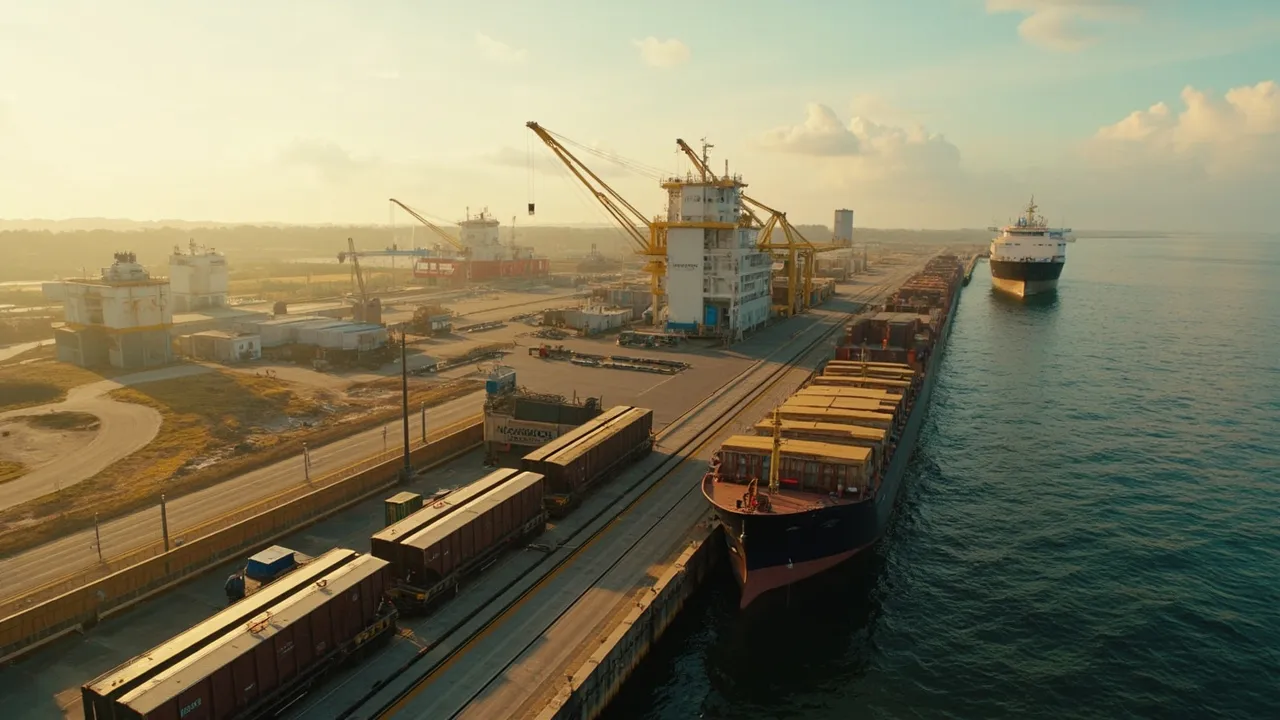
A large soybean sale is not complete when the commercial contract is signed. It is complete when tested grain reaches the correct vessel inside the contractual window. Between those points sit country elevators, unit trains, barge tows, export terminals, inspection capacity, storage space, and ocean schedules. A concentrated buying program can tighten all of them at once.
That risk is now material. Reuters reported that Chinese state traders purchased at least 13 U.S. soybean cargoes in an early-August buying push. Earlier in 2026, Reuters reported that China had already bought approximately 12 million metric tons of U.S. soybeans under a trade commitment. The operational question is no longer simply whether demand exists. It is whether the export network can release that demand without creating congestion, quality failures, or collateral damage for other customers.
Convert cargoes into a network demand plan
Thirteen ocean cargoes sound manageable until planners translate them into inland moves. Assuming a Panamax cargo of roughly 60,000 metric tons, the program represents about 780,000 metric tons of soybeans. Actual parcel sizes and vessel classes will vary, but the conversion illustrates the scale.
That volume cannot appear at a Gulf terminal on the vessel's arrival date. It must be assembled from multiple origins, tested, moved through elevators, and sequenced into terminal storage. Every commercial cargo therefore needs a logistics bill of materials: origin zones, expected daily receipts, railcar or barge requirements, elevator throughput, inspection slots, terminal bin assignments, and vessel laycan.
The lower Mississippi is especially important. FreightWaves has reported that the ports of South Louisiana, Baton Rouge, and New Orleans collectively serve as the gateway for 55% to 70% of U.S. corn, soybean, and wheat exports. Concentrating flows through that corridor makes synchronization essential. High export demand arriving alongside low water, lock disruption, or harvest traffic can turn a nominally available route into a constraint.
Gate the release instead of flooding the network
Exporters should use four release gates. Each gate authorizes the next commitment only when the required evidence exists.
Gate 1: Confirm the commercial specification
Before positioning transportation, confirm crop year, protein and moisture tolerances, allowable foreign material, sustainability documentation, destination requirements, shipment window, and tolerance on quantity. Assign a source region only after recent quality data shows that the specification is attainable.
This prevents a common failure: moving grain toward the port before discovering that it must be blended, reconditioned, or replaced. The gate should also reserve sampling and inspection capacity. A transportation slot without a viable quality path is not usable capacity.
Gate 2: Secure inland movement and storage
Release purchase orders to origin elevators only when the exporter has confirmed rail power or barge equipment, origin loading windows, destination unloading capacity, and buffer storage. The plan should show days of coverage at both the origin and export terminal.
River conditions deserve their own trigger. FreightWaves noted during a previous low-water episode that grain shippers faced limited barge and rail capacity and had to evaluate alternative routes. A practical rule is to reduce the released volume when draft restrictions, tow-size limits, or transit-time variance breach predetermined thresholds. Rail should be reserved as a planned option, not discovered as an emergency substitute after the river is constrained.
Gate 3: Match terminal inventory to a named vessel
Do not fill terminal bins simply because soybeans are available. Tie inbound lots to a nominated vessel, confirmed laycan, berth plan, loading rate, and documentary cutoff. Terminal inventory should arrive in waves that preserve enough working space for blending and normal customer flows.
The vessel plan must include uncertainty. If an ocean ship is five days late while barges continue arriving, storage becomes the constraint. If it arrives early, insufficient accumulated inventory can create berth delay. Planners should model early, base, and late arrival cases and set maximum inbound inventory for each one.
Gate 4: Authorize final accumulation
The final release should occur only after vessel status, berth availability, inspection readiness, documents, and remaining cargo quantity are reconciled. At this point, the control tower should compare the daily required accumulation rate with confirmed inbound capacity. A shortfall should trigger a ranked recovery action—alternate elevator, incremental rail block, revised barge sequence, or vessel-window negotiation—not an uncoordinated scramble for every available truck and car.
Protect other commodities and customers
A soybean surge competes with corn, wheat, feed ingredients, fertilizer, and industrial products for equipment and infrastructure. Protecting the soybean program by starving every other lane merely relocates the failure.
Build a capacity ledger by week and node. Show committed, reserved, and unallocated railcars, barges, elevator hours, storage tons, inspection appointments, and berth hours. Then rank shipments using contractual exposure, inventory cover, perishability or quality risk, customer criticality, and the cost of delay. Ring-fence minimum capacity for strategic non-soybean customers before releasing discretionary soybean volume.
Scenario planning should test at least four stresses: a sharp Chinese call-forward, lower-river draft restrictions, a five-day vessel delay, and an export-terminal outage. For each scenario, planners need a predefined release reduction, alternate route, customer-notification point, and decision owner. The goal is not a perfect forecast. It is to prevent one demand signal from producing dozens of conflicting local decisions.
Manage the sale as an executable flow
The right dashboard connects the sales commitment to physical milestones. Track contracted tons, sourced tons, quality-cleared tons, origin inventory, loaded inland tons, in-transit tons, terminal inventory, vessel ETA confidence, and loaded-on-vessel tons. Exceptions should expose the next constraint and its owner rather than report a reassuring aggregate percentage.
CXTMS helps logistics teams connect bookings, milestones, capacity, documents, and exceptions across complex multimodal flows. Request a CXTMS demo to see how a shared execution plan can turn major export commitments into controlled, visible shipments.