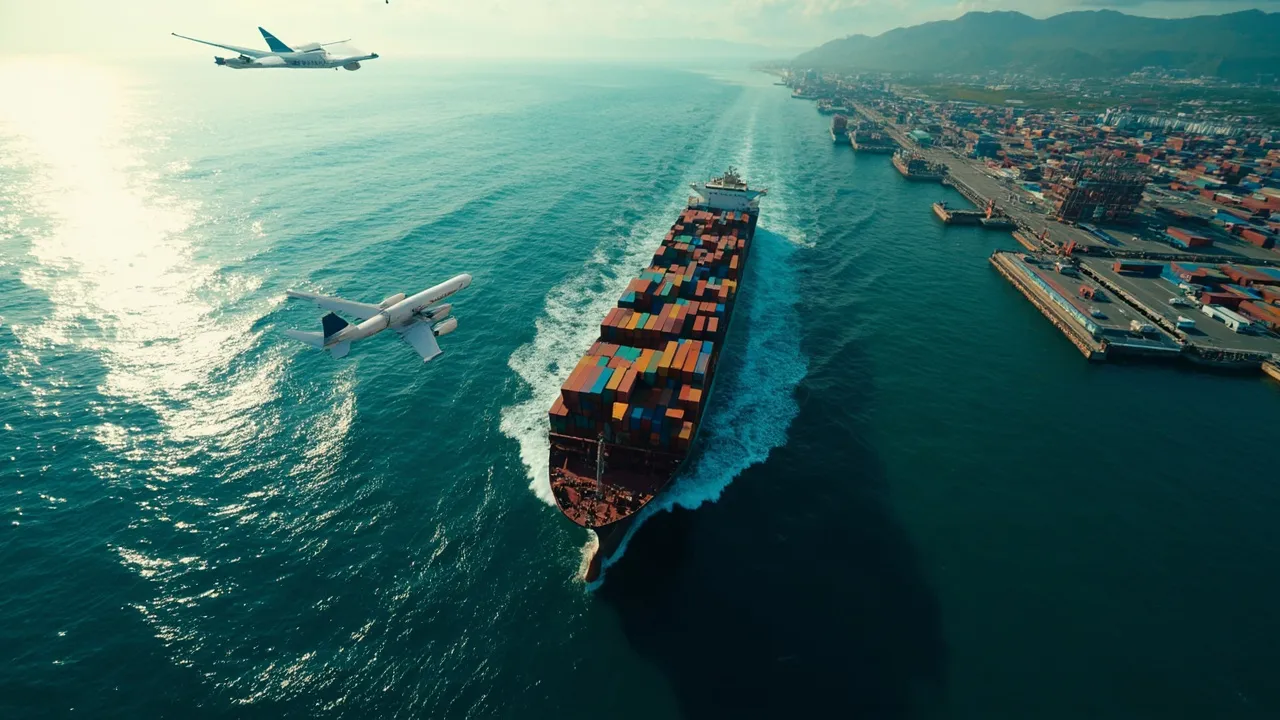
China's 21.8% Export Surge Creates a Capacity Crunch: What the $213 Billion Trade Surplus Means for Global Logistics Networks

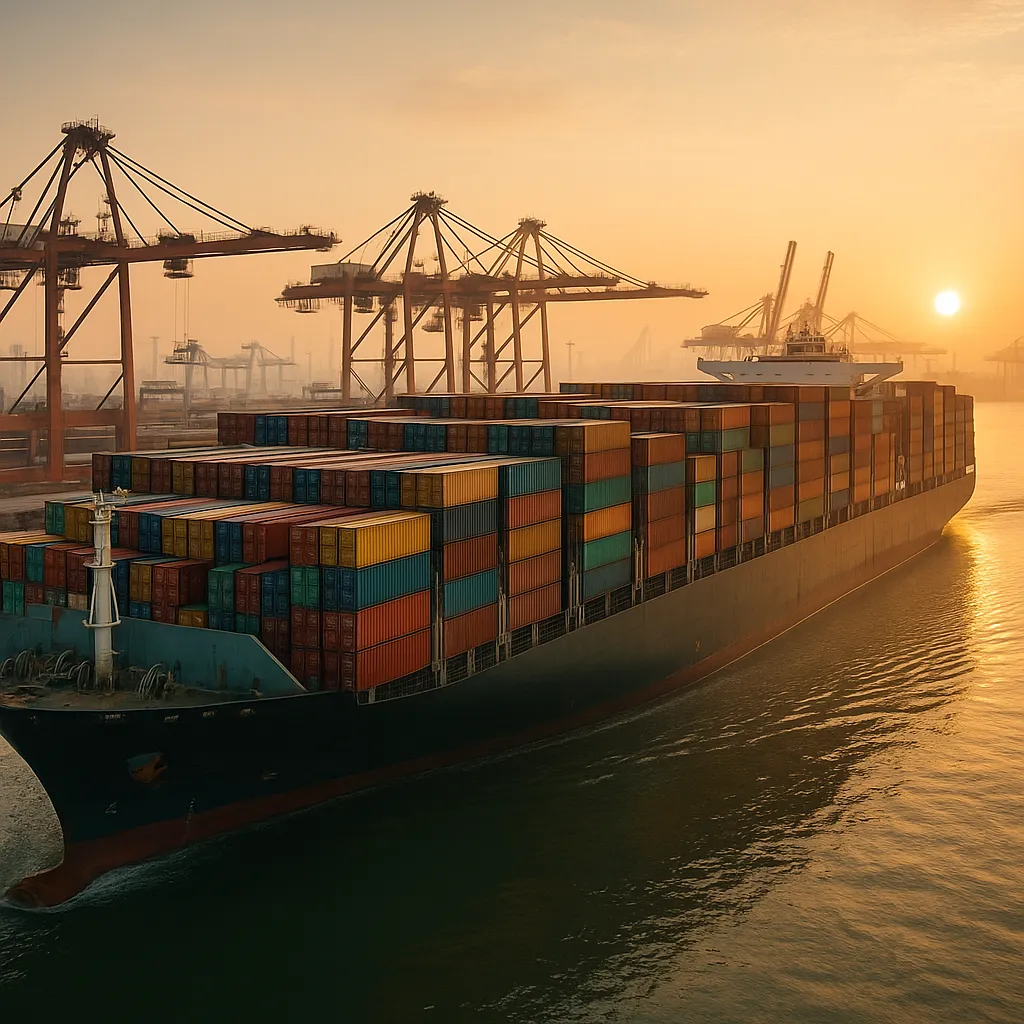
China just dropped a bombshell on global logistics planners. January–February 2026 export data revealed a 21.8% year-over-year surge in outbound shipments, totaling $656.58 billion and producing a staggering $213.6 billion trade surplus — smashing the Reuters consensus forecast of $179.6 billion by nearly 20%. For supply chain teams already navigating geopolitical turbulence and shifting trade lanes, the downstream capacity implications are enormous.
Breaking Down the Numbers
The scale of the acceleration is hard to overstate. December 2025 exports grew a modest 6.6%. Two months later, that figure tripled. Semiconductor exports alone jumped 66.5% year-over-year — the fastest growth in over a decade — driven by the global AI investment boom and a persistent memory chip shortage.
But the story isn't just about chips. Clothing, textiles, and bag exports also surprised economists to the upside, sectors that had struggled through 2025 against Southeast Asian competition. According to Xu Tianchen, senior economist at the Economist Intelligence Unit, "Growth in clothing, textiles, and bags exports was surprising, given their poor performance in 2025 amid challenges from Southeast Asia and South Asia."
With China's 2025 full-year trade surplus already at a record $1.2 trillion, the 2026 trajectory suggests that number will be eclipsed — barring major disruptions from the ongoing Middle East conflict.
Where the Volume Is Going: ASEAN and Europe Take the Lead
What makes this export wave particularly significant for logistics networks is the destination shift. According to Reuters, exports to ASEAN nations surged 29.4% in the January–February period, while shipments to Europe climbed 27.8% and those to South Korea rose 27%.
This is not a uniform global increase — it is a geographic rebalancing of Chinese export flows. With U.S.-bound volumes constrained by tariff uncertainty and the Supreme Court's tariff reprieve creating only a temporary window for front-loading, manufacturers are routing goods aggressively through ASEAN corridors and European gateways.
The implications for freight networks are immediate. Asia-to-Europe and intra-Asia lanes are absorbing volume at a pace that existing capacity allocations weren't designed for. Carriers had already been shifting capacity away from the transpacific toward these growth corridors. According to industry data reported by FreightWaves, transpacific capacity had declined by 2.9% as carriers redirected vessels to routes linking Asia with the Middle East, Indian Subcontinent, Sub-Saharan Africa, and Europe.
The Capacity Crunch: Where the Pressure Points Are
This volume surge creates a cascading set of capacity constraints that shippers need to prepare for:
Asia-Europe lane tightening. A 27.8% increase in China-to-Europe volumes on lanes that already absorbed redirected capacity creates real booking pressure. Shippers relying on spot market availability will face longer lead times and rate volatility through Q2.
ASEAN transshipment congestion. ASEAN ports — particularly Singapore, Port Klang, and Tanjung Pelepas — serve as critical transshipment hubs. A 29.4% volume spike flowing through these nodes raises dwell time and berth availability risks.
Warehouse saturation at destination. European and ASEAN distribution centers receiving outsized inbound volumes face storage capacity pressure. Shippers without pre-arranged overflow capacity could see receiving delays cascade into detention and demurrage charges.
Equipment imbalance. Surging outbound volumes from China without matching inbound flows to Chinese ports means container repositioning becomes a bottleneck. Empty container availability at origin ports can deteriorate rapidly, adding days to booking-to-loading timelines.
What the Semiconductor Surge Means for High-Value Freight
The 66.5% jump in semiconductor exports deserves special attention from logistics managers handling high-value or time-sensitive goods. This volume surge is competing for premium capacity — air cargo slots, temperature-controlled containers, and expedited customs processing.
As Supply Chain Dive's 2026 outlook noted, stabilizing market dynamics for shippers could be curtailed by overcapacity and network complexity risks. The semiconductor export boom adds a layer of complexity: high-value electronics shipments get priority allocation from carriers, potentially squeezing general cargo shippers off preferred services.
Strategic Playbook for Shippers
In an environment where export volumes are growing three times faster than anyone predicted, reactive logistics planning will cost you. Here's what proactive supply chain teams should be doing right now:
1. Lock in contract rates on Asia-Europe and intra-Asia lanes. Spot market exposure on these corridors is becoming increasingly expensive. Q2 contract negotiations should reflect the volume reality, not last quarter's rates.
2. Diversify transshipment routing. Don't funnel all ASEAN-bound or ASEAN-transshipped cargo through a single hub. Pre-qualify alternative ports and secondary carrier services to maintain schedule reliability.
3. Secure warehouse capacity ahead of the wave. If your European or Southeast Asian distribution strategy relies on just-in-time warehouse availability, the next 60 days are critical for securing overflow or 3PL capacity.
4. Monitor equipment availability at origin. Container shortages at Chinese ports can appear without warning when export surges accelerate. Build lead time buffers into booking timelines and consider shipper-owned container (SOC) strategies for critical lanes.
5. Use data to anticipate, not react. The difference between absorbing a capacity crunch and being blindsided by one comes down to visibility. Real-time freight analytics, carrier performance tracking, and predictive routing tools transform raw trade data into actionable logistics decisions.
How CXTMS Helps You Navigate the Surge
At CXTMS, our platform is built for exactly these moments — when global trade patterns shift faster than static planning can accommodate. Our multimodal visibility tools let you track carrier capacity across Asia-Europe, transpacific, and intra-Asia lanes in real time. Predictive analytics flag booking pressure before it becomes a service failure, and our dynamic routing engine identifies alternative carrier and port combinations that maintain transit times when primary lanes tighten.
Whether you're managing a surge in ASEAN-bound components or rerouting European imports around congested hubs, CXTMS gives you the data and flexibility to stay ahead of the capacity crunch rather than reacting to it.
Ready to see how CXTMS can strengthen your global logistics strategy? Request a demo today and discover how real-time freight intelligence turns trade disruptions into competitive advantages.