Cargo Ship–Tanker Collisions Need a Consignment-Level Recovery Record

When two vessels collide, the first hours belong to search-and-rescue teams and maritime authorities. For cargo owners, however, another clock starts immediately: how quickly can the business determine which consignments were exposed, protect its legal position, replace critical goods, and give customers an answer grounded in evidence?
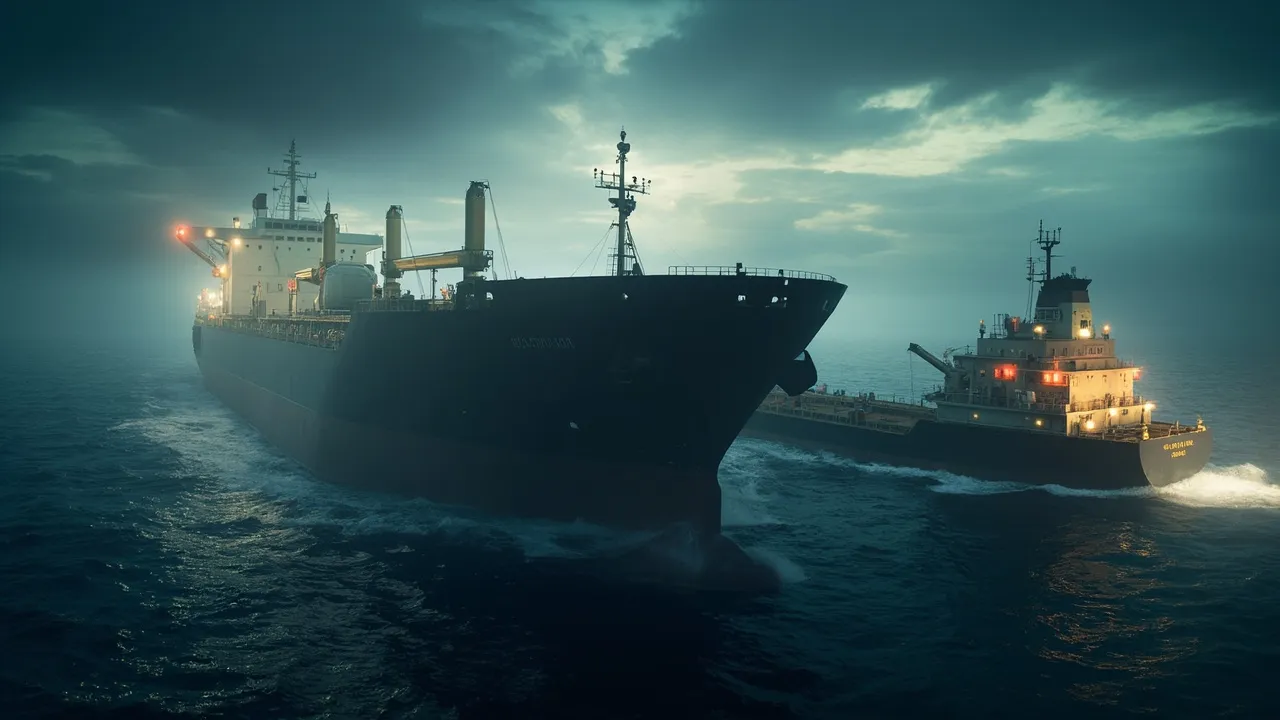
That challenge is visible in the collision reported in Turkey’s Marmara Sea. According to SupplyChainBrain, the Turkish-flagged cargo vessel Tugberk Imamoglu struck the oil-products tanker Alsu at about 3 a.m. local time, roughly 35 kilometers (22 miles) south of Silivri. Turkey’s transport minister said the cargo ship likely sank, and rescue teams were searching for 10 missing crew members at the time of the report.
Human safety comes first, and early reports can change. Yet freight operators cannot wait for a final casualty investigation before organizing their commercial response. They need a consignment-level recovery record: one controlled file that connects incident facts, shipment evidence, financial exposure, replacement activity, and customer commitments.
Start with five operational questions
The incident team should separate confirmed facts from assumptions and open five workstreams.
What is the crew and vessel status? Use official authority, owner, carrier, and insurer updates. Record the publication time and source of every update; never turn “likely sunk” into “confirmed total loss” without evidence.
Which consignments were exposed? Reconcile the vessel, voyage, booking, bill of lading, container or lot, purchase order, and final customer. A vessel-level alert is not enough. Teams must know the quantity, value, product criticality, and promised delivery attached to each affected consignment.
Is pollution changing the response? A collision involving an oil-products tanker can introduce exclusion zones, cargo contamination, port restrictions, and a longer salvage timeline even when a shipper’s own cargo is not hazardous. Record pollution notices and any handling restrictions alongside the shipment.
Who controls salvage and release? Salvors, authorities, shipowners, average adjusters, surveyors, and insurers may all issue instructions. After a 2025 tanker-container ship collision off England, Reuters reported that a specialist marine services provider was appointed to salvage the tanker. That illustrates why cargo recovery is a controlled maritime operation—not an ordinary pickup that a consignee can arrange independently.
Could general average apply? If a shipowner declares general average, cargo interests may have to provide a bond, guarantee, and valuation evidence before surviving cargo is released. The declaration, security instructions, adjuster contact, and submission status belong in the recovery record.
Build the document pack before the claim arrives
Claims stall when evidence sits across email threads, forwarding agents, procurement systems, and shared drives. Each affected consignment should have a structured document pack containing:
- Booking confirmation, bill of lading, commercial invoice, and packing list
- Container, seal, pallet, or cargo-lot identifiers and declared gross weight
- Certificate of origin, customs entries, permits, and product compliance records
- Cargo insurance certificate, policy wording, deductible, and notification deadline
- Incoterms and contracts identifying when risk and title transferred
- Inspection, loading, temperature, condition, and pre-shipment photographs where relevant
- Carrier notices, incident reports, survey instructions, salvage communications, and general-average documents
- Purchase order, customer order, promised delivery date, and downstream production dependency
The same pack should support two paths at once. The recovery and claim path preserves evidence, follows release instructions, and records damaged or recovered quantities. The replacement path confirms whether identical stock exists, whether a substitute is acceptable, and which customs or compliance documents must be recreated.
That parallel approach matters because ocean shipping moves about 80% of world trade, as Reuters noted. A maritime casualty therefore can affect components, raw materials, and customer orders far beyond the immediate scene. Waiting for a loss decision before sourcing replacements can turn one transport failure into multiple production or service failures.
Make one record the operational source of truth
The recovery record should not be a static claim folder. It should be a live object linked to the original shipment and accessible to operations, customer service, procurement, finance, legal, and insurance teams.
At minimum, capture:
- Incident ID, vessel, voyage, location, time, and latest verified status
- Every exposed consignment and its cargo value, insured value, owner, and customer
- Status labels such as unconfirmed, exposed, recovered, damaged, lost, or released
- Named insurer, broker, surveyor, adjuster, carrier contact, and internal decision owner
- Notice deadlines, evidence requests, claim amount, reserve, and recoveries received
- Replacement order, alternate supplier, new mode and route, cost approval, and ETA
- Customer notification time, message owner, next update due, and promise made
- A timestamped log of sources, decisions, approvals, and document versions
Use event-driven tasks instead of relying on meetings. A confirmed vessel match should trigger insurance notice and customer-impact review. A general-average declaration should create security-document tasks. A replacement approval should open a linked shipment while preserving its relationship to the original consignment. A revised ETA should update the customer commitment and schedule the next communication.
Measure recovery, not just incident closure
A casualty is not operationally closed when the alert disappears from the dashboard. Closure requires a documented disposition for every consignment and reconciliation of financial and customer outcomes.
Useful measures include time to identify exposed consignments, time to notify insurers, percentage of records with a complete evidence pack, time to approve a replacement, avoided production downtime, customer updates delivered on schedule, claim recovery percentage, and unrecovered cost by cause.
The strongest metric is time to a defensible customer commitment. “A vessel was involved in an incident” is an alert. “Your consignment is confirmed exposed; replacement stock is booked by air, customs documents are complete, and delivery is expected Tuesday” is a recovery decision.
Turn maritime uncertainty into controlled execution
A collision generates fragmented, fast-changing information. The operator’s job is not to pretend that uncertainty has vanished. It is to connect each verified update to the exact cargo, document, owner, deadline, financial exposure, and customer promise it affects.
CXTMS gives freight teams a shared shipment record for milestones, documents, exceptions, replacement movements, and customer communications. Request a CXTMS demo to see how consignment-level workflows can support faster, evidence-based disruption recovery.