Anti-Greenwashing Enforcement Reaches the Supply Chain: How New CMA and EU Rules Make Shippers Liable for Environmental Claims Across Their Networks

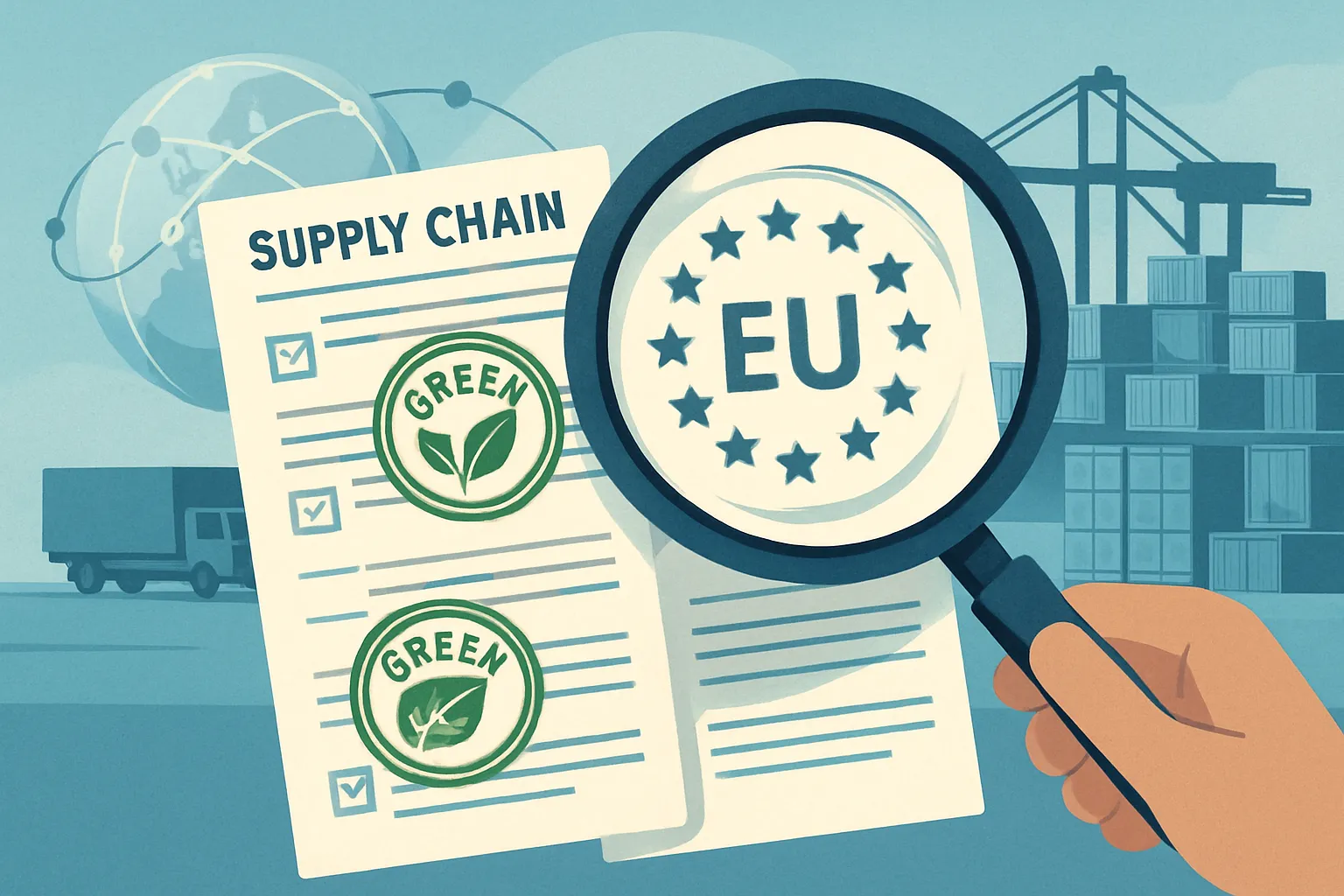
For years, sustainability in logistics operated on an honor system. Carriers marketed "carbon neutral" deliveries. 3PLs promoted "green fleets." Shippers passed those claims along to their customers and investors without asking hard questions about the underlying data.
That era is ending — fast.
On January 22, 2026, the UK Competition and Markets Authority (CMA) published updated guidance on environmental claims across supply chains, making one thing unmistakably clear: companies are now responsible for misleading environmental claims throughout their entire supply chain, not just the ones they make directly. Meanwhile, the EU's Empowering Consumers for the Green Transition (ECGT) Directive must be transposed by March 2026 and will apply from September 2026, banning vague terms like "eco-friendly," "green," and "climate neutral" unless backed by verified, substantiated evidence.
For shippers, freight forwarders, and logistics operators, this isn't a distant regulatory concern. It's a compliance emergency happening right now.
The CMA's Supply Chain Guidance: What Changed
The CMA's January 2026 guidance represents a fundamental shift in how environmental claims liability works. Previously, enforcement focused on the company making the claim. Now, the CMA has clarified that every actor in the supply chain shares responsibility — and the penalties are severe.
Under the Digital Markets, Competition and Consumers Act (DMCCA), the CMA can now impose fines of up to 10% of global turnover for misleading environmental claims — without going through the courts. That's not a theoretical maximum. The CMA has signaled it will use these powers aggressively.
The guidance establishes three core principles for supply chain actors:
-
Risk-based enforcement. The CMA will target parties best positioned to prevent or correct misleading claims — typically those with the greatest control over content and presentation. For shippers, this means you can't blame a carrier for a "carbon neutral" claim you repeated in your own sustainability report.
-
Proportionate due diligence. All supply chain actors must undertake verification checks appropriate to their role, expertise, and resources. A multinational shipper faces higher expectations than a regional carrier.
-
Evidence-based substantiation. Every environmental claim requires documented proof before publication, regardless of where in the supply chain the claim originates.
The EU's Parallel Crackdown: September 2026 Deadline
The UK isn't acting alone. Across the Channel, the EU's regulatory framework is tightening in parallel — and it goes even further.
The ECGT Directive, which member states must transpose by March 2026 and enforce from September 27, 2026, directly targets the kinds of vague sustainability claims that have become commonplace in logistics marketing. Under the new rules, the following practices become explicitly prohibited:
- Generic environmental claims ("eco-friendly," "sustainable," "green") without recognized certification or verified evidence
- Carbon neutrality claims based solely on carbon offset purchasing — companies must demonstrate actual emissions reductions
- Sustainability labels not based on independent, third-party certification schemes
- Claims about entire products or services when they relate only to a single aspect of environmental performance
The penalties under the EU framework can reach up to 4% of annual EU turnover, along with potential revenue confiscation and market access restrictions.
For logistics companies operating across both jurisdictions — which includes most global freight forwarders and 3PLs — the combined exposure is staggering.
Real Risk Scenarios in Logistics
This isn't abstract regulatory theory. Consider how these rules apply to everyday logistics operations:
Scenario 1: The "Carbon Neutral Delivery" claim. A 3PL markets its delivery service as "carbon neutral" based on purchased carbon offsets. Under both the CMA guidance and the ECGT Directive, this claim is now problematic unless the company can demonstrate actual emissions reductions alongside any offsetting. The shipper using that 3PL and repeating the claim in its own ESG reporting shares liability.
Scenario 2: The "Green Fleet" marketing. A carrier promotes its "green fleet" because 15% of its vehicles are electric or CNG-powered. But 85% of shipments still move on diesel trucks. Under the new rules, claiming a "green fleet" when it relates to only a fraction of operations could constitute a misleading claim about the entire service.
Scenario 3: The inherited sustainability report. A shipper includes carrier-provided emissions data in its corporate sustainability report without independent verification. If that data is later found to be inaccurate or misleading, the shipper — not just the carrier — faces enforcement action.
Poland's competition authority (UOKiK) has already demonstrated how enforcement plays out in practice. In mid-2025, it pressed greenwashing charges against three logistics and transport companies for marketing claims suggesting that parcel locker deliveries were more eco-friendly than home delivery, and that deliveries used a "green fleet" resulting in zero-emission e-commerce. The charges demonstrate exactly the kind of enforcement shippers should expect to intensify throughout 2026.
How This Changes Shipper-Carrier Contracts
The compliance implications ripple directly into procurement. Shippers need to fundamentally rethink how they evaluate, contract with, and monitor their logistics providers. Key changes include:
- Contractual environmental data obligations. Carrier agreements must include specific requirements for emissions data provision, methodology disclosure, and audit rights.
- Verification clauses. Contracts should require that environmental claims made by carriers are independently substantiated before the shipper can reference them.
- Liability allocation. Clear contractual language must establish who bears responsibility when an environmental claim is challenged by regulators.
- Regular compliance audits. Quarterly or semi-annual reviews of carrier sustainability data should become standard practice, not a one-time check during RFP evaluation.
Building an Audit-Ready Sustainability Data Pipeline
The shift from trust-based to verification-based sustainability reporting requires infrastructure that most logistics operations don't yet have. An audit-ready data pipeline needs several components:
Standardized data collection. Emissions data from carriers, warehouses, and other supply chain partners must be collected in consistent formats aligned with recognized methodologies like the Global Logistics Emissions Council (GLEC) Framework.
Third-party verification. Self-reported data is no longer sufficient. Companies need independent verification of emissions calculations and environmental performance claims.
Lifecycle documentation. Every environmental claim must be traceable back to its underlying evidence — from raw emissions data through calculation methodology to final published claim.
Real-time monitoring. Annual sustainability reports are insufficient when enforcement can target individual shipments or marketing campaigns. Continuous monitoring of environmental performance data is becoming essential.
How CXTMS Helps Shippers Verify Rather Than Trust
CXTMS approaches sustainability compliance the same way it approaches every aspect of logistics visibility: through verified data, not vendor promises. The platform's carbon tracking modules aggregate emissions data from across your carrier network, normalize it against recognized frameworks, and flag discrepancies before they become compliance risks.
Rather than accepting a carrier's "carbon neutral" claim at face value, CXTMS enables shippers to see the actual emissions data behind the claim — broken down by shipment, lane, and mode. When a carrier's reported emissions don't align with operational reality, the platform surfaces the gap so you can address it before it appears in a sustainability report that regulators might scrutinize.
Ready to build a compliance-ready sustainability data pipeline? Request a CXTMS demo and see how verified emissions tracking can protect your business from greenwashing enforcement risk.
The regulatory landscape for environmental claims is evolving rapidly. This article reflects rules and guidance current as of March 2026. Companies should consult legal counsel for jurisdiction-specific compliance advice.