AI-Native Yard Operating Systems Are Here: How Terminal Industries and Oxa Are Automating the Last Manual Frontier in Logistics


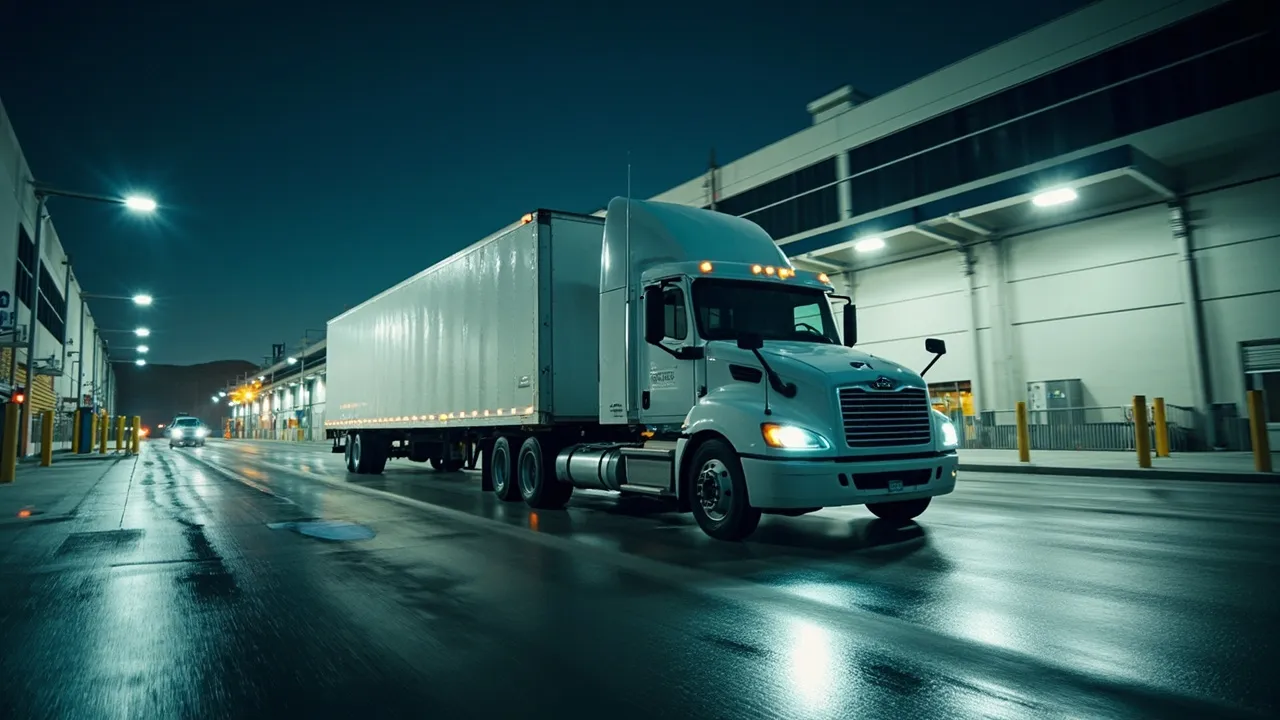
Every dollar you've invested in warehouse automation and transportation management has made your supply chain faster — except for one glaring gap. The yard, that sprawling no-man's-land between the gate and the dock, remains stubbornly manual, stubbornly analog, and stubbornly expensive. In 2026, that's finally changing.
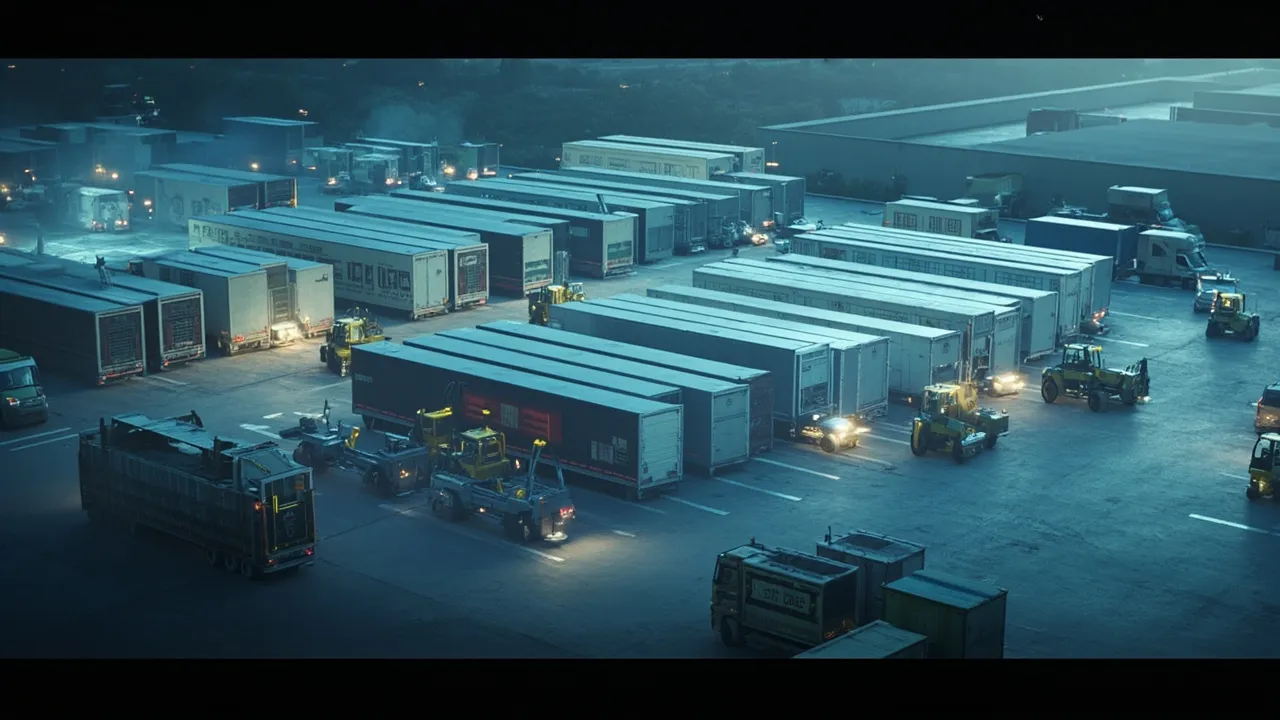
The Yard: Logistics' Most Expensive Blind Spot
Here's a statistic that should make every supply chain leader uncomfortable: roughly 75% of logistics operators now say the yard is a bottleneck, according to Terminal Industries, despite massive investments in the systems flanking it. Warehouse management systems have hit approximately 80% adoption among large operators. TMS platforms sit around 60%. Yet yard technology adoption remains below 25%.
The result is a structural chasm. On one side, your WMS orchestrates every pick, pack, and putaway with surgical precision. On the other, your TMS optimizes every lane and load with algorithmic efficiency. In between, the yard runs on radio calls, spreadsheets, and a spotter driver who's been doing it "his way" for 15 years.
The global dock and yard management systems market is estimated at $4.56 billion in 2026, and it's growing fast — driven by e-commerce volume surges, labor shortages, and the realization that the yard is where throughput goes to die. But the real story isn't market size. It's the emergence of an entirely new category of technology: AI-native yard operating systems that don't just monitor yard activity — they autonomously run it.
Terminal Industries: What "AI-Native" Actually Means
In February 2026, Austin-based Terminal Industries unveiled what it calls the first AI blueprint for yard operations — and the distinction it draws against legacy yard management systems is crucial.
Traditional YMS platforms were designed as systems of record. They document what already happened: which trailer parked where, which driver checked in, which dock door was assigned. They layer analytics, and sometimes computer vision, onto architectures built decades ago for configuration and reporting — not real-time execution.
Terminal's Yard Operating System™ takes a fundamentally different approach. It treats the yard as a living, physical system, continuously ingesting real-time signals from cameras, sensors, telematics, and enterprise platforms. Those signals are translated into operational context, fed through AI reasoning and policy engines, and executed through durable workflows — from gate to dock — without manual intervention.
"Yard operations fail because the technology was never designed to handle constant change," said Darin Brannan, Terminal Industries' CEO. "We built Terminal around the idea that vision and intelligence have to live at the core of the system, not as add-ons."
The practical impact is significant. Terminal's system autonomously coordinates appointments, manages capacity, resolves exceptions, and orchestrates yard activity at operational speed. It's not a dashboard that tells you there's a problem — it's a system that fixes the problem before you know it exists.
Oxa's $103M Bet: Retrofitting Autonomy Into Existing Yard Fleets
While Terminal Industries is reinventing yard software, Oxford-based Oxa is attacking the hardware side — and doing it with serious financial backing. In March 2026, Oxa secured $103 million in a Series D first close, with investors including NVentures (NVIDIA's venture arm), the UK National Wealth Fund ($50 million alone), BP Ventures, IP Group, and Hostplus.
Oxa's thesis is elegantly simple: autonomy will scale in logistics yards before it scales on city streets. Industrial environments — ports, airports, factories, distribution centers — are structured, predictable, and operate in closed settings with fewer regulatory barriers than public roads.
Rather than manufacturing its own vehicles, Oxa integrates autonomous driving software into existing yard vehicles — tow tractors, terminal trucks, logistics shuttles — allowing operators to retrofit fleets already in service. The technology stack includes Oxa Driver (the autonomy software), Oxa Foundry (a deployment configuration toolkit), and Oxa Hub (fleet management and operational data).
Customers already deploying Oxa's technology include DHL, Vantec, and BP, with commercial rollouts expanding across Europe, the UK, and the Middle East.
The ROI Case: Why Yards Are the Perfect Autonomy Proving Ground
The economic argument for yard automation is compelling, and it goes beyond labor savings:
-
Labor cost reduction: Yard spotters — the drivers who shuttle trailers between dock doors, parking spots, and gates — are among the hardest positions to fill in logistics. Industry-wide driver shortages and rising wages make each spotter cost $55,000–$75,000 annually, before overtime and benefits.
-
Throughput gains: Autonomous yard operations can run 20+ hours per day versus the 8–10 hours typical of manual operations, effectively doubling yard throughput capacity without adding physical infrastructure.
-
Safety improvements: Yards are dangerous environments. The Bureau of Labor Statistics consistently ranks transportation and material moving among the highest-injury occupations. Autonomous systems eliminate blind-spot collisions, backing accidents, and fatigue-related incidents.
-
Detention cost elimination: With autonomous coordination between gate, yard, and dock, trailer dwell times drop dramatically — reducing the $3 billion annual industry cost of detention and demurrage.
The convergence of these factors explains why investors are pouring capital into the space. Outrider raised $73 million for autonomous yard trucks. Forterra (formerly Robotic Research) partnered with yard tractor manufacturer Kalmar. And now Oxa's $103 million round signals that the institutional investment community sees industrial yard autonomy as a near-term commercial reality — not a science project.
Integration Is Everything: Connecting Yard Data to End-to-End Visibility
The greatest risk in yard automation isn't the technology itself — it's deploying it in isolation. An autonomous yard truck that can't communicate with your TMS doesn't know which trailer to prioritize. A yard OS that can't sync with your WMS doesn't know which dock doors are actually ready.
This is where integration architecture becomes critical. Terminal Industries explicitly designed its platform for deep TMS and WMS integrations, offering what it describes as "single pane of glass visibility to each yard, and all yards." The system's modular architecture means it can be tuned to each facility while maintaining enterprise-wide operational intelligence.
For shippers running complex multi-facility networks, platforms like CXTMS provide the connective tissue between yard-level automation and end-to-end supply chain visibility. When yard data — gate times, trailer positions, dock assignments, dwell metrics — flows into a unified TMS, you get something no standalone yard system can deliver: the ability to optimize upstream and downstream operations based on real-time yard conditions.
What Facilities Should Prioritize First
If your organization is evaluating yard automation, here's a practical adoption roadmap:
-
Start with visibility: Deploy computer vision at gates and dock doors before investing in autonomous vehicles. You can't automate what you can't measure.
-
Digitize appointment scheduling: Replace phone-and-email appointment management with automated, integrated scheduling that syncs with your TMS and WMS.
-
Pilot autonomous spotting in controlled zones: Begin with simple, repetitive trailer moves in low-complexity areas of the yard before expanding to full autonomous orchestration.
-
Connect yard data to your TMS: Ensure yard metrics flow into your transportation management platform so planners can see real-time yard conditions alongside load planning, carrier scheduling, and delivery tracking.
-
Scale with a platform, not point solutions: Choose yard technology that integrates with your existing stack rather than creating another data silo.
The Bottom Line
The yard has been logistics' last manual frontier for decades — a persistent blind spot sandwiched between increasingly intelligent warehouses and increasingly optimized transportation networks. That era is ending.
Terminal Industries is proving that AI-native software can autonomously run yard operations from gate to dock. Oxa is proving that autonomous driving technology can be retrofitted into existing yard fleets at commercial scale. And the investment community, with hundreds of millions flowing into the space, is betting that yard automation is the next major productivity unlock in supply chain operations.
The question for logistics leaders isn't whether to automate the yard. It's whether you'll do it proactively — or be forced into it by competitors who did.
Ready to connect your yard operations to end-to-end supply chain visibility? Request a CXTMS demo to see how unified TMS intelligence integrates with yard automation platforms for complete gate-to-delivery optimization.