AI Tariff Scenario Simulators: How Supply Chain Leaders Use What-If Modeling to Navigate the Most Complex Trade Policy Environment in Decades

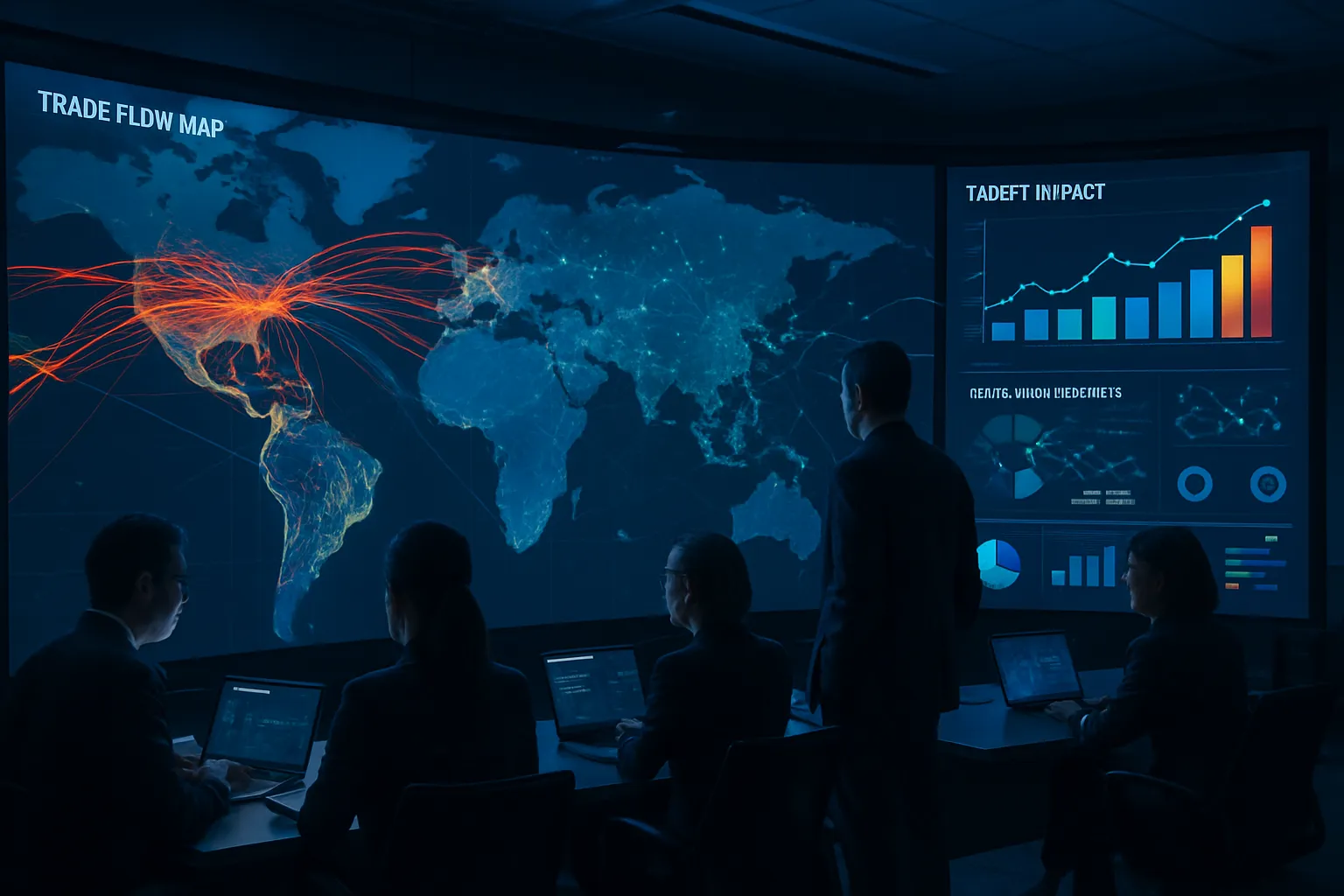
The Supreme Court's landmark IEEPA tariff ruling in early 2026 didn't simplify trade policy — it supercharged the complexity. With the administration pivoting to Section 122 authority and imposing a baseline 10% tariff on all imports, supply chain leaders now face a policy environment where tariff rates, exemptions, and retaliatory measures can shift week to week. In this landscape, the spreadsheet-driven tariff analysis of the past has become dangerously inadequate.
Enter AI-powered tariff scenario simulators — a new category of supply chain technology that lets logistics and procurement teams model alternative trade flows, calculate real landed costs, and stress-test their networks against dozens of policy scenarios before a single container ships.
Why Traditional Tariff Management Is Failing
For decades, tariff management was a compliance exercise handled by customs brokers and trade attorneys after goods were already in transit. Classification, valuation, and duty payment happened downstream, often disconnected from sourcing and procurement decisions made months earlier.
That model broke in 2025 when the apparel sector saw a punishing 17% surge in costs under new tariff regimes, while produce faced around 4% and pharmaceuticals were largely untouched. The uneven impact across categories and geographies made generic tariff strategies useless. Every product line, country of origin, and customer segment demanded its own analysis.
KPMG's 2026 supply chain trends report identified tariff-management platforms and AI-powered scenario simulators as essential tools, noting that supply chain leaders must be able to "simulate alternative flows and test 'what-ifs' before policies are implemented." The advisory firm emphasized that agility — diversifying suppliers, adjusting production footprints, and leveraging digital tools — is now the baseline for competitiveness, not an advantage.
How AI Scenario Simulators Work
Modern tariff scenario simulators combine several AI capabilities into an integrated decision-support platform:
Digital Supply Chain Twins. These virtual replicas of a company's entire supply network — from raw material origins through manufacturing, warehousing, and final delivery — can simulate the financial impact of tariff changes across every node. According to Gartner's 2025 Resilience Benchmark, companies embedding risk-sensitive metrics with AI models saw a 28% faster response rate and 19% shorter recovery cycles compared to those relying on manual contingency management.
Landed Cost Calculators. Rather than evaluating tariff duty rates in isolation, AI-driven simulators calculate total landed costs: purchase price plus freight, insurance, duties, taxes, brokerage fees, and compliance costs. When a 25% tariff on Chinese-origin components jumps to 50% on steel and aluminum — as happened in mid-2025 — the simulator instantly recalculates whether Vietnamese, Mexican, or domestic alternatives become cost-competitive when factoring in lead time changes, quality variance, and logistics costs.
Multi-Variable Scenario Engines. These tools model combinations of tariff restrictions, market conditions, and business demands simultaneously. A supply chain leader can ask: "What happens to my margin if Section 301 duties increase by 10% on electronics from Malaysia while ocean freight rates rise 15% and the dollar weakens 3% against the ringgit?" The AI returns actionable answers in minutes rather than the days or weeks required for manual analysis.
Natural Language What-If Queries. Large language models now enable supply chain planners to ask questions in plain English rather than building complex spreadsheet models. Teams can query their digital twin with questions like "Show me the three lowest landed-cost sourcing alternatives for SKU group 4700 if China tariffs increase to 60%" and receive detailed scenario comparisons with confidence intervals.
The Five Post-Ruling Actions That Demand Simulation
EY's March 2026 advisory on five actions after the Supreme Court tariff ruling outlined critical steps that directly benefit from AI scenario modeling:
-
Preserve refund rights — Simulators track which shipments fall under IEEPA-era tariff rates eligible for refunds, calculating potential recovery amounts across thousands of entries automatically.
-
Model replacement tariff exposure — With Section 122 authority capped at 150 days and 15% maximum rates, simulators project which products face the highest risk when the administration inevitably pivots to longer-term authorities like Section 301 or 201.
-
Stress-test supply chain shifts — Before committing capital to nearshoring or friendshoring moves, companies can simulate whether the cost savings from tariff avoidance outweigh the logistics, quality, and lead-time penalties of moving production.
-
Synchronize cross-functional response — AI platforms break down the silos between procurement, finance, and tax departments, ensuring that sourcing decisions reflect real duty exposure and pricing decisions account for actual landed costs.
-
Build continuous monitoring loops — Rather than reacting to tariff changes after they take effect, AI systems ingest policy signals — proposed rules, executive orders, trade representative announcements — and proactively alert teams to model emerging scenarios.
Real-World Impact: From War Rooms to Always-On Intelligence
The shift from reactive tariff management to proactive scenario simulation is already reshaping how leading shippers operate. According to SupplyChainBrain, future-focused manufacturers are embedding AI in increasingly sophisticated ways, using digital twins as "a live model of markets and the business, using real data to simulate the effect of different tariffs on the supply chain."
The most effective implementations share three characteristics:
- Speed: Scenario results in minutes, not days, enabling decisions within the news cycle of tariff announcements.
- Granularity: Analysis at the SKU, lane, supplier, and customer-segment level rather than blunt category averages.
- Integration: Connected to ERP, TMS, and customs systems so that simulation outputs directly inform purchase orders, routing guides, and compliance filings.
Companies that built this capability before the IEEPA ruling were able to model the fallout — including Section 122 pivot scenarios — within hours, while competitors scrambled to understand basic exposure.
What Supply Chain Leaders Should Do Now
The tariff policy environment isn't returning to stability anytime soon. The combination of SCOTUS precedent, congressional trade authority debates, and ongoing retaliatory measures from trading partners means that scenario modeling must become a continuous capability, not a one-time project.
Start with these priorities:
- Audit your tariff data foundation. AI simulators are only as good as their input data. Ensure HTS classifications are current, country-of-origin determinations are accurate, and free trade agreement eligibility is documented.
- Connect trade compliance to procurement. Break the wall between customs teams and sourcing teams so that tariff scenario outputs directly inform supplier selection and contract negotiations.
- Invest in landed cost visibility. If you can't calculate true landed costs today — including duties, fees, and compliance costs — no amount of AI will help you make better trade decisions.
How CXTMS Supports Tariff Scenario Planning
CXTMS's trade compliance and landed cost modeling capabilities help shippers build the data foundation that AI scenario simulation requires. Our platform integrates duty rate management, carrier cost data, and multimodal routing intelligence into a unified view — giving procurement and logistics teams the visibility they need to evaluate sourcing alternatives, model tariff impacts on total landed costs, and make data-driven decisions in volatile trade environments.
Ready to build tariff resilience into your supply chain? Request a CXTMS demo and see how our platform helps you navigate the most complex trade policy environment in decades.