Adaptive Warehouse Automation: Why Flexible Reconfigurable Systems Are Replacing Fixed Installations in 2026


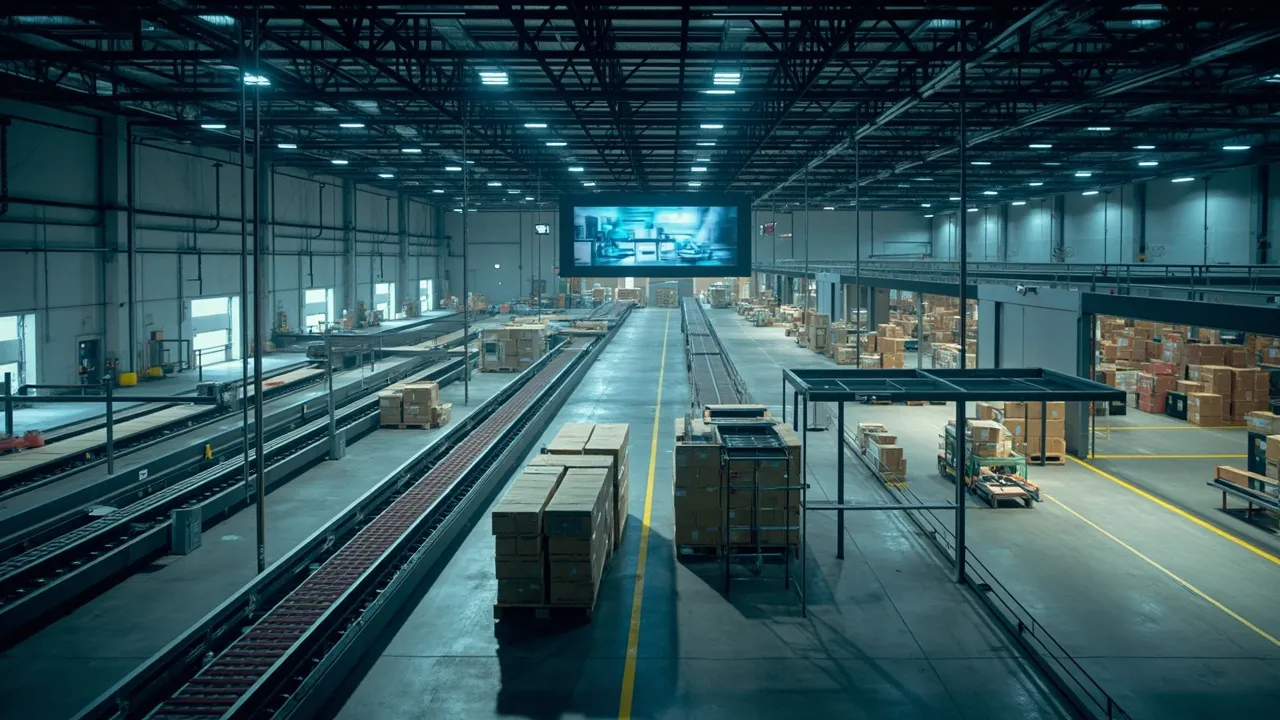
Three years ago, a mid-market apparel distributor invested $12 million in a conveyor-based sortation system optimized for an 80/20 B2B-to-B2C order split. Today, that ratio has flipped to 20/80. The conveyor lines designed for bulk pallet picks now sit underutilized while the e-commerce fulfillment team scrambles with manual workarounds for single-unit orders. The automation isn't broken — it's just obsolete.
This scenario is playing out across warehouses worldwide, and it's driving a fundamental rethinking of how companies approach automation investment. The era of fixed, purpose-built warehouse automation is giving way to adaptive, reconfigurable systems designed for a world where the only constant is change.
The $34 Billion Market's Flexibility Pivot
The global warehouse automation market reached $34.17 billion in 2026 and is projected to nearly double to $65.74 billion by 2031, growing at a 13.98% CAGR. But the composition of that spending is shifting dramatically. Where capital once flowed into bolted-down conveyor runs and fixed sortation systems, it's now moving toward mobile robots, modular goods-to-person stations, and software-defined automation that can be reconfigured in days rather than months.
The catalyst is clear: channel volatility. E-commerce penetration continues climbing — U.S. quarterly e-commerce sales hit $310.3 billion in Q3 2025 — but the mix between B2B wholesale, direct-to-consumer, marketplace fulfillment, and subscription models shifts unpredictably. A warehouse designed for one dominant channel becomes a liability when that channel's share drops by half.
Why Traditional Automation Assumptions No Longer Hold
Fixed automation works brilliantly when three conditions are met: stable throughput volumes, predictable product mix, and consistent order profiles. For decades, those assumptions held. A distribution center serving 200 retail stores could reliably forecast pallet-out volumes months in advance and design conveyors accordingly.
Those assumptions have shattered. MHI's 2026 supply chain trends analysis highlights that companies are now turning to automation and robotics specifically to build operations that are "responsive and agile" — capable of withstanding disruptions and workforce shortages while meeting fluctuating customer demands. The emphasis is no longer on peak throughput for a single scenario, but on adaptability across multiple scenarios.
A DHL Supply Chain survey from November 2025 found that while 44% of companies had deployed warehouse robotics, only 34% of VP and Director-level executives were fully satisfied with their implementations. Much of that dissatisfaction stems from rigid systems that delivered on their original spec but couldn't adapt as business needs evolved.
Mobile Robots Over Conveyors: The Flexibility Advantage
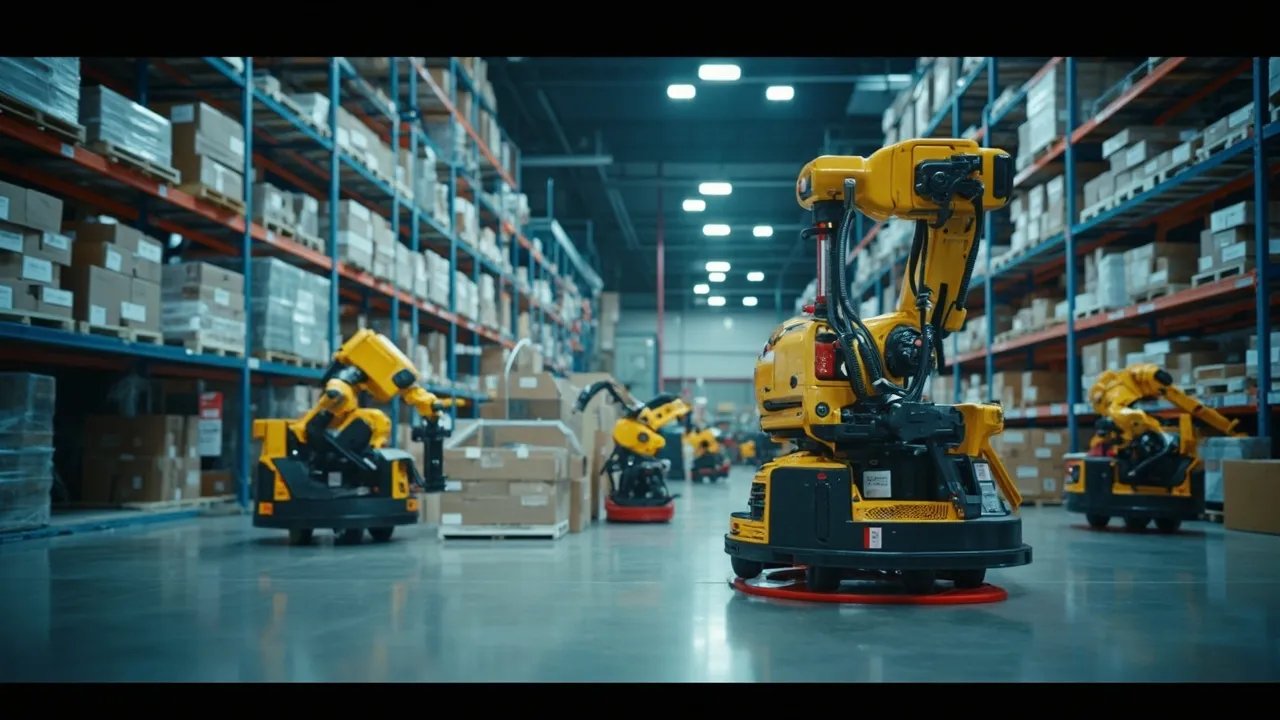
The most visible expression of the flexibility pivot is the rise of autonomous mobile robots (AMRs) over fixed conveyor infrastructure. AMR fleets priced at $2,000–4,000 per unit per month can reach payback in as little as 12 months, with each robot effectively replacing 2.5 to 3 full-time equivalents, according to Mordor Intelligence's warehouse automation analysis.
The key differentiator isn't raw throughput — a well-designed conveyor system still moves more units per hour per dollar. It's redeployability. Floor-agnostic navigation allows robots to be shifted across buildings during seasonal peaks, and pilot fleets of 10 units can scale to triple digits without layout redesign. When a new channel emerges or an existing one contracts, the fleet adjusts in days rather than requiring a six-month construction project.
This modularity extends beyond AMRs. Robotic automated storage and retrieval systems (AS/RS), modular sortation units, and AI-driven pick stations are all being designed with reconfigurability as a core feature. Facilities in 2026 can enable and disable automation modules as needed, reducing downtime and minimizing the risk of overbuilding.
URBN and Nuuly: Building for Unpredictability
Few companies illustrate the adaptive automation imperative better than URBN, parent of Urban Outfitters. The company is moving forward with the second phase of its $60 million automation investment at its Nuuly rental fashion fulfillment center in the Kansas City area.
What makes this case remarkable is the inherent unpredictability of rental logistics. Unlike traditional retail where products flow one direction — warehouse to customer — Nuuly processes constant bidirectional flows as garments ship out, return, get inspected, cleaned, and reship. The return rate isn't a problem to minimize; it's the entire business model. Every item cycles through the facility multiple times, and subscriber growth (up 40% year-over-year) continually changes the throughput profile.
URBN committed 40% of its $385 million fiscal year 2027 capital expenditure to logistics investments, with automation designed to expand capacity while handling the inherent variability of subscription fulfillment. The lesson: when your business model guarantees volatility, your automation must embrace it.
The Cost Calculus: Fixed vs. Adaptive
The traditional objection to flexible automation is cost. A purpose-built conveyor system optimized for a specific throughput profile will always be cheaper per unit handled than a reconfigurable alternative — at the moment of installation. The equation changes when you factor in the total cost of flexibility over a 5 to 10-year horizon.
Consider the real costs of fixed automation inflexibility:
- Stranded capital when channel mix shifts and purpose-built lines become underutilized
- Retrofit expenses averaging 40–60% of original installation cost to reconfigure fixed systems
- Opportunity cost of 6–12 month lead times for major automation modifications
- Parallel manual operations running alongside underutilized automation to handle unexpected order profiles
Robotics-as-a-Service (RaaS) models are further tilting the calculus. Subscription pricing shifts capital risk to vendors and lets operators ramp fleets up or down with 30 to 90-day notice, cutting total cost of ownership by up to 30%. Providers bundle hardware, software, and maintenance into fixed monthly fees, turning automation into a tactical lever rather than a strategic bet.
Software-Defined Automation: The Brain Behind Flexibility
Hardware modularity alone isn't enough. The real enabler of adaptive warehousing is the software layer — warehouse execution systems (WES) and orchestration platforms that dynamically allocate work across heterogeneous automation assets.
Modern WES platforms treat robots, conveyors, pick stations, and human workers as interchangeable capacity pools. When e-commerce orders surge, the system reallocates AMRs from replenishment to picking. When a wholesale wave drops, goods-to-person stations shift from case-building to each-pick mode. This software-defined approach means the same physical assets serve different operational modes throughout the day.
The 55% of supply chain leaders who reported boosting their technology investments in MHI's industry report aren't just buying more robots — they're investing in the orchestration intelligence that makes those robots adaptable.
Decision Framework: When to Choose Fixed vs. Adaptive
Not every operation needs adaptive automation. High-volume, single-channel operations with stable product mixes — think dedicated e-commerce fulfillment for a single SKU category — may still benefit from fixed systems optimized for throughput. The decision framework comes down to three variables:
- Channel volatility: If your B2B/B2C/marketplace mix has shifted more than 15% in the past three years, adaptive systems reduce stranded-asset risk
- SKU proliferation rate: Rapidly expanding catalogs favor modular storage and retrieval over fixed-slot configurations
- Seasonal amplitude: Operations with peak-to-trough ratios exceeding 3:1 benefit from scalable RaaS models over fixed capacity
Building an Adaptive Warehouse Strategy with CXTMS
The shift from fixed to adaptive automation creates new complexity in logistics planning. Multiple automation modalities, variable capacity models, and dynamic fulfillment profiles require sophisticated analytics to optimize.
CXTMS helps logistics teams model warehouse automation scenarios across different channel-mix projections, compare total cost of ownership between fixed and flexible configurations, and optimize carrier selection based on the variable fulfillment profiles that adaptive warehouses produce. When your warehouse can shift from pallet-out to parcel-out in hours, your transportation management needs to keep pace.
Ready to build an adaptive logistics strategy? Request a CXTMS demo to see how our platform helps you optimize fulfillment and transportation across dynamic warehouse operations.
Sources: Mordor Intelligence Warehouse Automation Market Report | Supply Chain Dive — URBN Nuuly Logistics Investment | MHI Top Supply Chain Trends 2026