Amazon's 21 Air Pause: A Cargo-Carrier Suspension Playbook for Critical Shipments

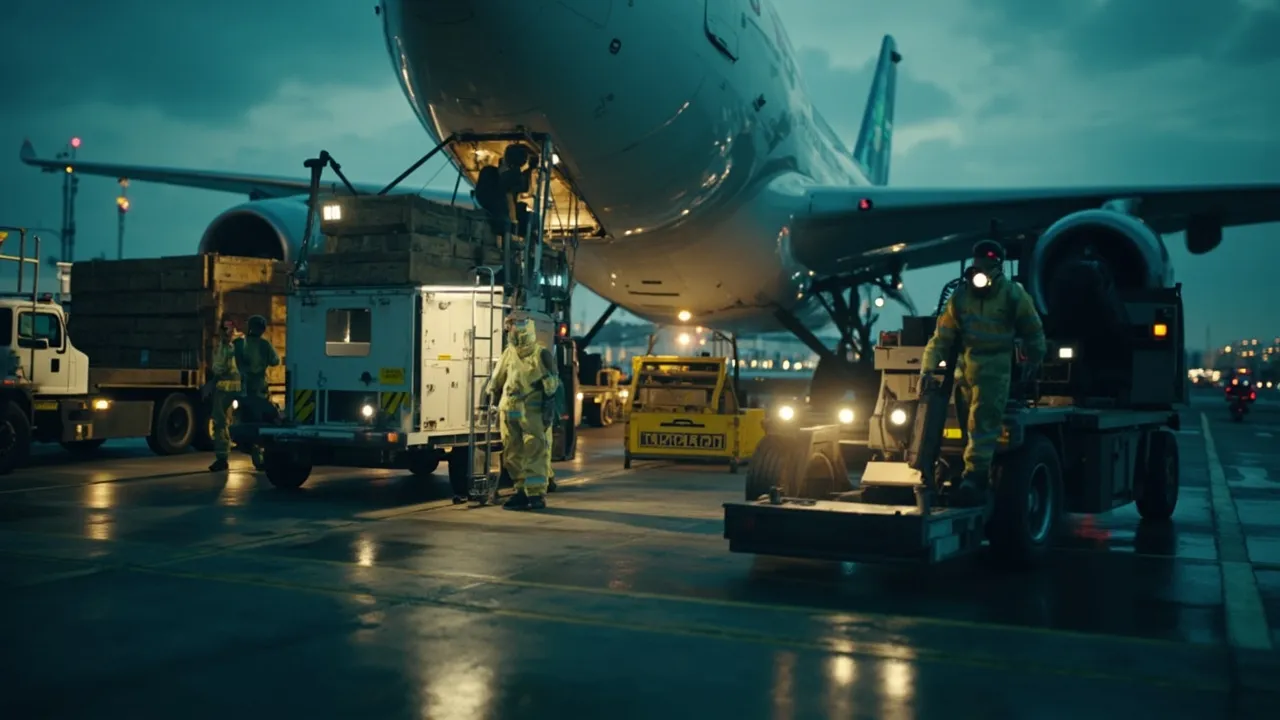
Amazon's decision to pause work with cargo operator 21 Air is a sharp reminder that carrier capacity can disappear between one booking cycle and the next. For freight teams, the first hours after a suspension are not primarily a procurement exercise. They are a control problem: identify every affected shipment, stop avoidable handoffs, protect the most consequential orders, and preserve a defensible record of each decision.
SupplyChainBrain reported that Amazon paused work with 21 Air on September 13 after a Boeing 767-300 operated as Prime Air Flight 7598 overran a runway at Miami International Airport on September 6. The crash killed at least five people and temporarily shut the airport's runways. A fatal event requires investigators and operators to establish facts; shippers should not speculate about causation. They should, however, be ready to control the downstream freight disruption immediately.
Start with one affected-shipment register
Create a single live register covering freight booked, tendered, accepted, in transit, or awaiting recovery by the suspended carrier. Search by operating carrier, flight number, air waybill, airport pair, handling agent, and planned connection—not merely by the carrier shown on a customer quote. Capacity bought through an intermediary may still depend on the affected operator.
For each shipment, record its last confirmed physical location, custody holder, security status, customs status, temperature or dangerous-goods constraints, original promise, remaining slack, and next planned handoff. Give every line an owner and a timestamp for the next action. This prevents several teams from chasing the same shipment while another load receives no attention.
Then separate status into four operational groups:
- Not yet tendered: stop release until replacement routing is approved.
- Tendered but not departed: confirm whether the handler will hold, return, or transfer the freight.
- In transit: identify the current airport and whether onward movement remains valid.
- Arrived but unrecovered: protect pickup appointments, storage free time, and consignee communication.
Do not cancel every booking reflexively. A cancellation made before custody and status are confirmed can break the audit trail or create duplicate movement instructions.
Freeze promises before buying replacement lift
The commercial team should temporarily stop making new delivery commitments on affected lanes. Customer-facing dates must be rebuilt from confirmed replacement capacity, cutoffs, handling time, and customs requirements. An attractive flight schedule is not a recovery plan until space is confirmed and the freight can legally and physically make the handoff.
This discipline matters even when the wider market appears accommodating. Supply Chain Dive reported that the global air cargo spot rate fell 6% month over month, while 2026 market growth was still forecast at 4%. Softer average pricing can make short-term capacity easier to source, but averages do not guarantee space on a specific airport pair, for a specific commodity, at the required cutoff.
Build each revised promise from milestone evidence: cargo available, security screening complete, export release obtained, replacement booking confirmed, handling acceptance secured, and final-mile capacity reserved. Communicate a range when uncertainty remains. A transparent revised window is more useful than an optimistic date that changes three times.
Allocate lift by business consequence
When replacement space is constrained, first-come-first-served escalation is usually the wrong rule. Score affected shipments against consistent criteria:
- Human safety or product integrity, including medical, temperature-controlled, and time-expiring goods.
- Regulatory or contractual deadline, including permits, production windows, and penalty exposure.
- Customer operational impact, such as a component capable of stopping a production line.
- Remaining recovery options, including road feeder service, another gateway, split shipment, or deferred uplift.
- Economic consequence, comparing expedite cost with margin, inventory loss, downtime, and service penalties.
The score should determine who receives premium lift. Seniority, account volume, and the loudest internal escalation should not override a documented criticality rule without an explicit approval. Keep low-criticality freight on hold when doing so protects a scarce position for a genuinely urgent shipment.
Market volatility also belongs in the decision. FreightWaves reported in July that air cargo rates could rise 15% in 2026 because of conflict-related effects, reversing an earlier expectation for contract rates to fall 5% to 10%. That range illustrates why teams should approve recovery spend against the cost of failure, not against an outdated rate card.
Qualify the replacement movement end to end
Alternative lift is not interchangeable simply because it serves the same destination. Confirm operating carrier, aircraft capability, dangerous-goods approval, temperature handling, screening acceptance, transfer rules, ground-handler hours, and recovery arrangements. If routing through another gateway, calculate road time, border formalities, driver availability, and the risk of missing the new cutoff.
Use a two-person control for rebooking. One operator builds the route; another verifies custody, documentation, and cancellation of conflicting instructions. Require written confirmation from the new carrier or forwarder before releasing cargo. Where practical, reserve a backup option with a defined expiration rather than relying on an informal promise.
Preserve the evidence chain
Every affected shipment record should retain the original booking, tender acceptance, carrier notices, flight-status messages, handler correspondence, custody scans, revised quotes, approvals, customer communications, and proof of final delivery. Never overwrite the original milestones when rebooking. Add a new route version and link it to the disruption event.
That history supports claims and invoice review, but its greater value is operational learning. After recovery, teams can calculate time to identify affected freight, time to confirm custody, percentage rebooked within target, premium cost per shipment, promise changes, storage charges, and failures caused by incomplete data.
Turn the incident into a repeatable control
A useful carrier-suspension plan assigns named roles before an event: incident lead, operations controller, procurement owner, compliance reviewer, customer-communications lead, and finance approver. It also defines a carrier and flight data model that exposes the actual operating party behind every movement.
CXTMS can provide the shared shipment record needed to coordinate that response—linking bookings, milestones, documents, exceptions, revised routes, costs, and customer commitments without erasing the original plan. The goal is not to predict every suspension. It is to make the next response faster, fairer, and fully traceable.
Ready to strengthen air-freight contingency control? Request a CXTMS demo to see how centralized shipment visibility and exception workflows can support carrier disruption recovery.