Walgreens' 196-Store Pharmacy Hub Needs Prescription-Level Fulfillment Controls

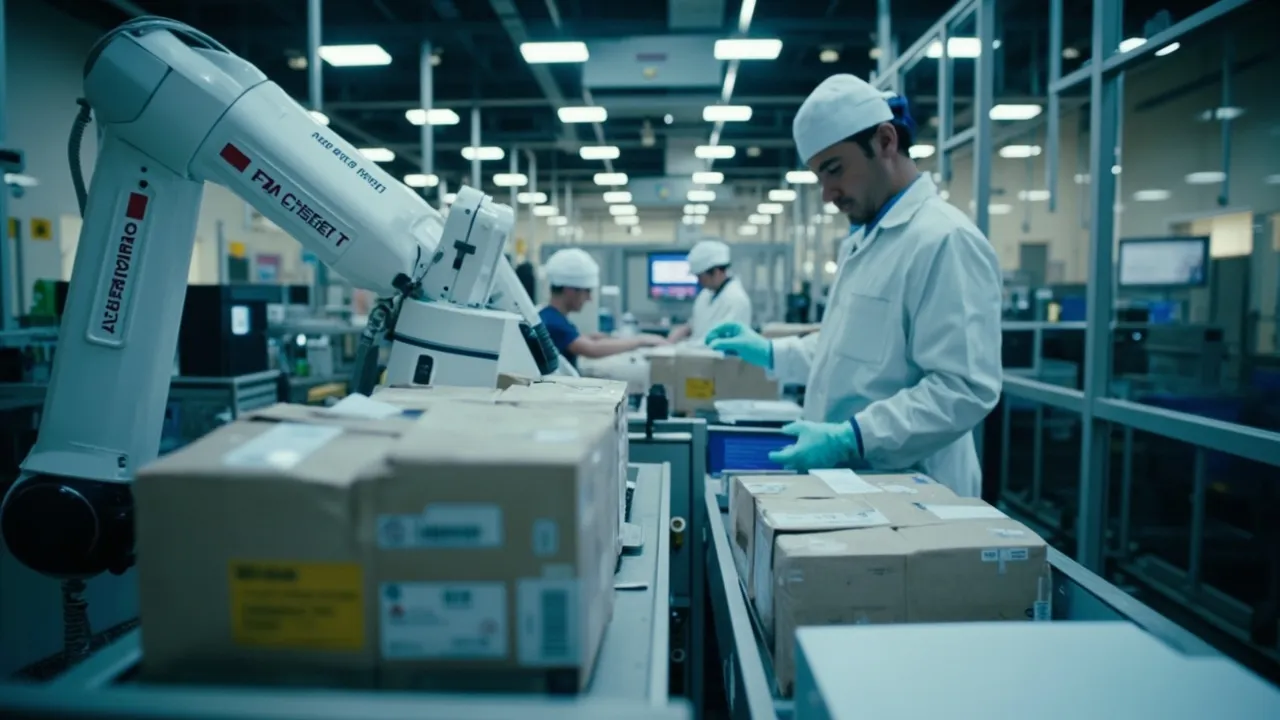
Walgreens' newest automated pharmacy hub has the scale of a regional distribution operation, but its output cannot be managed like ordinary retail inventory. A delayed tote of shampoo is inconvenient. A delayed prescription can interrupt treatment, strand a patient at the counter, and force a pharmacist to rebuild an order locally under pressure.
The company opened its Kent, Washington, micro-fulfillment center on July 22. Supply Chain Dive reports that the robotic facility is expected to process 7 million prescriptions annually and support nearly 196 stores, including 122 in Washington. At that volume, the operation averages more than 19,000 prescriptions per calendar day.
That scale can remove repetitive work from stores and give pharmacists more time with patients. It also concentrates risk. The operating model succeeds only when the hub, linehaul network, and receiving pharmacy share one prescription-level view of deadlines and exceptions.
Pharmacy fulfillment is not ordinary micro-fulfillment
Retail micro-fulfillment generally optimizes for pick speed, inventory availability, and delivery cost. Pharmacy fulfillment adds clinical and regulatory consequences. Each order must remain associated with the correct patient and store; controlled or temperature-sensitive products may require additional handling; and custody must be clear from fill through pharmacist handoff.
Urgency is also different. A retail replenishment delay can often wait for the next truck. A prescription may be promised for pickup that afternoon, required before a patient travels, or tied to a medication schedule. The system therefore needs to distinguish routine maintenance fills from time-critical orders instead of placing every item in the same departure queue.
Finally, pharmacy exceptions require qualified decisions. Automation may identify a stock shortage, label problem, data mismatch, damaged package, or missed sort. It cannot decide silently that a patient can wait. The exception must reach a named owner at the hub or store with enough time to reroute, refill locally, contact the patient, or arrange an alternative.
Build cutoffs backward from the patient promise
A single daily order cutoff is too crude for a network serving almost 200 locations. Each store needs a service calendar built from its patient pickup commitments, delivery route, transit time, receiving capacity, and pharmacist verification window.
The useful calculation runs backward. If a prescription is promised at 4 p.m., the store may need it received by 1 p.m. for check-in and final verification. A route arriving at 1 p.m. might leave Kent at 8 a.m., which means the order must clear automation, quality control, and sortation before loading closes. Every stage needs a timestamp and a buffer based on actual variability—not an optimistic average.
Orders accepted after the hub cutoff should follow an explicit rule. Depending on clinical urgency and inventory, the system might assign a local fill, roll the order to the next route with a revised promise, or escalate it for pharmacist review. What it should never do is leave the order in an ambiguous status while the store assumes it is coming.
Network history supports this focus on the last mile. Walgreens paused expansion in 2023 after its former CEO said the last-mile experience was not where the company wanted it. The Kent opening indicates a renewed strategy, and Supply Chain Dive says Walgreens now operates 14 micro-fulfillment centers. Better automation throughput will matter only if the final store handoff is equally controlled.
Replenishment rules must protect local resilience
Central fulfillment should reduce duplicate inventory, not eliminate the store's ability to recover. Each pharmacy needs a deliberately sized local buffer based on demand, lead time, product criticality, substitution options, and route reliability.
Fast-moving maintenance medications may justify predictable hub replenishment with a modest store reserve. Unpredictable urgent prescriptions may require deeper local coverage. Refrigerated products, controlled substances, and scarce medications need their own policies rather than a generic days-of-supply target.
The central system should monitor projected stock at both levels. If a hub shortage threatens several stores, allocation rules should consider patient commitments and available local inventory before distributing the remaining supply. If a delivery misses its milestone, the calculation should immediately show which stores and promised prescriptions are exposed.
This becomes more important as utilization rises. In 2025, Supply Chain Dive reported that Walgreens' automated centers handled 3.5 million prescriptions per week, representing 40% of company prescription volume. The same report cited a 24% year-over-year increase in shipped volume. Growth magnifies the value of automation, but it also magnifies every poorly designed replenishment rule.
Connect every handoff to an accountable milestone
Prescription visibility should continue after a tote leaves the robot. At minimum, the operating record should capture:
- fill and quality-control completion;
- tote close, seal, and route assignment;
- carrier pickup and hub departure;
- expected and actual store arrival;
- store receipt, discrepancy count, and pharmacist acceptance;
- final availability for the patient.
Each milestone needs a tolerance and escalation path. If a route departs late, the system should calculate the affected store promises before the truck arrives. If a tote is loaded onto the wrong route, the destination mismatch should trigger a hold. If a store does not acknowledge receipt, ownership should move to a specific role rather than a shared inbox.
Chain-of-custody evidence matters too. Tote identifiers, seals, scan events, driver and vehicle assignments, temperature records where applicable, and receiving signatures should remain attached to the shipment. That creates an auditable history without forcing teams to reconstruct the journey from emails and phone calls.
Turn exceptions into recovery workflows
The most useful control tower is not a map of moving vehicles. It is a prioritized queue that tells people what is at risk, who owns the response, and when intervention must happen.
For the Kent network, an exception should include the prescription or tote affected, patient-promise risk, store, route, cause, recovery options, owner, and deadline. A late truck affecting routine next-day orders should rank differently from a misrouted tote containing same-day medication. The workflow should document the chosen response and update the store automatically.
Performance reviews can then measure more than units per hour. Useful metrics include orders available by promise time, cutoff compliance, local refill rate caused by hub failures, route milestone adherence, exception age, first-response time, and custody discrepancies. These measures connect automation productivity to the patient experience.
Walgreens' Kent facility demonstrates the operational promise of centralized pharmacy automation. Its 7-million-prescription capacity can free pharmacists from repetitive filling work—but only if transportation execution preserves the precision created inside the building.
CXTMS connects hub output, store delivery milestones, custody documents, and exception ownership in one transportation workflow. To see how that control layer can support high-stakes pharmacy distribution, request a CXTMS demo.