Sanctions Tariff Uncertainty Makes Supplier Routing a Board-Level Risk Register

Sanctions risk used to feel like a compliance screen at the edge of the logistics process. Procurement chose the supplier. Trade compliance checked restricted-party lists. Transportation booked the move.
That separation no longer works.
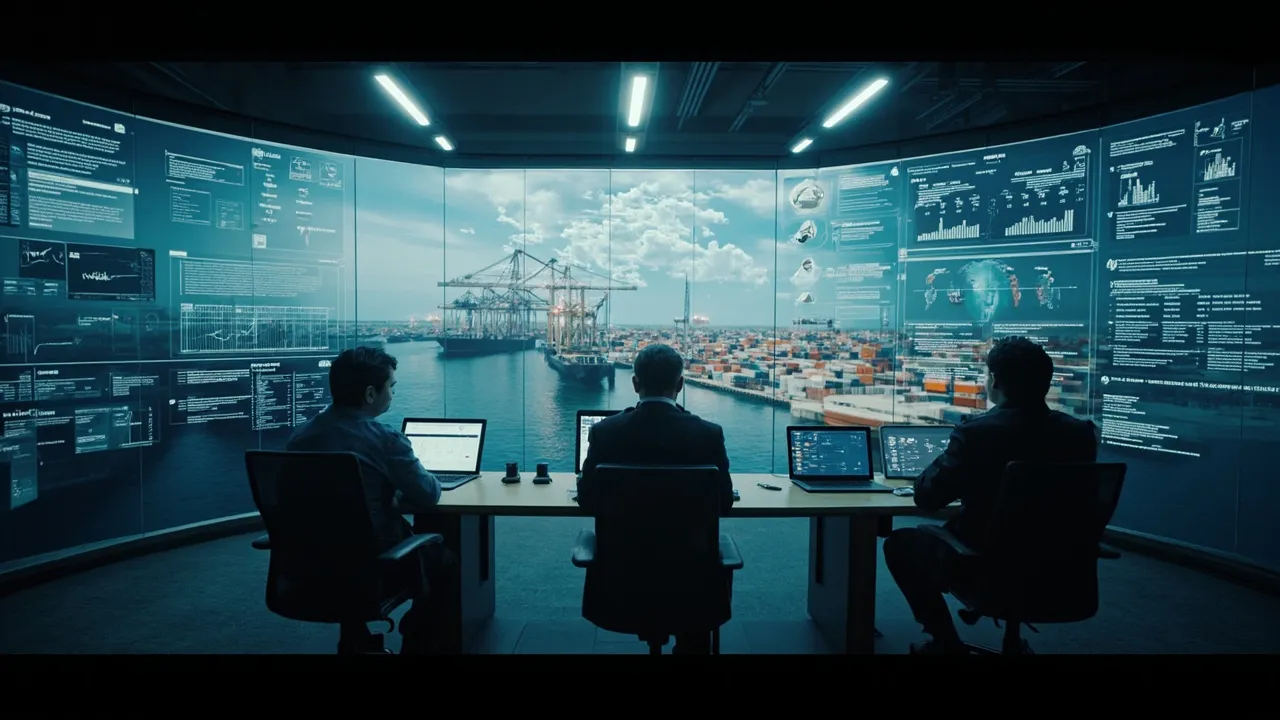
When sanctions and tariffs can change the economics of a supplier country, energy relationship, trade lane, or transshipment path, routing becomes a board-level risk register. The question is whether a purchase order, booking window, vessel routing, customs entry, and customer promise still make sense if policy changes before the freight arrives.
Reuters reported that a revised U.S. Russia sanctions bill eased the tariff threat facing China, India, and other buyers of Russian energy. The updated measure reduced the possible tariff structure from a previous blanket 500% proposal to a maximum 100% tariff on the top five purchasers of Russian oil and natural gas. A separate Reuters report said the revised bill still raised concern in Congress because of the tariff authority it could create.
For logistics leaders, the important point is not whether that exact bill lands in its current form. It is that suppliers, trade routes, and landed-cost assumptions can be repriced by policy decisions that move faster than many freight cycles.
Supplier Geography Is Now A Freight Variable
Supplier routing used to be treated as a tactical decision once procurement had already selected the source. If the supplier was in the approved vendor file, logistics optimized mode, carrier, port, broker, and delivery date.
Sanctions-related tariff uncertainty changes that sequence. Supplier country, beneficial ownership, energy exposure, banking pathway, origin documentation, intermediate routing, and customs classification all become transportation inputs. A low-cost supplier can become expensive if its country, industry, or upstream exposure is pulled into a tariff scenario. A familiar port pair can become risky if it relies on a route, transshipment point, or broker process that cannot withstand new documentation demands.
This is especially hard because sanctions and tariff risk do not always map neatly to the product being shipped. A rule aimed at energy purchases, security concerns, forced labor, dual-use goods, or national security policy can affect companies several steps removed from the headline issue.
That is why supplier routing now needs a risk register, not just a route guide.
Volatility Is Already The Baseline
The sanctions story is part of a wider 2026 operating environment where global supply chains are being forced to adapt to disruption that arrives quickly and does not resolve cleanly.
SupplyChainBrain reported that war risk, trade talks, and lingering disruptions have forced logistics teams to rethink how goods move. Its Strait of Hormuz example shows the operational problem clearly: confirmed crossings rose from 34 on June 23 to 70 the next day, then dropped back to 22 by June 28. That is not a stable planning environment. It is a reminder that freight networks now operate against political and security variables that can swing inside a single week.
SupplyChainBrain also noted that U.S.-Mexico-Canada Agreement talks are creating uncertainty for North American supply chains before any final policy outcome, making it harder for companies to plan with confidence.
That matters for sanctions and tariff planning because logistics teams do not need a final law to feel the impact. They feel it when suppliers pause quotes, brokers ask for more documentation, finance holds approvals, carriers change risk pricing, and customers demand clearer delivery commitments.
The Risk Register Has To Be Operational
A supplier-routing risk register cannot be a quarterly legal memo. It has to connect directly to the shipment record.
Start with supplier country and production site. Country of origin must be structured data, not a document note, because tariff exposure, admissibility, and customs treatment depend on it.
Add restricted-party screening status and ownership exposure. A passed screen should include date, screening source, and escalation owner. If a supplier, consignee, bank, vessel, or intermediary requires review, that exception needs to be visible before freight is tendered.
Track tariff scenarios by purchase order and booking date. The risk is not only the current rate. It is the rate that could apply if a policy changes before departure, arrival, or customs entry. Logistics, procurement, and finance need a shared view of who absorbs that change and whether the route still protects margin.
Map the shipment route with customs broker ownership. The register should identify port of export, transshipment point, port of entry, broker, importer of record, and required documents. If policy risk rises, the company should know which shipments are exposed, which broker owns the entry, and which documents are missing.
Finally, name the financial owner. Trade policy uncertainty becomes dangerous when everyone can see the risk but no one owns the decision. Procurement may own supplier alternatives, finance may own landed-cost thresholds, compliance may own admissibility, and logistics may own routing. The register should make those handoffs explicit.
Routing Decisions Need Scenario Triggers
The best time to decide a tariff response is before goods are on the water.
If a supplier country enters a high-risk tariff scenario, the system should trigger review before purchase order release or booking. If a restricted-party screen expires before the planned ship date, the load should not move quietly into execution. If a route depends on a port or transshipment point under review, planners should see the alternative lane, incremental cost, and lead-time impact.
This is where transportation management becomes more than freight execution. It becomes the control layer that turns policy uncertainty into specific operating choices.
CXTMS Connects Trade Risk To Freight Execution
CXTMS helps freight forwarders and logistics teams keep supplier data, shipment routing, documents, exception ownership, broker coordination, and customer commitments connected in one execution workflow. That is exactly what sanctions and tariff uncertainty now require.
When trade policy changes, companies need to know which suppliers, purchase orders, lanes, shipments, brokers, and customers are exposed. Most of all, they need a shared operating record so compliance risk does not sit in one system while freight decisions happen in another.
Sanctions and tariff uncertainty will not disappear from the board agenda. The companies that handle it best will be the ones that turn supplier routing into a living risk register before a policy headline becomes a shipment exception.
If your team is still managing tariff scenarios through email threads and offline spreadsheets, schedule a CXTMS demo. We will show how shipment-level execution can keep supplier routing, trade compliance, and landed-cost risk aligned before goods are already moving.