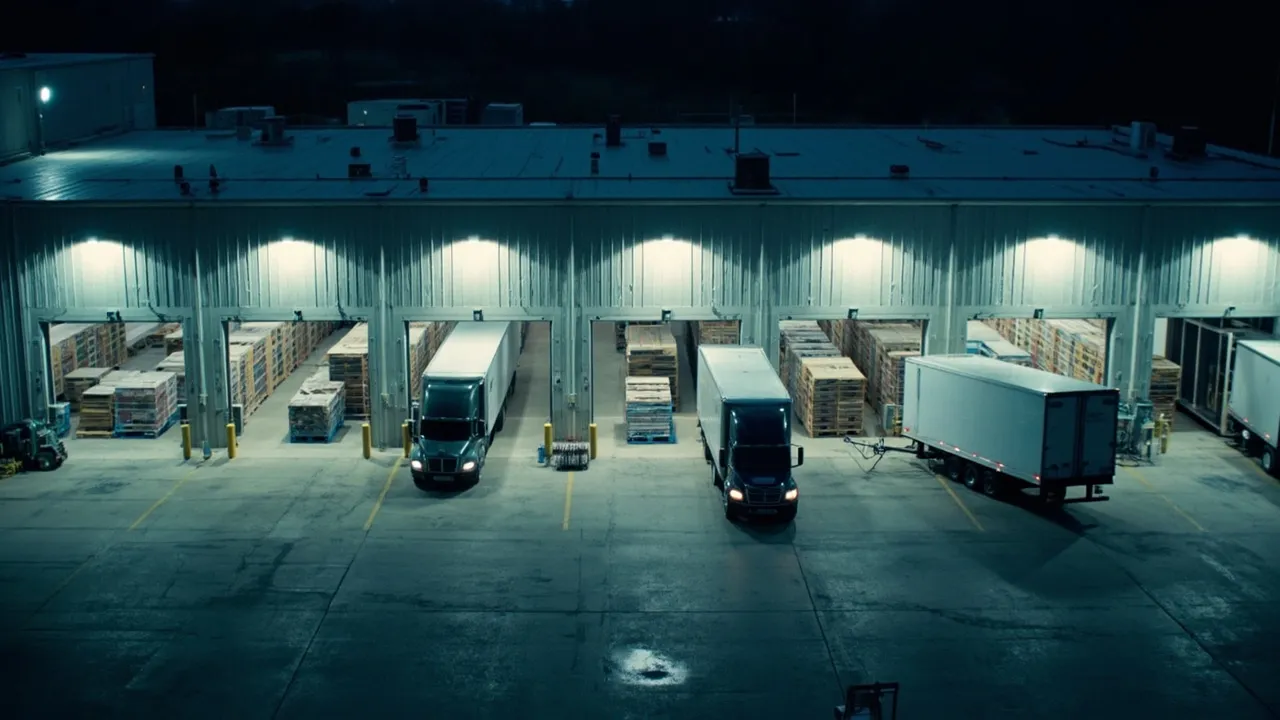
Warehouse Closures Need an Exit Plan Before the Lease Ends


Warehouse closures look like real estate decisions from a distance. A lease expires, a facility is consolidated, a third-party provider takes over volume, and the network should become more efficient.
On the floor, the move is much messier. Inventory has to be transferred, open orders still have to ship, labor capacity has to wind down without collapsing service, carriers need new routing instructions, and systems have to cut over cleanly. If the exit plan is vague, the warehouse may stay open longer than expected while distribution costs keep leaking.
That is the lesson behind Levi Strauss' delayed distribution transition. Supply Chain Dive reported that Levi Strauss is closing its Hebron, Kentucky, distribution center, with layoffs beginning in late August, according to a June 30 WARN notice. About 303 employees are expected to lose their jobs at the site. The company first disclosed the closure last year, but the transition from the Hebron facility to a third-party facility in Groveport, Ohio took longer than expected. Levi Strauss also incurred higher distribution costs while maintaining operations at Hebron during the transition, according to Supply Chain Dive.
The issue is not that network rationalization is wrong. It is that a warehouse exit is an operating program, not a moving announcement.
Delayed Exits Create Hidden Risk
When a facility closure slips, the cost is rarely confined to rent. The risk spreads across the network.
Inventory is the first problem. Every SKU needs a disposition decision: transfer, liquidate, hold for final wave, return to vendor, reserve for customer order, or quarantine for quality review. Slow movers, damaged goods, seasonal inventory, promotional stock, kitted product, hazardous material, and customer-owned inventory all need different handling rules. If the old facility and new facility both believe the other location owns the decision, inventory becomes stranded.
Labor is the second risk. A closure date changes employee behavior, attendance, training, supervision, and productivity. The business still needs people to pick, pack, count, load, clean up exceptions, and train the receiving site. But employees are also making personal decisions about severance, transfers, new jobs, and commute changes. If volume stays high after the planned ramp-down, the operation can lose capacity exactly when accuracy matters most.
Customer service is third. Open orders do not care that the network team is optimizing nodes. Backorders, returns, partial shipments, customer allocation rules, appointment commitments, retailer compliance windows, and direct-to-consumer delivery promises continue through the closure period. A warehouse exit plan has to show the last day each promise can be made from the closing site and the first day the replacement node can own it.
Transportation is fourth. Carriers need updated pickup locations, appointment rules, billing points, tender instructions, accessorial expectations, pool-point logic, and return addresses. A carrier that arrives at the wrong dock during the final week can create missed cutoffs, detention, reschedules, and unhappy customers.
Systems are fifth. The warehouse management system, transportation management system, order management system, EDI feeds, customer portals, carrier integrations, label logic, billing rules, and reporting dashboards all have to agree on which facility is live. If the system cutover trails the physical move, the business ends up with shipments moving from one node while documents, invoices, and customer notifications point to another.
The Warehouse Exit Checklist
A closure plan should be built around operational handoffs, not calendar milestones.
Start with SKU disposition. Every item family needs an owner, destination, quantity, exception code, and deadline. The record should distinguish sellable inventory from damaged, obsolete, seasonal, regulated, bonded, customer-owned, or return-to-vendor stock.
Next, define the transfer lane. Moving inventory to a replacement node is not generic truckload freight. The team needs lane capacity, load sequencing, cube and weight assumptions, inventory status at departure, receiving appointment, cross-dock or putaway rules, and proof that inventory is usable after transfer.
Set the final pick date by customer promise, not by facility closure date. Retail compliance orders, ecommerce orders, wholesale replenishment, spare parts, and returns all have different cutoffs. A final pick date should answer one question: after this point, which node owns the customer promise?
Lock the carrier appointment plan. The closing site needs a schedule for final outbound pickups, transfer loads, returns, donation or liquidation moves, waste removal, empty pallet recovery, equipment moves, and any final yard cleanup. Carriers should receive written instructions before the last week, not a panicked correction after the truck arrives.
Build a labor ramp-down model. The model should show required headcount by function, not just total employee count. Picking, inventory control, shipping, receiving, maintenance, supervision, yard coordination, customer service, and systems support may taper at different speeds.
Protect the customer promise. During a closure, a customer-facing "on time" status is not enough. The business needs to know which orders are at risk because inventory is transferring, which customers require proactive notice, which appointments need rebooking, and which exceptions deserve executive escalation.
Finally, name an exception owner. The last 10% of a closure contains most of the friction: missing inventory, unshipped orders, carrier no-shows, customer deductions, system mismatches, damaged transfers, and invoices tied to the wrong facility. Every exception class should have a decision owner before the first transfer load moves.
Network Rationalization Needs Live Evidence
Logistics Management's coverage of the 37th State of Logistics report shows why these projects are no longer occasional cleanups. U.S. business logistics costs totaled $2.4 trillion, or 7.8% of GDP. The report also frames the market as a move from periodic optimization to continuous adaptation, shaped by trade policy shifts, labor constraints, rising operating costs, and energy volatility.
That matters because warehouse closures are becoming part of ongoing network management. Companies are not simply opening and closing buildings once every decade. They are adjusting node density, outsourcing selected operations, shifting ecommerce fulfillment, adding automation, and balancing owned sites with third-party capacity.
Inbound Logistics' Top 100 3PL Providers list shows how broad that outsourcing market has become. Featured providers commonly combine DC management, ecommerce fulfillment, pick/pack, kitting, transportation, cross-border management, TMS, WMS/WES, visibility, automation, and control tower capabilities. That breadth creates opportunity, but it also raises the execution bar. A company moving work into a hybrid owned-and-3PL model needs clean data handoffs, not just a signed services agreement.
Where CXTMS Fits
CXTMS helps logistics teams turn a warehouse closure into a controlled execution record. Facility-level shipment milestones, transfer lanes, carrier appointments, customer promises, document status, exception ownership, and cutover dates can live in one transportation workflow instead of scattered emails and status calls.
That visibility matters most when the plan changes. If a transfer lane slips, a final pick date moves, or a carrier misses the last pickup window, the team needs to know which shipments, customers, and promises are affected immediately.
If your warehouse network is changing faster than your execution controls, request a CXTMS demo. CXTMS helps logistics teams manage facility transitions with fewer surprises before a lease date becomes a service failure.