Furniture Distribution Revamps Need Cost-to-Serve Evidence by SKU

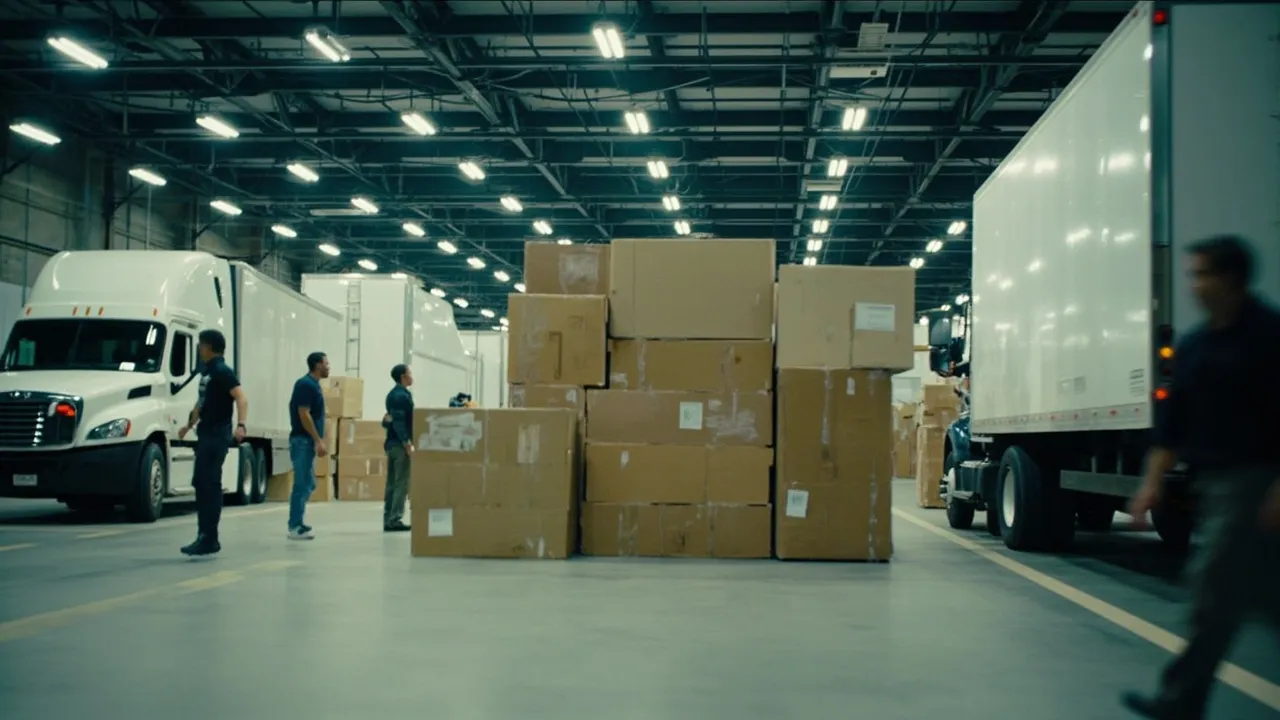
Furniture distribution looks like a network-design problem until a sofa misses an appointment, another arrives damaged, and a third eats the margin because the route had no density.
That is why La-Z-Boy's current overhaul is worth watching. Supply Chain Dive reported that the furniture maker is in year two of a four-year distribution revamp that will consolidate 15 regional centers into three centralized hubs. The company expects to largely complete its Midwest and Eastern hubs this year. CFO Taylor Luebke also said the redesign is expected to cut warehouse square footage 30% and heavy-furniture delivery mileage 20%, while acknowledging some "friction costs," according to Supply Chain Dive.
Those numbers tell the whole story. The potential savings are real. So is the operational risk.
A furniture network can look cheaper on a map and still fail in execution. Fewer hubs can reduce rent, labor duplication, inventory fragmentation, and empty miles. But bulky products consume cube before they hit weight limits, require careful handling, depend on delivery appointments, and create expensive failures when the wrong product lands at the wrong door.
For a furniture distributor, cost-to-serve cannot stop at facility count or average miles. It has to reach the SKU.
Big and Bulky Savings Can Disappear Fast
Furniture logistics is unforgiving because every product carries a different physical and service profile.
A dining chair, sectional sofa, recliner, sleeper sofa, mattress set, dining table, and modular office unit may sit in the same product family, but they do not create the same freight economics. Cube, packaging, handling sensitivity, damage exposure, delivery labor, appointment time, return probability, and assembly expectations vary sharply.
That matters when a company centralizes distribution. A hub-and-cross-dock model may reduce storage and linehaul cost, but it also raises the importance of clean product data. If the system underestimates cube, a route can cube out early. If handling requirements are missing, a product can move through the wrong dock process. If delivery promises are not matched to zone density, a truck can spend too much time between low-density stops.
Mordor Intelligence estimates the North America same-day delivery market at $11.59 billion in 2026, growing at a 5.92% CAGR to $15.47 billion by 2031. Its analysis also points to driver shortages, labor costs, congestion fees, curb penalties, and route optimization as major delivery-economics forces. Even when furniture is not truly same-day, customer expectations are moving that way: tighter windows, clearer tracking, and less patience for failed delivery attempts.
That pressure makes furniture distribution revamps less tolerant of average-cost thinking. A 20% mileage reduction is valuable only if it does not come with higher damage claims, missed appointments, re-deliveries, extra accessorials, and customer-service credits.
The SKU-Level Cost-to-Serve File
The practical answer is a cost-to-serve file that makes each bulky item measurable before and after the network changes.
Start with SKU cube. For furniture, dimensions are not catalog trivia. The distribution system needs actual cube, packaged dimensions, orientation rules, stackability, fragility, and whether a product consumes floor space that cannot be recovered by stacking lighter freight above it. Cube should influence slotting, cross-dock sequencing, route planning, equipment choice, and delivery-fee logic.
Add the delivery zone. A product that ships profitably in a dense metro corridor may become expensive in an outer suburb or rural market. Zone should capture distance, final-mile density, appointment availability, drive time, labor rules, and failed-attempt risk.
Document the handling requirement. Some furniture can move through ordinary dock flow. Some needs two-person handling, liftgate service, blanket wrap, room-of-choice delivery, assembly, debris removal, threshold-only service, or white-glove treatment. If those definitions live in sales copy but not transportation data, the cost model is already broken.
Track the damage rate. Damage is not just a claims metric. It is a routing and handling signal. If one SKU generates repeated corner damage, carton compression, fabric tears, scratches, or missing hardware, the cost-to-serve model should see it. The answer may be packaging, carrier qualification, dock changes, or a different promise.
Measure dwell time. Bulky freight can sit longer because it needs special equipment, load sequencing, customer confirmation, return authorization, or quality inspection. Dwell time ties directly to space, labor, appointment reliability, and inventory availability.
Assign the carrier class. A SKU may be eligible for LTL, dedicated delivery, pool distribution, parcel oversize, local fleet, white-glove partner, or final-mile specialist. The cheapest class on paper may become the most expensive after damage, re-delivery, missed appointments, or customer concessions.
Finally, connect the customer delivery promise. Threshold delivery, room-of-choice service, white-glove appointments, commercial dock delivery, and store pickup should each carry their own cost model. The promise is the operating contract the network has to fulfill.
3PL Capability Does Not Replace Shipper Evidence
Many furniture companies will lean on logistics partners during a network redesign, and that can be the right move. Inbound Logistics' Top 100 3PL Providers list shows how broad the market has become: listed providers commonly offer crossdocking, DC management, ecommerce fulfillment, final mile, LTL, truckload, white-glove delivery, reverse logistics, TMS, visibility, WMS/WES, automation, and control towers.
That breadth creates options. It does not remove the shipper's responsibility to know the economics of its own SKUs.
A 3PL can operate a crossdock, provide final-mile coverage, execute white-glove delivery, and feed milestone data back into a TMS. But the shipper still owns merchandising choices, service promises, delivery-fee thresholds, concessions, return policy, packaging standards, and margin targets. If the shipper cannot tell which products are structurally expensive to serve, outsourcing just moves the fog to another invoice.
The better model is shared evidence. The shipper and its logistics partners should look at the same product-level facts: cube, claims, dwell, appointment success, carrier performance, accessorials, re-delivery frequency, return reason, and net margin after freight.
Where CXTMS Fits
CXTMS helps furniture and big-and-bulky logistics teams connect shipment execution to SKU-level economics. A bulky shipment should not be just a PRO number or delivery appointment. It should carry the product profile, delivery zone, service promise, carrier class, milestone history, exception record, claims signal, and cost impact.
That gives teams a clearer view of whether a distribution revamp is working. Are hubs reducing miles without increasing dwell? Are certain SKUs driving damage in specific lanes? Are low-density zones erasing savings? Are returns tied to product quality, delivery handling, or expectation mismatch?
La-Z-Boy's expected 30% square-footage reduction and 20% mileage reduction show the upside of disciplined network redesign. The hard part is proving those gains survive contact with real furniture, real appointments, and real customers.
If your furniture distribution network is changing faster than your cost-to-serve model, request a CXTMS demo. CXTMS gives logistics teams the SKU-level shipment visibility, exception history, and carrier-performance evidence needed to protect margin while the network changes.