Target’s Inventory Turns Jump 10%: Why Upstream Holding Capacity Is Becoming a Retail Advantage

Target's inventory story is not just about having less stock. It is about having inventory in better places, at better times, with more flexibility before it reaches stores. That distinction matters because retailers are still trying to solve two problems that rarely cooperate: protect in-stock service for customers while avoiding the expensive hangover of excess inventory.
Target told analysts that Q1 inventory turns rose 10% year over year, according to Supply Chain Dive. EVP and COO Lisa Roath tied the improvement to better connectivity between upstream and downstream processes, including merchandising decisions, inbound receiving, product flow, and store replenishment. CEO Michael Fiddelke framed the operating tension clearly: Target would rather be "chasing inventory a little bit than canceling inventory."
That line captures the modern retail inventory problem. Too little inventory creates lost sales, substitutions, and frustrated shoppers. Too much inventory clogs distribution centers, store backrooms, working capital, markdown budgets, and transportation plans. The advantage increasingly belongs to retailers that can hold inventory upstream long enough to preserve optionality, then release it downstream close to actual demand.
Upstream capacity is becoming a control point
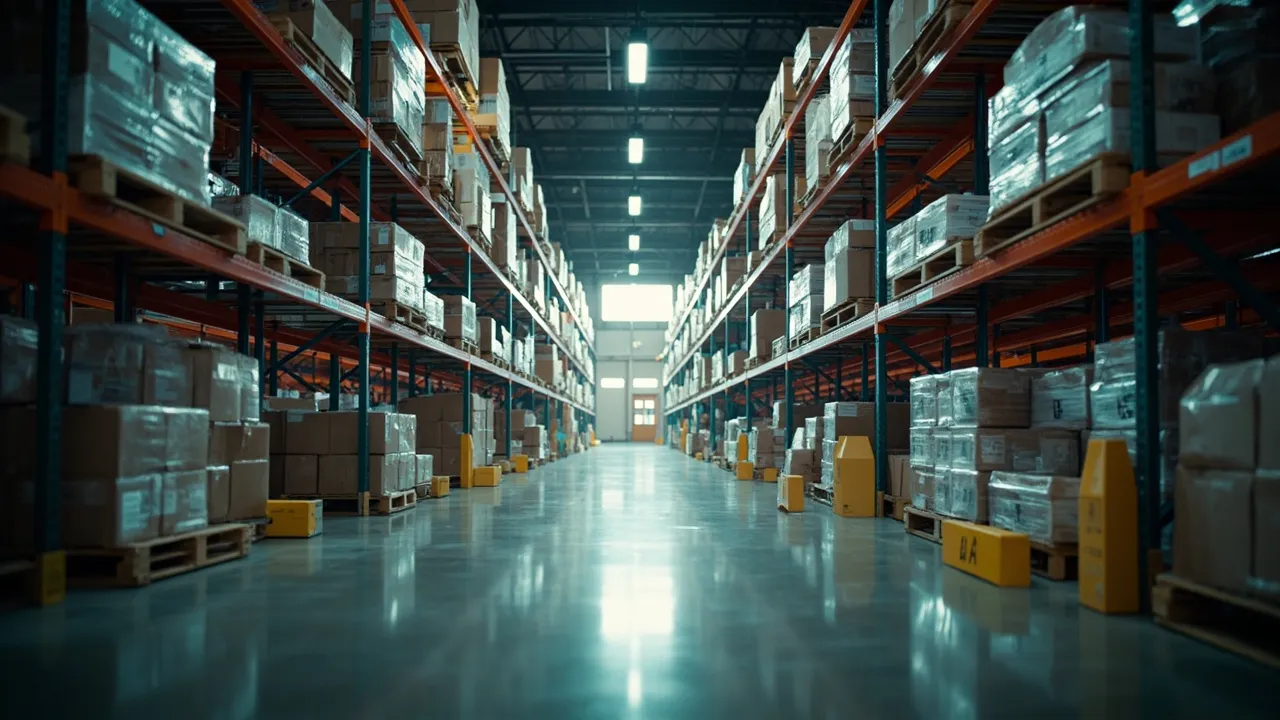
Target's new Houston Receive Center is a useful example of that shift. Supply Chain Dive reported that the facility is a $265 million, 1.2 million-square-foot operation employing 185 people and serving six regional distribution centers plus a flow center. The site is expected to process around 25 million cartons annually and gives Target more inventory-holding capacity before goods move into downstream nodes.
The facility is not just another warehouse. It receives and holds vendor product until downstream replenishment is needed. For seasonal, bulky, long-lead-time, or hard-to-forecast items, that holding function is valuable because it delays the final placement decision.
That delay can be powerful. If inventory moves too early into stores or regional DCs, the network loses flexibility. Product sits where demand may not materialize. Backrooms and DC slots fill up. Rebalancing requires additional transportation. But if inventory remains too far upstream for too long, stores risk missing the window when guests actually need the product. The sweet spot is not maximum inventory or minimum inventory. It is timed inventory.
Target's Houston site also adds physical flexibility. Supply Chain Dive reported that the facility offers roughly 3 million to 3.5 million cubic feet of product storage. When inventory needs to move, Target can load full pallets directly into outbound trailers or use sortation before trailer loading. The site also has two independent line sorters, giving it redundancy if one line is down or under maintenance.
The lesson is not simply "hold more inventory"
Upstream holding capacity can be misunderstood. It is not a license to overbuy. In fact, the whole point is to avoid treating inventory as a binary choice between flood the network and starve the network.
Target's recent history makes that lesson sharper. Like many retailers, it dealt with inventory imbalances earlier in the decade, and excess stock hurt financial performance. The current emphasis on inventory productivity shows a different discipline: improve availability without letting inventory land too early in the wrong node.
That requires more than warehouse space. It requires clean decisions about which products deserve upstream buffers, how long they should be held, which downstream nodes should receive them, and what signals trigger release. Seasonal products may need a different rule than core grocery items. Bulky categories may need a different flow path than fast-moving replenishment SKUs. Imported goods with long lead times may justify earlier purchase commitments, but not earlier store allocation.
Food distribution capacity adds another layer. Target said it has grown upstream network capacity, including a new food distribution center in Colorado. Food logistics adds tighter service expectations, shorter freshness windows, and less tolerance for sloppy timing. The same broad principle applies: the network needs enough upstream capacity to support reliability, but the release cadence has to match demand, shelf life, store capacity, and transportation availability.
The best retailers are turning upstream nodes into inventory decision points, not just storage locations.
Transportation systems have to model holding points
This is where many logistics operations fall short. Transportation systems often model shipments as movements from origin to destination. Retail replenishment now needs something richer: inventory that pauses, changes priority, splits by downstream demand, and moves through a chain of timing decisions.
A receive center changes the planning question. It is no longer simply, "Which carrier moves this inbound load to the DC?" It becomes, "Where should this product wait, how much downstream capacity is available, when should the inventory be released, and what transportation plan protects the promise without creating waste?"
That means transportation management has to connect with inventory status, facility capacity, merchandising calendars, purchase order timing, and store replenishment windows. A load that looks cheap on a lane-by-lane basis may be expensive if it arrives before the network can absorb it. A delayed release may protect DC capacity but create a rush move later. A full-pallet outbound plan may lower handling cost, while sortation may improve allocation precision. None of those tradeoffs can be managed well if inventory and transportation teams work from separate clocks.
Retailers should track upstream holding capacity with the same seriousness they track carrier performance. Useful metrics include dwell time by product class, release accuracy, downstream congestion avoided, trailer utilization, in-stock impact, emergency transfer frequency, and markdown exposure. The goal is to prove that holding inventory upstream improves service and economics.
Chasing inventory beats canceling inventory only if the chase is controlled
Fiddelke's point about preferring to chase inventory over canceling inventory is practical. Retailers cannot forecast every demand swing perfectly. A network that can respond to stronger-than-expected demand without flooding every downstream node is better positioned than one that has to unwind overbuying after the season misses.
But chasing inventory can become chaotic if the operating model is weak. Teams start expediting freight, overriding routing guides, sending partial trailers, and making allocation decisions based on who shouts loudest. The result is service recovery at premium cost.
The alternative is controlled optionality: upstream capacity to preserve choices, transportation planning to execute those choices without panic, and replenishment logic to decide when and where inventory should move.
The CXTMS takeaway
Target's 10% improvement in inventory turns is a reminder that inventory productivity is no longer only a merchandising or warehouse metric. It is a logistics orchestration metric. Upstream receive centers, food distribution capacity, import timing, store replenishment, and transportation execution all have to work as one system.
For shippers, the lesson is clear: add holding capacity only if the operating layer can decide what to hold, when to release it, and how to move it downstream economically. CXTMS helps logistics teams connect shipment visibility, carrier planning, exception workflows, and facility timing so inventory does not become trapped between planning intent and execution reality.
Ready to turn inventory movement into a better-timed network advantage? Schedule a CXTMS demo and see how connected transportation execution helps protect service without overloading the network.