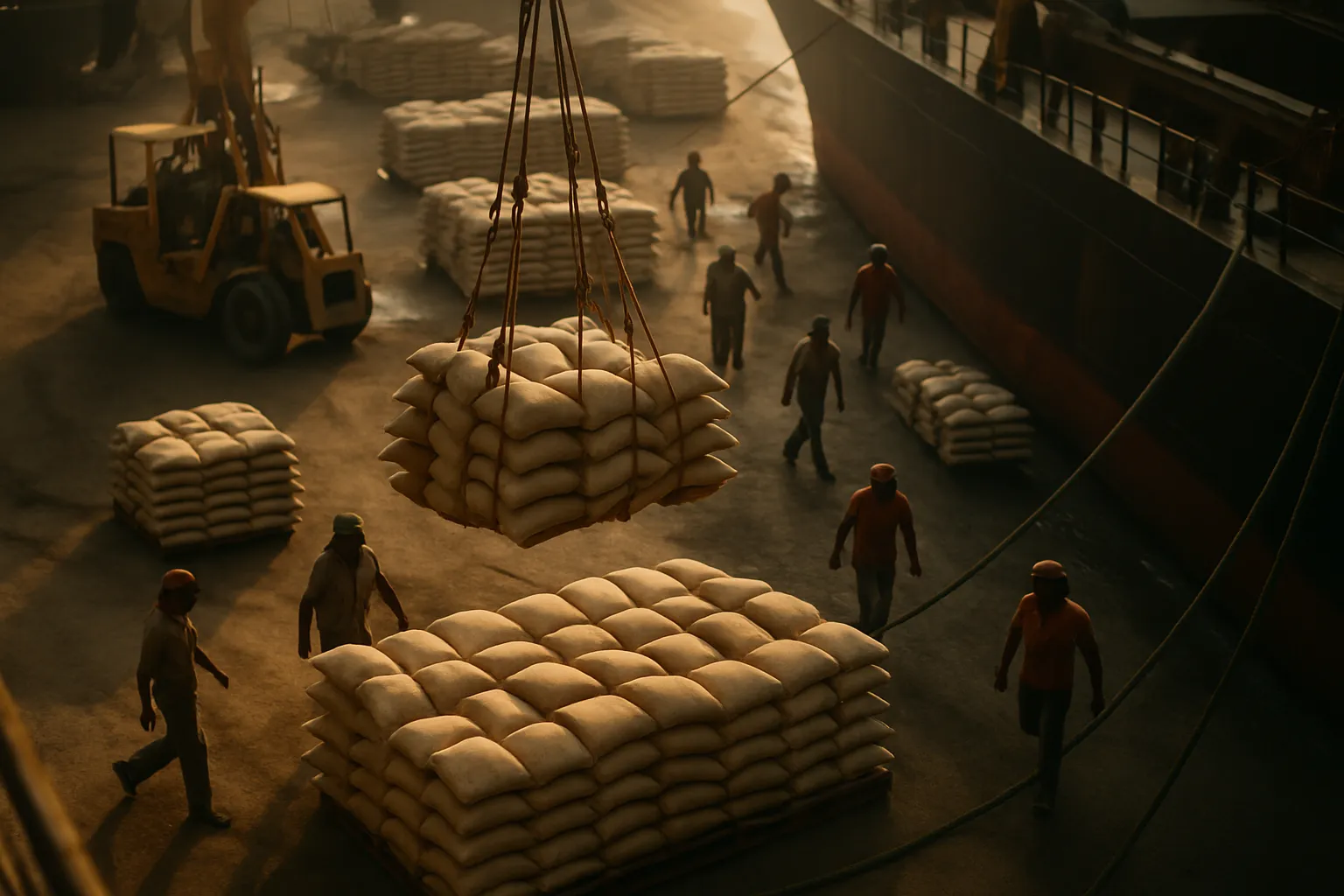
U.S.-China Agriculture Trade Board Could Become a New Freight Planning Signal

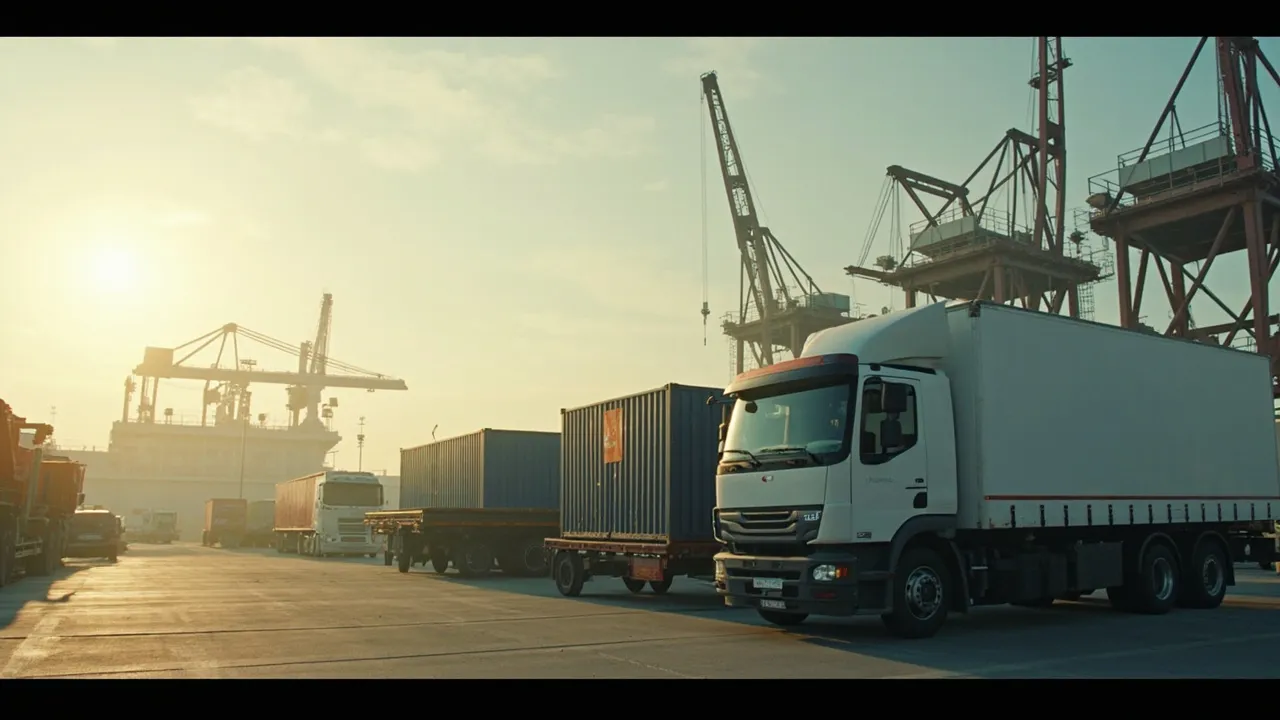
Trade policy usually reaches logistics teams too late. A headline breaks, commercial teams start calling customers, and operations is left to find reefer capacity, vessel space, inland drayage, rail slots, inspection paperwork, and export documentation after the market has already moved.
The proposed U.S.-China Board of Trade is worth watching because it could give freight planners a cleaner upstream signal. According to Supply Chain Dive, the U.S. and China said they reached consensus on agricultural trade priorities during Beijing meetings, with plans to establish both a trade board and an investment board. China also agreed to purchase at least $17 billion of U.S. agricultural products through the rest of 2026 and into 2027 and 2028.
That does not automatically translate into freight volume tomorrow morning. It does mean logistics teams should treat the board as a policy-to-capacity signal, especially in agriculture lanes where demand is seasonal, equipment-sensitive, and documentation-heavy.
Agriculture commitments are freight commitments in disguise
Agriculture moves differently from general merchandise. A consumer goods shipper can often reroute cartons, shift inventory between DCs, or hold import stock for a few weeks. Agricultural exports are tied to harvest windows, quality decay, inspection rules, vessel schedules, railcar availability, elevator capacity, and buyer documentation.
That is why a $17 billion purchase commitment matters operationally. Even before individual contracts are signed, the signal can affect forward planning for bulk grain, soybeans, meat, poultry, dairy, aquatic products, feed inputs, agricultural machinery, and temperature-controlled food flows.
Supply Chain Dive reported several details that freight teams should convert into watchlist items. China renewed more than 400 expired listings for U.S. beef facilities and added new listings, restoring market access for U.S. beef. China also agreed to resume U.S. poultry imports that USDA believes are free of pathogenic avian influenza. Both countries said they would work on non-tariff barriers and market access issues around agricultural goods.
Those are not abstract diplomatic points. Facility listings determine which plants can ship. Poultry rules affect cold chain demand. Non-tariff barriers shape inspection steps, certificate requirements, hold risk, and customer confidence. Market access changes can turn a quiet lane into a constrained lane quickly.
The first planning impact is equipment, not ocean capacity
Ocean space matters, but the first bottleneck in agriculture often appears earlier: in equipment positioning.
If meat or poultry exports accelerate, reefer availability becomes the obvious concern. Exporters need refrigerated containers in the right inland markets, pre-cooled and ready, with enough genset coverage and drayage capacity to protect handoffs. Food-grade trailer availability can tighten around processing centers before the cargo ever reaches a port.
Bulk and feed-related flows create a different pattern. Grain and soybean shipments pull on elevator throughput, shuttle train planning, barge movements, port terminal slots, and vessel loading windows. A policy signal that increases buying interest can pressure inland rail and truck capacity around origin regions even if ocean sailings remain manageable.
Agricultural equipment suppliers should watch the same board for a different reason. If the trade framework includes broader market-access improvements, parts, machinery, tires, implements, and service components may need more predictable trans-Pacific planning. That is especially true when parts support planting, harvesting, or repair seasons.
The board could also influence port selection. Exporters may favor gateways with stronger cold-chain infrastructure, USDA inspection support, agricultural fumigation capacity, reliable rail connections, and less exposure to congestion. The right question is not only “which port is cheapest?” It is “which port can preserve product integrity and documentation compliance under a compressed shipping window?”
Trade optimism still needs a risk discount
Policy signals should inform forecasts, not replace judgment. The same Supply Chain Dive report noted that the countries aim to finalize preliminary agreement outcomes “at an early date,” which means the logistics market still needs to separate announced intent from booked freight. It also noted that an October 2025 trade truce included a one-year pause in reciprocal tariffs set to lift on Nov. 10, 2026, while USTR has begun reviewing Section 301 tariffs on China imports.
That uncertainty matters. Logistics teams should not assume a straight-line volume surge. They should build scenarios.
A base case might assume gradual procurement and moderate export demand across approved agricultural categories. An upside case might assume faster buying after facility listings and import permissions unlock. A downside case should account for delayed implementation, tariff uncertainty, documentation friction, or renewed political tension.
Macro conditions add another layer. Supply Chain Brain reported that the United Nations cut its 2026 global GDP growth forecast from 2.7% to 2.5%, with downside scenarios as low as 2.1%, and lifted its inflation outlook to 3.9% from 3.1%. The same report highlighted energy-market strain from the Strait of Hormuz disruption, a route tied to roughly one-fifth of global oil supplies and one-third of global seaborne fertilizer.
For agriculture logistics, that combination is brutal: demand signals may improve while fertilizer, fuel, and transport cost volatility complicate execution.
Who should watch the board closely
Food exporters should track whether specific commodity categories receive clearer access, whether Chinese buyers return to longer-term contracts, and whether inspection requirements become easier or harder. The operational output should be a rolling lane forecast by origin, commodity, temperature requirement, port, and customer deadline.
Reefer operators should monitor whether beef, poultry, dairy, seafood, and other temperature-sensitive categories start producing quote activity. The earlier signal is not bookings; it is bid requests, equipment inquiries, customer allocation conversations, and drayage pre-checks near production regions.
Trans-Pacific forwarders should translate policy announcements into routing playbooks. Which inland origins need rail protection? Which ports have the right veterinary, cold-storage, or fumigation capacity? Which carriers can support the documentation cadence? Which lanes need backup sailings?
Agricultural equipment suppliers should look for indirect demand. A thaw in trade terms can pull parts, repair inventory, and machinery exports into tighter seasonal windows, especially when customers want product on the ground before planting or harvest.
Turn policy news into an execution workflow
The practical move is to assign ownership. Trade policy should not sit in a newsletter folder. Someone in logistics should convert each announcement into structured planning fields: commodity, origin region, destination, mode, temperature requirement, documentation risk, capacity risk, likely timing, and confidence level.
Then connect those fields to procurement. If a lane moves from “watch” to “probable,” the team should start carrier conversations before the freight is firm. That does not mean overcommitting; it means reserving options, testing rates, validating cutoffs, and confirming equipment access.
CXTMS is built for exactly this kind of translation layer. Policy signals only matter if they become executable plans: lane forecasts, carrier commitments, documentation checkpoints, appointment visibility, and exception management. When agriculture commitments turn into orders, logistics teams need more than a headline. They need a system that connects the signal to the shipment.
Ready to turn trade-policy volatility into better freight execution? Schedule a CXTMS demo and see how connected transportation planning helps teams forecast lanes, secure capacity, and manage export complexity before the market tightens.