Averitt’s Louisville Logistics Campus Points to a Regional Freight Network Reset

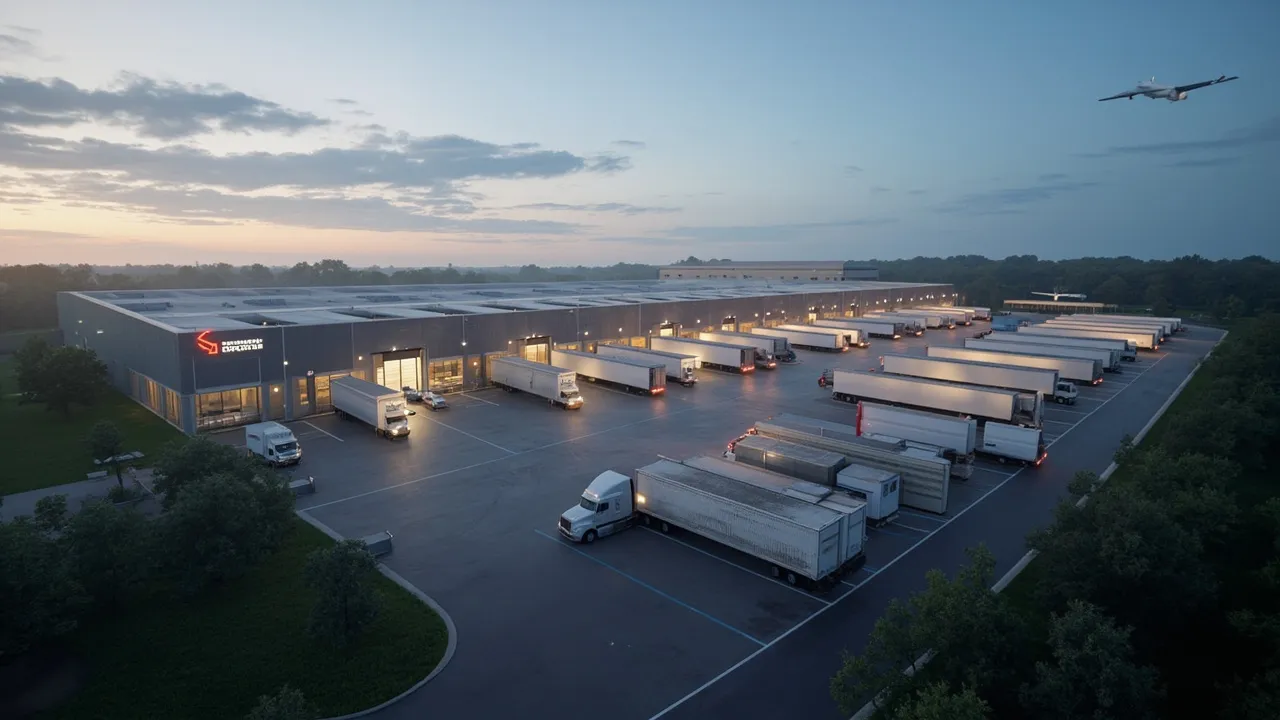
Averitt Express is making a Louisville bet that says a lot about where freight networks are headed. The carrier plans to replace its current 40,000-square-foot Louisville-area service center with a new regional logistics campus that combines less-than-truckload, truckload, dedicated, distribution and fulfillment, and integrated services in one location.
According to Logistics Management, the campus is expected to include a two-story 10,000-square-foot regional office, a 50,000-square-foot cross-dock with 100 doors that can expand to 160 doors, more than 286,000 square feet of distribution and fulfillment space, parking for more than 300 trailers, plus maintenance, fueling, and driver support facilities. Averitt also said it plans to retain 182 associates at the existing Louisville location and hire 64 more over four years, with completion expected by 2028.
That is not just a bigger terminal. It is a different operating thesis: regional freight networks need integrated nodes that can flex between linehaul, cross-dock, storage, fulfillment, and final-mile support without handing every exception to another facility or another provider.
Why regional campuses are getting more strategic
For years, many transportation networks were optimized around lowest-cost lane awards, long-haul consolidation, and annual procurement events. That model still matters, but it has become too brittle by itself. Shippers now need networks that can absorb demand swings, equipment shortages, inbound delays, weather disruption, and store or customer service failures without blowing up the plan.
A regional logistics campus helps because it shortens the distance between decisions and freight. If a trailer arrives late, freight can still be cross-docked, held, reworked, consolidated, or pushed into a different service path from the same campus. If inventory needs to sit closer to demand for a few days, attached distribution and fulfillment space reduces the need for a separate warehouse transfer. If dedicated capacity and LTL operations are coordinated locally, planners have more options than simply paying premium spot rates.
That flexibility is why the Louisville announcement fits a broader retail and distribution pattern. Supply Chain Dive recently reported that Dollar Tree opened a 1 million-square-foot Arizona distribution center serving about 700 stores across the West and Southwest, with executives saying the network strategy is about positioning infrastructure closer to stores to reduce transit times and improve shelf availability. The same article noted Dollar Tree has freight contracts covering about three-quarters of its volumes to improve predictability and reduce spot-market exposure.
The lesson is not that every shipper needs a million-square-foot DC or a 100-door cross-dock. The lesson is that regional infrastructure is becoming a service-level control point.
Louisville is a logical place for that control point
Louisville has unusual gravity in freight. It sits at the intersection of regional trucking lanes, Midwest and Southeast consumption markets, parcel flows, and air cargo infrastructure. For a carrier, that makes it a strong location for blending LTL density, truckload repositioning, dedicated fleet support, and fulfillment activity.
Averitt’s planned 100-door cross-dock matters because doors are optionality. More doors let a carrier keep inbound and outbound freight moving with less congestion, more precise dock assignments, and better wave planning. The planned ability to expand to 160 doors is also a signal: the building is being designed for network growth, not just today's dock pressure.
The 286,000-plus square feet of distribution and fulfillment space is just as important. Regional freight networks increasingly blur the line between transportation and inventory positioning. A shipment may need to become a stored pallet, a pick-and-pack order, a staged retail replenishment load, or a consolidated outbound move. When those activities happen under one operational umbrella, the network can respond faster.
What mid-market shippers should take from this
Mid-market shippers do not need to copy Averitt’s capital plan. They do need to ask sharper network-design questions.
First: where are the real regional control points in the network? A control point is not simply the cheapest terminal or warehouse. It is a location where freight can be rerouted, held, consolidated, reclassified, or recovered when the plan changes. If your network has no such nodes, every disruption becomes an escalation.
Second: do your systems see inventory, orders, appointments, and transportation decisions together? A regional campus only creates value if planners know what is available, what is late, what can be combined, and what service promise is at risk. If the TMS, WMS, carrier portal, and customer service desk are working from different versions of the truth, physical capacity will be underused.
Third: are you measuring linehaul savings against service recovery costs? Longer, cheaper moves can look attractive in procurement spreadsheets. But when they increase dwell, missed delivery windows, split shipments, detention, or emergency transfers, the savings evaporate. Regional nodes often win by reducing exception cost, not by producing the lowest linehaul rate on every lane.
Fourth: how much contingency coverage exists inside core carrier relationships? Averitt’s campus design brings LTL, truckload, dedicated, distribution, fulfillment, and integrated services together. Shippers should evaluate carriers and 3PLs the same way: not just on rate cards, but on how many useful recovery paths they can offer when freight does not behave.
The TMS implication: regional networks need faster planning loops
A campus strategy fails if the digital planning loop is slow. Transportation teams need to model regional alternatives before the freight is already late. That means using a TMS to compare carrier capacity, appointment constraints, accessorial exposure, service commitments, inventory priority, and customer impact in the same workflow.
For CXTMS customers, this is exactly where transportation management becomes more than tendering. A modern TMS should help planners see which loads can be consolidated, which lanes are better served through a regional cross-dock, which carriers are producing reliable recovery performance, and where network exceptions are creating recurring cost leakage.
Averitt’s Louisville expansion is a carrier investment, but the strategic message belongs to shippers too: regional freight networks are being rebuilt around flexibility. The winners will not be the companies with the most nodes. They will be the companies that know which nodes matter, what decisions those nodes enable, and how quickly their systems can act when the freight plan changes.
Ready to test whether your freight network has enough regional flexibility? Schedule a CXTMS demo and see how smarter transportation planning can turn network complexity into better service and lower exception costs.