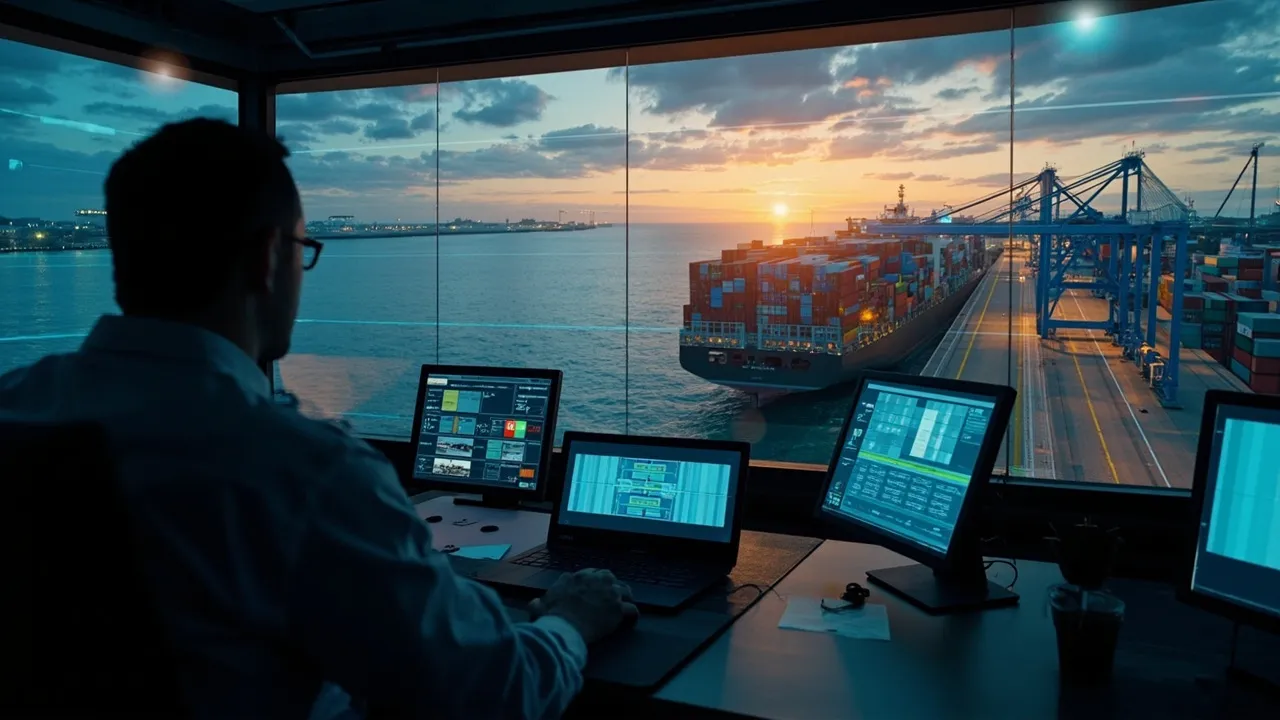
Port Tracker Says Retail Imports May Lag Into Fall. That Is a Planning Problem, Not Just a Volume Problem.

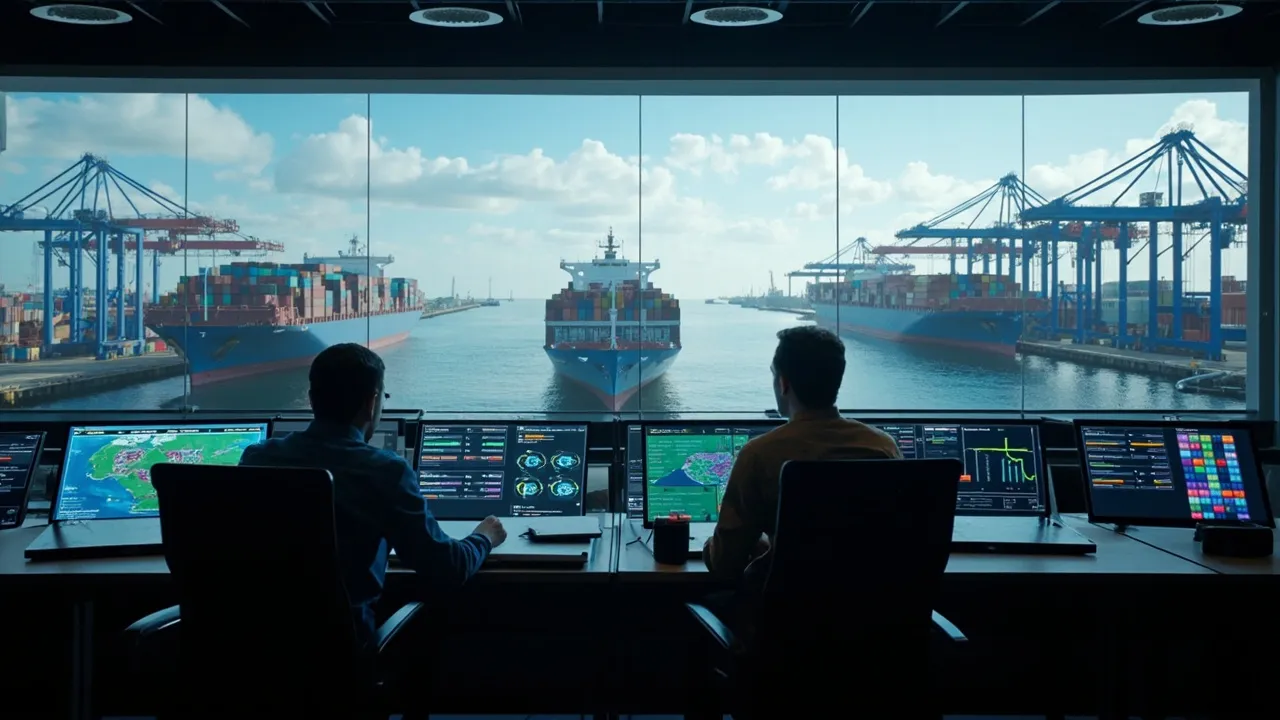
Retail import forecasts are not just volume forecasts. They are early warnings for transportation planning.
The latest Global Port Tracker report from the National Retail Federation and Hackett Associates says U.S.-bound retail container imports are likely to trail 2025 levels into early fall, even though May and June show year-over-year gains. Logistics Management reported that March import volume at covered U.S. ports reached 2.16 million TEU, down 13.6% from February and 0.6% from March 2025. The report then projects April at 2.13 million TEU, down 3.6% annually; May at 2.17 million TEU, up 11.1%; June at 2.13 million TEU, up 8.2%; July at 2.2 million TEU, down 7.8%; August at 2.19 million TEU, down 5.5%; and September at 2.08 million TEU, down 1.3%.
That pattern looks contradictory if teams only scan the monthly percentages. Short-term gains can appear encouraging. The operating signal is more complicated: first-half 2026 volume is projected at 12.59 million TEU, up just 0.5% year over year, and the May-June lift is partly a comparison against the sharp drop after April 2025 tariff announcements. In other words, the apparent rebound may not mean demand is strengthening. It may mean the baseline was unusually weak.
For importers, forwarders, and 3PLs, that distinction matters. A soft import market can still create volatility.
Lower volume does not mean easier planning
The lazy assumption is that lower import demand gives logistics teams breathing room. Sometimes it does. But ocean freight rarely becomes simple just because aggregate volume softens.
When carriers expect weaker demand, they can cancel sailings, adjust port rotations, reposition equipment, or consolidate capacity. Those moves may make sense for vessel economics, but they complicate shipper execution. A container booked for one sailing may roll into another. A gateway that looks available in the forecast may tighten after blank sailings. Inland appointments may swing from quiet to congested when multiple delayed vessels arrive in the same window.
Retailers also do not feel import softness evenly. One category may be over-inventoried while another needs replenishment. A tariff-sensitive product may be pulled forward. A seasonal assortment may still have a hard in-store date. A supplier may delay production because buyer commitments are uncertain. Volume can be down at the market level while specific lanes, SKUs, ports, and customer programs remain urgent.
That is why the Port Tracker signal should trigger scenario planning, not a simple capacity cut.
Tariffs and compliance risk are distorting the calendar
The forecast also sits inside a messy trade-policy environment. Reuters reported that pro-tariff and human-rights groups asked the U.S. Trade Representative to impose new import bans, duties, and quotas tied to forced-labor enforcement, with roughly 60 witnesses scheduled for hearings in the Section 301 investigation. The same Reuters coverage noted that the forced-labor probe could affect countries including China and Russia as well as U.S. allies such as Australia, Canada, the European Union, Britain, Israel, India, Qatar, and Saudi Arabia.
That kind of policy uncertainty changes import timing. Shippers may accelerate shipments ahead of possible duties. Others may pause orders until landed-cost assumptions become clearer. Compliance teams may require more documentation before release. Buyers may shift sourcing or split purchase orders across suppliers and origins.
For transportation teams, the result is not just fewer or more containers. It is noisier containers: more exceptions, more documentation checks, more last-minute routing decisions, and more disagreement between the demand plan and the booking plan.
Hackett Associates founder Ben Hackett, quoted by Logistics Management, pointed to the same mix of weakening forward demand, tariff volatility, consumer sentiment pressure, and geopolitical tension. That combination is exactly why import planning has to be dynamic. A static monthly forecast will not protect service levels when the policy environment changes faster than the replenishment calendar.
Forwarders need a three-layer scenario model
Forwarders should treat the current import forecast as a planning exercise across three layers: ocean, inland, and customer allocation.
On the ocean side, teams should build scenarios for base demand, tariff pull-forward, delayed replenishment, and carrier capacity withdrawal. That means mapping which customers and purchase orders can tolerate a later sailing, which need guaranteed space, and which should be routed through alternate gateways. The point is not to guess the exact TEU number for July. The point is to know which decisions change if July is down 8%, flat, or suddenly pulled forward.
On the inland side, import softness should be translated into drayage, rail, truckload, transload, and warehouse labor assumptions. If arrivals compress after blank sailings, drayage demand can spike even in a weak month. If retailers slow inbound flow, warehouse labor may be underplanned and then stretched when delayed containers finally discharge. If customers shift gateways to manage risk, established carrier capacity may be in the wrong market.
On the allocation side, logistics teams need customer-level rules before inventory arrives. Which stores, DCs, or wholesale customers get priority if containers are late? Which SKUs can be substituted? Which shipments should move direct-to-customer, direct-to-store, cross-dock, or hold for consolidation? Those decisions should not wait for a vessel arrival notice.
Technology has to connect forecasts to execution
The broader technology lesson is simple: forecasts only matter if they change execution before the exception hits.
In Logistics Management's 2026 technology roundtable, supply chain leaders described a shift from passive visibility to embedded decision support. AI and orchestration are delivering value when they are placed inside high-frequency operational workflows such as transportation planning, inventory positioning, warehouse labor planning, and carrier selection. That is the right framing for import planning. A dashboard showing projected TEU declines is useful, but not sufficient. The system should translate that signal into booking recommendations, alternate routing options, capacity alerts, and customer-impact scenarios.
A modern import planning process should connect:
- purchase orders and supplier readiness;
- ocean bookings, sailing schedules, and roll risk;
- port, drayage, rail, and warehouse capacity;
- customs and compliance documentation status;
- inventory allocation rules;
- customer promise dates and exception workflows.
When those elements live in separate spreadsheets and inboxes, every forecast change becomes a meeting. When they live in one execution layer, forecast changes can become planned actions.
The CXTMS angle: plan capacity before containers hit the port
Retail import softness into fall is not a reason to relax. It is a reason to plan with sharper scenarios. The winners will be teams that know which ocean bookings are flexible, which inland markets are exposed, which customers require protection, and which exceptions can be automated before a container reaches the terminal.
CXTMS helps logistics teams connect transportation forecasts, shipment execution, carrier workflows, documentation, and exception management in one operating view. If your import plan still depends on monthly forecasts, manual booking trackers, and late-stage fire drills, schedule a CXTMS demo. The best time to solve a port problem is before the container is on the water.