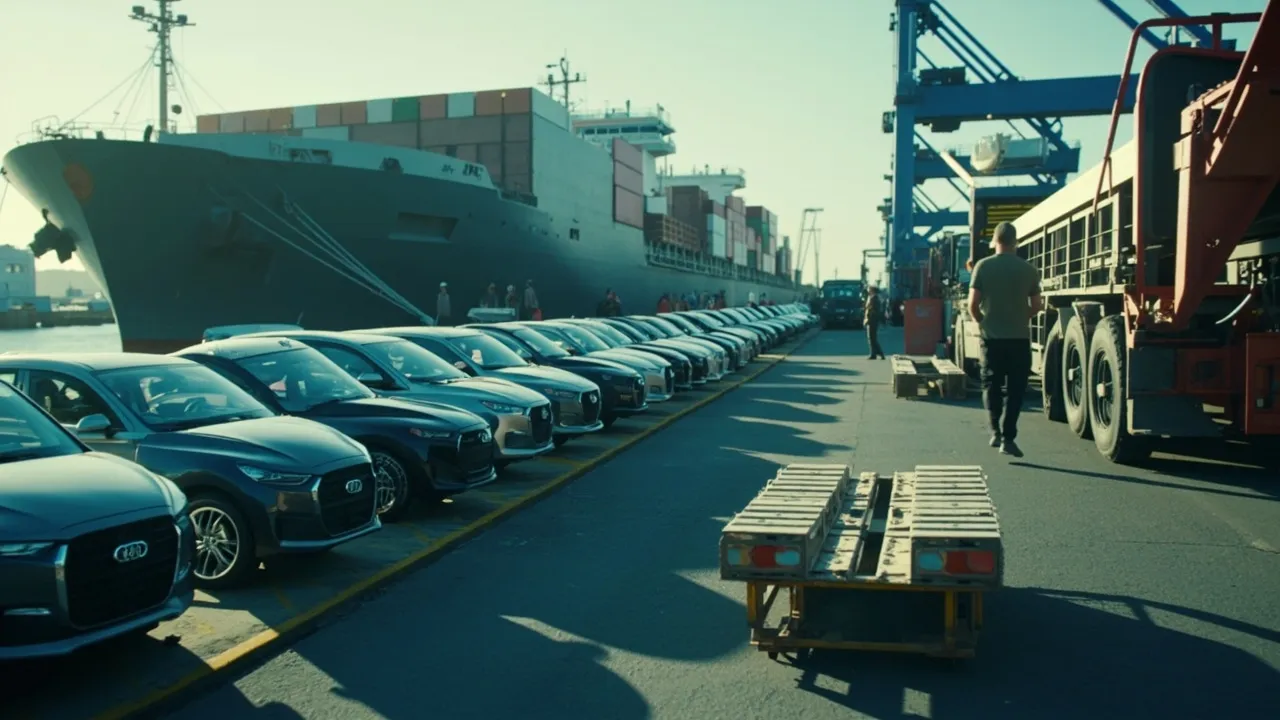
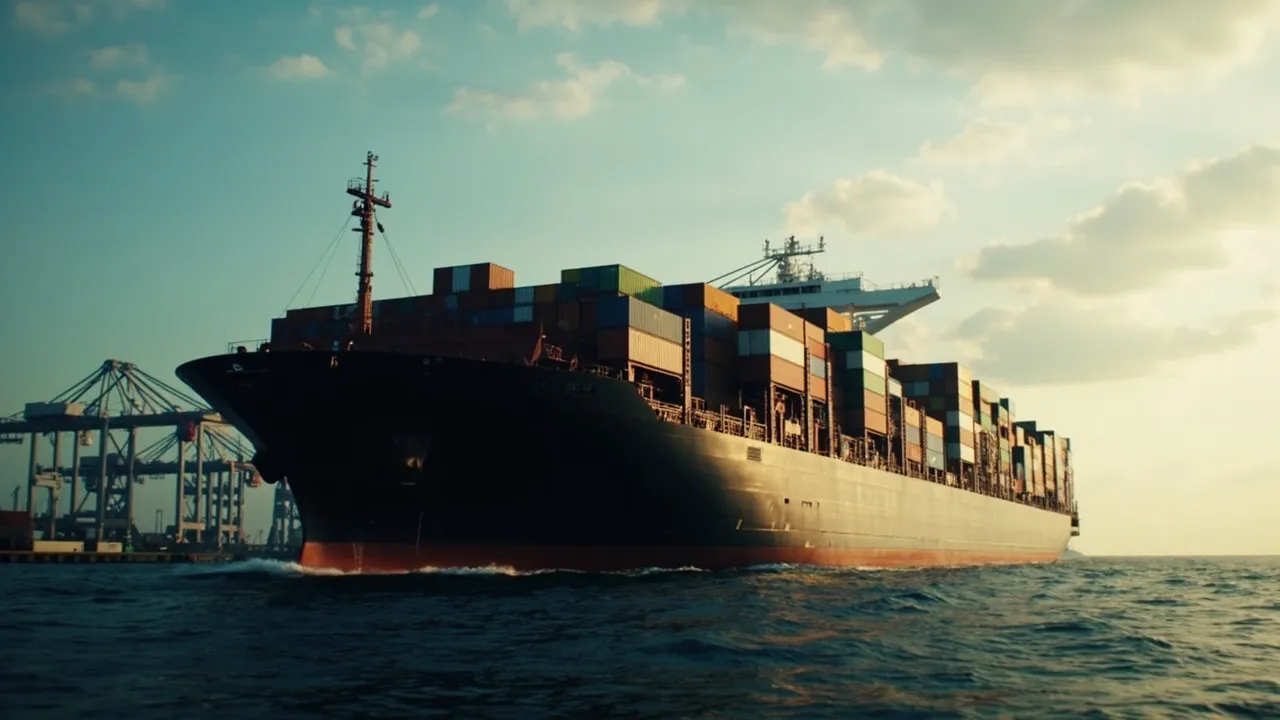
Europe Is Recalibrating Around Tariff Uncertainty, and Transatlantic Logistics Contracts Are Caught in the Middle

Transatlantic logistics contracts were already annoying enough. Now they are being negotiated in a market where nobody fully trusts the tariff math to stay still for a quarter.
That is the real story behind Europe’s latest trade recalibration. A temporary 10% U.S. global tariff, followed almost immediately by discussion of a move to 15%, has pushed shippers, forwarders, and procurement teams into a planning window that feels too short for strategy and too long for guesswork. The issue is not just higher duties. It is that contract terms, sourcing decisions, and volume commitments are being made while the rules themselves are wobbling.
For logistics teams moving freight across the Atlantic, this is where policy stops being abstract and starts messing with routing guides, origin plans, and customer commitments.
The tariff itself is only half the problem
According to Reuters, the Trump administration’s new tariff framework relies on Section 122, a rarely used legal path that allows duties of up to 15% but only for 150 days unless Congress extends them. That detail matters more than the headline rate.
A tariff that might expire, escalate, or get legally challenged inside a five-month window is a nightmare for annual contracting. Ocean service agreements, air capacity commitments, customs assumptions, and customer pricing models all usually want more stability than that. Section 122 offers the opposite.
That is why the present environment is so disruptive. A 10% tariff is one problem. A 10% tariff that can become 15%, overlap with prior duty structures, or disappear after 150 days is a much bigger one.
Europe hit pause because the contract logic broke
The market response in Europe was not subtle. Reuters reported that on Feb. 23, 2026, European lawmakers postponed a vote on the EU-U.S. trade deal after the new blanket tariff changed the economics underneath it. Lawmakers specifically questioned whether the temporary U.S. tariff would replace the prior deal terms or sit on top of them.
That distinction is brutal in practice. Reuters noted that for some products, including certain cheeses, the new surcharge could push the overall tariff burden to about 30%. It also cited trade committee chair Bernd Lange saying that roughly 7% to 8% of EU products could face tariffs above the rates agreed the previous year.
If you are a logistics provider or a shipper, that is not background policy chatter. That is the difference between honoring a procurement plan and blowing it up.
Why logistics contracts are getting squeezed
Logistics Management put it plainly: the uncertainty is landing right as companies need to commit shipping volumes for the next 12 months. Lars Jensen of Vespucci Maritime told the publication that importers are being forced to decide whether to front-load cargo ahead of a possible July tariff shift while still figuring out where key products should originate.
That is the squeeze.
Shippers need to lock in rates and capacity. Carriers and forwarders want volume visibility. Customers want firm quotes. But nobody wants to commit too hard if the duty regime could change again before the summer is over.
This is why contract negotiations are getting more tactical. Instead of a clean annual commitment model, more teams are likely to lean on shorter validity periods, indexed surcharges, split-origin contingency clauses, and more aggressive review checkpoints around the Section 122 deadline.
Frankly, they should. Pretending this is a normal contracting season would be stupid.
Front-loading is back, but with worse assumptions
Tariff uncertainty tends to create one very predictable behavior: front-loading. If importers think duties may rise in July, they pull shipments forward into Q2 and early Q3. That can temporarily distort ocean bookings, warehouse demand, drayage capacity, and inland distribution planning.
But this cycle is nastier than a simple pull-forward. Teams are not just asking, "Should we ship earlier?" They are asking, "Should we source from a different country, use a different customs strategy, or avoid committing to a lane that could look dumb in six weeks?"
That extra layer matters because transatlantic planning now sits inside a broader European diversification push. Logistics Management noted that the EU-Mercosur agreement would eliminate tariffs on 91% of goods traded with Mercosur, while the EU would eliminate tariffs on 92% of imports from Mercosur. The European Commission estimates the agreement could lift annual EU exports by as much as €49 billion and support more than 440,000 jobs.
In other words, Europe is not just reacting to U.S. tariff volatility. It is actively looking for alternative trade structures that create clearer customs rules and more predictable cargo flows.
What CXTMS readers should watch through July
The smart move is not to predict policy perfectly. It is to build a logistics plan that survives bad policy timing.
1. Watch contract duration and review triggers
Any transatlantic agreement signed now should reflect the Section 122 timeline. If rates or service obligations run well past the 150-day window with no adjustment language, someone is probably eating avoidable risk.
2. Model origin shifts before customers ask for them
If European shippers start reallocating production or export mix toward lower-risk trade lanes, the logistics teams that already mapped alternate origins will move faster. Everyone else will be stuck doing reactive network design.
3. Expect more advisory work from providers
Logistics Management reported that customer demand for guidance has risen sharply. That tracks. When the trade rules are unstable, forwarding stops being a pure execution business and becomes an advisory business. Teams that can explain landed-cost impact, customs scenarios, and timing tradeoffs will win trust fast.
4. Separate temporary spikes from real demand
If front-loading lifts volumes in the short term, do not confuse that with durable demand growth. The market loves to overread panic freight. A few hot months do not automatically justify long-term fixed commitments.
The real takeaway
Europe is recalibrating because tariff uncertainty has turned contract planning into a moving target. The danger is not just higher duty rates. It is making 12-month logistics commitments based on trade rules that may not survive 150 days.
That means the winners in this cycle will not be the companies with the boldest forecasts. They will be the ones with the least fragile contracts, the clearest origin options, and the fastest response when tariff policy inevitably swerves again.
That is not glamorous. It is just how competent logistics teams stay out of trouble.
Want tighter control over landed-cost modeling, customer commitments, and contract exceptions when trade policy gets chaotic? Book a CXTMS demo to see how CXTMS helps logistics teams adapt faster.