Truck Driver Detention Time Crisis: How Shipper Accountability Is Reshaping Freight Economics in 2026

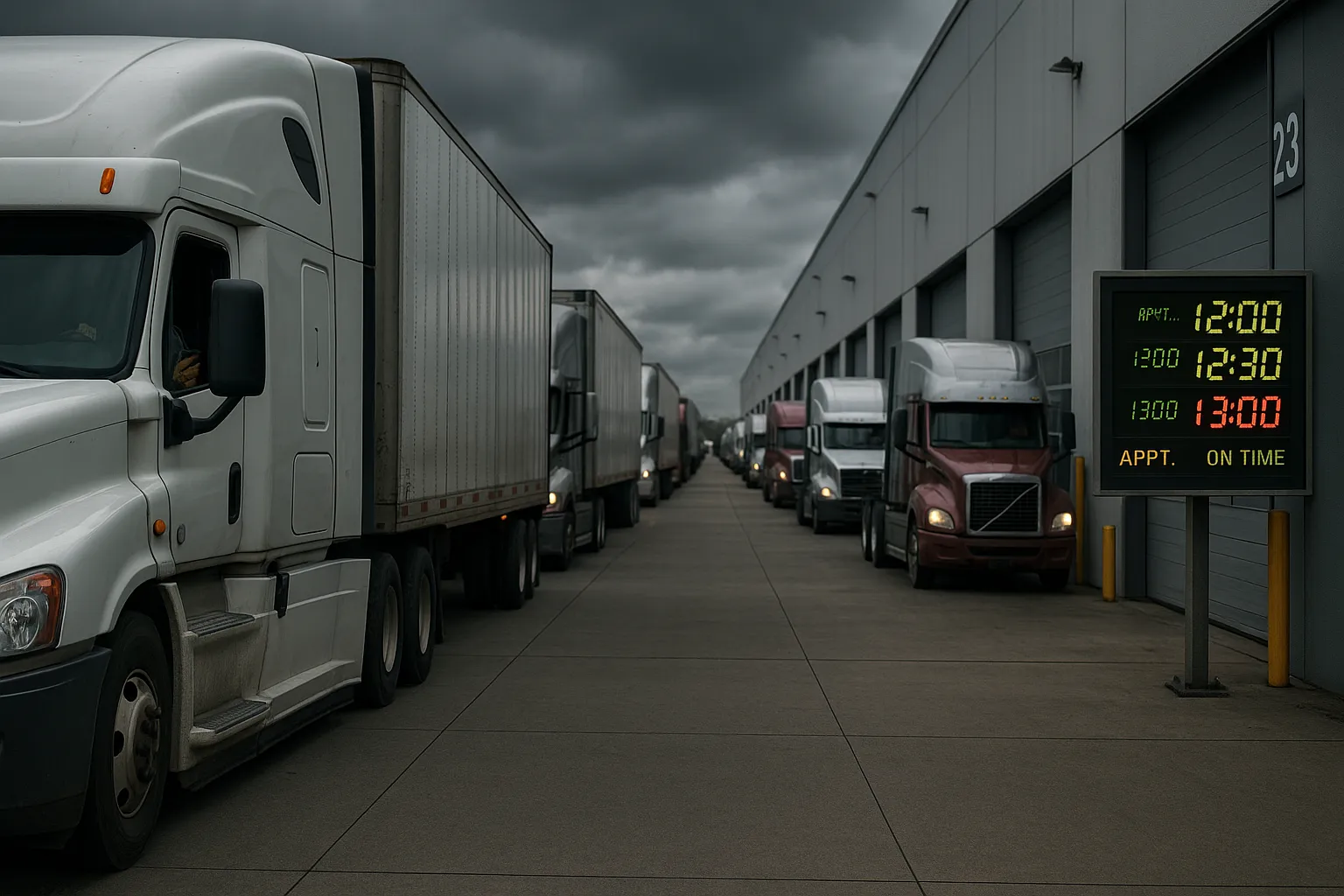
Every hour a truck sits idle at a loading dock is an hour of lost productivity, lost revenue, and compounding frustration for drivers who are overwhelmingly paid by the mile—not by the hour. In 2026, as the freight market tightens and carrier capacity becomes harder to secure, the truck driver detention crisis is no longer just a driver problem. It's a shipper problem, a safety problem, and increasingly, a regulatory problem that is fundamentally reshaping how freight economics work across the American supply chain.
According to the American Transportation Research Institute (ATRI), driver detention cost the trucking industry $15.1 billion in 2023—comprising $11.5 billion in lost productivity and $3.6 billion in direct expenses. With capacity tightening and carriers gaining pricing power in 2026, shippers who continue to ignore detention are discovering that the costs extend far beyond hourly fees: they're losing preferred carrier access, paying premium spot rates, and watching their freight get bumped to the bottom of every dispatch board.
The Scope of the Problem: By the Numbers
The data paints a stark picture. ATRI's 2024 detention survey of 587 drivers found that 39.3% of all deliveries involved detention—defined as wait times exceeding the standard two-hour free time window at shipper or receiver facilities. The Federal Motor Carrier Safety Administration (FMCSA) has documented average dwell times of 3.4 hours per stop where detention occurs, with 4.9% of stops exceeding four hours.
The financial impact on individual drivers is devastating. FMCSA and the Department of Transportation's Office of Inspector General estimate that driver wage losses from detention range between $1.1 billion and $1.3 billion annually. For individual drivers, that translates to $11,000–$19,000 in lost earnings per year—a staggering sum for an occupation where median annual pay already struggles to attract new entrants.
Perhaps most troubling is the compensation gap. According to DAT Freight & Analytics, fewer than 50% of billed detention charges are actually paid by shippers. The Owner-Operator Independent Drivers Association (OOIDA) found that 17% of drivers never receive any detention pay at all, and typical detention fees of $30–$50 per hour fall well below the industry's average operating cost of $66.65 per hour. Drivers are literally subsidizing shipper inefficiency out of their own pockets.
How Detention Fuels the Driver Shortage
The trucking industry's persistent driver shortage—estimated at over 60,000 unfilled positions by the American Trucking Associations—is inextricably linked to the detention problem. When drivers lose hours of productive driving time sitting at docks, the cascading effects are immediate and personal.
Drivers who experience frequent detention report higher levels of job dissatisfaction, burnout, and intent to leave the profession. ATRI's research found that drivers speed 14.6% more after experiencing detention, attempting to make up lost time and miles. The FMCSA documented that every 15-minute increase in average dwell time increases the expected crash rate by 6.2%. The Government Accountability Office (GAO) reported that 80% of drivers affected by detention had difficulty complying with Hours-of-Service (HOS) regulations.
This creates a vicious cycle. Detention makes the job less attractive and more dangerous. Fewer people want to drive trucks. The driver shortage worsens. Carriers gain leverage to be selective about which shippers they serve—and facilities known for excessive detention are the first to get dropped from routing guides.
The Shipper-of-Choice Connection
In the tightening 2026 freight market, carriers are increasingly ranking shipper facilities by their operational efficiency—and detention time sits at the top of the evaluation criteria. FreightWaves' 2025 Shipper of Choice awards incorporated quantitative detention time metrics from Dock411's facility ratings data for the first time, signaling a broader industry shift toward measurable shipper accountability.
Shippers earning "preferred" status—those with average dock times under 90 minutes, efficient appointment scheduling, and prompt payment practices—report securing 8–15% better freight rates and first-call capacity even in tight markets. Conversely, facilities flagged on driver apps like Dock411 and TruckerPath for excessive wait times find carriers refusing loads, demanding premium rates, or simply not showing up.
The message from the carrier community is clear: in a market where drivers can choose which loads to accept, shipper behavior at the dock directly determines freight costs and service reliability.
Regulatory Momentum: FMCSA Takes Action
Federal regulators are responding to the detention crisis with increasing urgency. The FMCSA launched a comprehensive detention time data collection initiative in late 2023, acknowledging that information gaps have prevented regulators from fully understanding the scope of the problem. This survey—the agency's most ambitious detention-focused research effort—is designed to build the evidentiary foundation for potential regulatory action.
Meanwhile, the FMCSA's broader push for freight transparency is gaining momentum in 2026. The agency's broker transparency rule, which requires property brokers to provide transaction records electronically within 48 hours of service completion, is advancing through the regulatory process. While this rule targets broker-carrier transparency rather than detention specifically, it reflects a regulatory environment that is increasingly demanding accountability across all freight stakeholders.
Industry advocacy groups including OOIDA and ATRI continue to push for more direct detention reforms, including proposals for mandatory $100-per-hour detention fees after a two-hour grace period and requirements for shippers to report facility dwell times. While no federal detention pay mandate exists yet, the combination of regulatory attention, industry data, and market dynamics is creating unprecedented pressure for shippers to address the problem voluntarily—or face market consequences.
Technology Solutions: From Reactive to Proactive
Forward-thinking shippers are deploying technology to attack detention at its root cause: poor dock management and scheduling inefficiency. The most impactful solutions include:
Automated Dock Appointment Scheduling: Digital platforms that replace phone-and-email scheduling with self-service driver appointment booking, real-time slot availability, and automated confirmation. Facilities implementing these systems report 30–45% reductions in average wait times.
Real-Time Dock Status Visibility: IoT sensors and yard management systems that provide carriers with live updates on dock availability, estimated wait times, and queue position—allowing drivers to time their arrivals and avoid unnecessary idling.
Geofenced Check-In Systems: Automated arrival detection that eliminates manual check-in bottlenecks, instantly notifying dock teams when a driver enters the facility geofence and triggering the loading/unloading workflow.
Predictive Analytics: Machine learning models that analyze historical dock throughput patterns, seasonal volume fluctuations, and carrier arrival data to optimize appointment windows and staffing levels.
How CXTMS Helps Shippers Reduce Detention and Strengthen Carrier Relationships
CXTMS provides shippers with integrated visibility into detention events across their entire carrier network, transforming scattered data points into actionable intelligence. By correlating shipment tracking data with facility dwell times, CXTMS automatically identifies which locations generate the most detention, which carriers are most affected, and what patterns—time of day, day of week, commodity type—drive excessive wait times.
The platform's carrier relationship management tools enable shippers to monitor their own "shipper score" based on real operational data: average dock times, appointment adherence, payment speed, and detention frequency. This self-awareness is the first step toward earning preferred shipper status and securing the rates and capacity that come with it.
CXTMS also integrates with dock scheduling systems to provide end-to-end appointment visibility, alerting operations teams when inbound shipments are running ahead of or behind schedule so dock resources can be dynamically reallocated. The result is fewer detention events, lower freight costs, stronger carrier partnerships, and a measurable competitive advantage in a tightening capacity market.
Ready to reduce detention, improve carrier relationships, and lower freight costs? Request a CXTMS demo to see how integrated dock visibility and carrier performance analytics can transform your facility operations.